
Africa-Press – Kenya. Edible oil sector players in the country say they have been forced to operate under partial capacity due to inability to export to neighbouring countries.
The industry players have only been left with the Kenyan market to meet their production needs despite injecting investments to meet the EAC market needs.
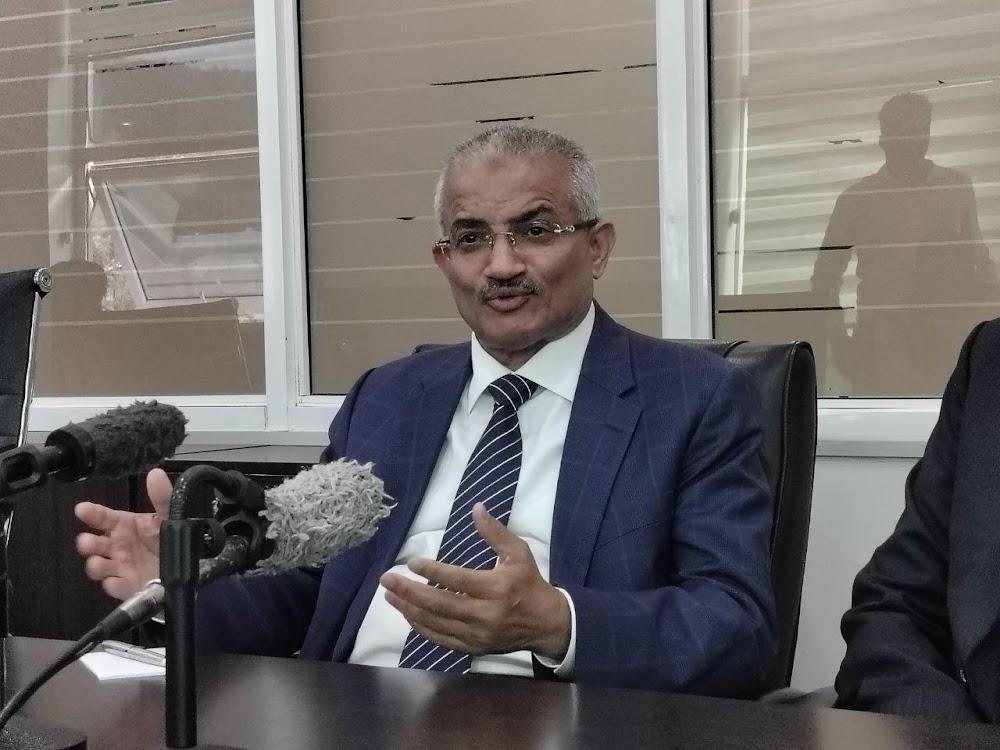
Golden Africa Limited Managing Director Fathi Hayel Saeed said that despite a tough operating environment locally the Malaysian investors have been left to operate at 60 percent capacity.
“Countries like Uganda, Rwanda and Burundi are landlocked and depend on Kenya to supply them. However, their government have introduced incentives and imposed some import duties which has made it difficult to compete with them,” said Saeed.
The Malaysian investors said that the locally Kenya needs 800,000 tonnes of edible oil against a production capacity of 2.4 million tonnes.
In response to the planned imports of edible oils in the country by the state, he expressed fears that the sustained duty-free importation of edible oils could equally signal the closure of key industries.
He said while they appreciate and applaud the government’s efforts to reduce the cost of living, the importation of edible oil duty-free is detrimental to manufacturers.
“If the tough operating environment in the country continues we as foreign investors will not have the patience I continuously losing money we will find alternative ways of where we can find money and relocate it elsewhere,” said Saeed
In an effort to cut on production costs the firm announced it will engage Malaysian authorities on improving crude imports into the region.
The Asian nation is in the meantime looking to export more palm oil to Kenya, at a time that mutual business relationship between Malaysia and Kenya, hit $1.19 billion (Sh167 billion) in 2022.
Meanwhile Indonesia has offered to assist Kenya to improve the production of palm and sunflower oil, the Ministry of Investments, Trade and Industry has announced.
A delegation from the Asian nation, the world’s largest producer of palm oil, is expected in Nairobi next week for discussions with President William Ruto and Cabinet Secretaries Moses Kuria (Investments, Trade and Industry) and Mithika Linturi (Agriculture).
An agreement for end-to-end development of the edible oil industry will be signed during the meetings.
The talks will be centred around supporting farmers in selected counties of Lamu, Kwale, Tana River, Taita Taveta, Homa Bay, Migori, Kisumu and Busia through an outgrowth scheme as well large scale plantation farming.
Kenya currently imports crude palm oil worth US $1 Billion (Sh141billion) annually through 5 companies of Bidco, Kapa Oil, Pwani Oil, Menengai and Golden Africa.
Last December, there was an outcry from consumers when the prices of edible Oil skyrocketed to Ksh 480 per litre forcing the government to import edible Oil through the Kenya National Trading Corporation thus reducing the retail price by more than a half to Ksh 220 per litre currently.
For More News And Analysis About Kenya Follow Africa-Press