
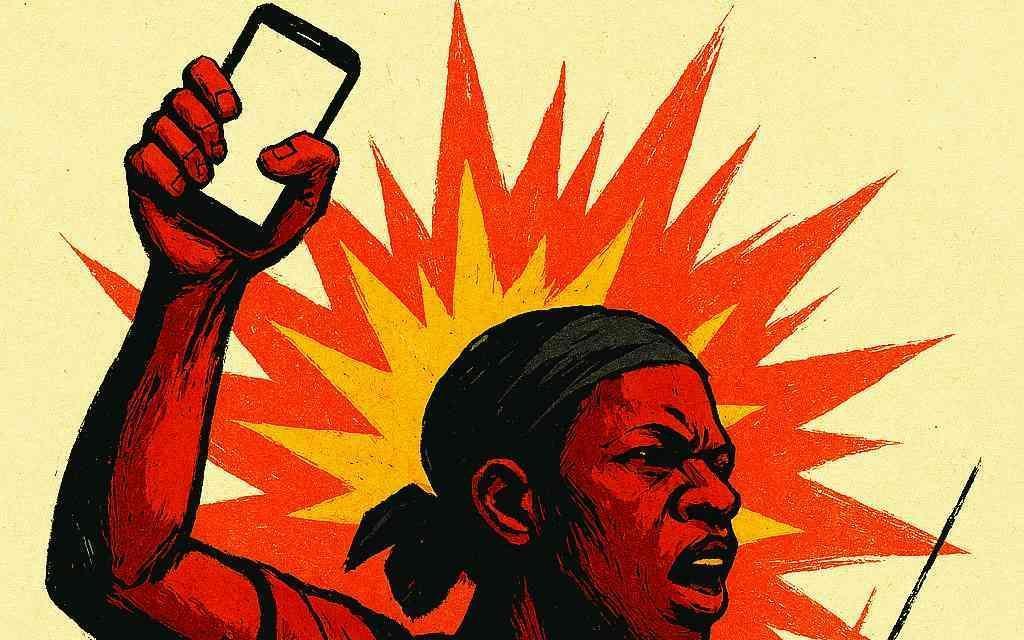
Africa-Press – Kenya. 2025 was the year Africa’s ruling elite exposed itself as relics of a dying order, clinging desperately to analogue repression and outdated propaganda as if transistor radios and poster monopolies could still silence a generation armed with smartphones.
They mistook curfews for control, censorship for legitimacy and staged rallies for consent, but history does not wait for the sleepwalkers. 2026 will not be a continuation of their charade; it will be the year the youth drag the continent to the digital age by force of defiance.
The political class, incumbents and opposition stalwarts alike, have been stumbling blindly through the corridors of power, lulled by the illusion that yesterday’s tools can contain tomorrow’s insurgency. They are about to be jolted awake by a generation that refuses to inherit decay.
Africa’s Gen Z has detonated a new grammar of resistance, one that renders analogue repression brittle and obsolete. TikTok has become the rallying cry, WhatsApp the organising cell, X the megaphone, Instagram the battlefield of imagery.
The youth are not waiting for permission; they are scripting their own revolution in real time, livestreaming betrayal, documenting brutality and amplifying solidarity across borders. The leaders who cling to radio propaganda will soon discover that their voices are drowned out by hashtags that travel faster than bullets and memes that puncture their lies with viral precision.
This is the awakening: a continental indictment of longevity without legacy, a generational revolt against political sleepwalking. Africa’s leaders are about to learn that the future is digital and in the digital realm, their analogue chains snap like twigs.
The rise of Gen Z activism
Gen Z has detonated a new political grammar across Africa, rewriting the language of resistance with smartphones instead of rifles, hashtags instead of slogans, livestreams instead of leaflets.
They have shifted protest culture from the narrow confines of street-only defiance to hybrid movements that fuse the physical and the digital, making repression harder to contain and propaganda easier to puncture. When hashtags trend faster than bullets travel, when brutality is exposed in real time to millions and when diaspora networks amplify local struggles into global outrage, the old machinery of control begins to look brittle and absurd.
This generation has declared the digital sphere the new battleground: TikTok, X, WhatsApp and Instagram are not entertainment platforms but arsenals of mobilisation. Their solidarity is cross-border, contagious and unstoppable. #EndSARS in Nigeria ignited #ZimbabweanLivesMatter, while South Africa’s #FeesMustFall reverberated into Namibia’s #ShutItAllDown. Their framing is generational, a direct indictment of betrayal by the ageing elite who mistake longevity for legitimacy. Their impact is tangible: Kenya’s #RejectFinanceBill2024 forced the government to retreat, while #FeesMustFall compelled concessions and sparked a national reckoning on decolonising education.
These are not episodic protests or sporadic flare-ups of discontent that regimes hope to smother with curfews and censorship. It is continental insurgency, a generational revolt against political sleepwalking, an indictment of leaders who cling to power without purpose. Gen Z activism is the prophecy of renewal, the declaration that longevity without legacy is treason against the future.
Key flashpoints of digital defiance
Across the continent, the flashpoints of Gen Z defiance have revealed a new arsenal of resistance, where smartphones have become weapons of mass accountability and hashtags the banners of insurgency.
In Nigeria, the #EndSARS uprising of 2020 mobilised millions against police brutality, coordinating logistics, fundraising and solidarity entirely through digital platforms. It was not the old opposition parties that shook the State, but young citizens armed with Twitter threads, Instagram posts and WhatsApp groups that exposed the rot of impunity.
Kenya’s #RejectFinanceBill2024 proved that viral TikTok campaigns can force a government retreat, as thousands of first-time voters transformed outrage into organised marches and digital memes into political pressure.
South Africa’s #FeesMustFall between 2015 and 2016 disrupted campuses nationwide, compelling concessions and igniting a national debate on decolonising education, a movement led not by professors or politicians but by students who understood that their smartphones were megaphones of legitimacy.
Namibia’s #ShutItAllDown in 2020 showed that gender-based violence could no longer be hidden behind State silence, as youth mobilised across borders, amplifying their cries into a continental chorus of defiance and in Cameroon, the 2025 anti-gerontocracy protests confronted Paul Biya’s mausoleum of the octogenarian elite, exposing the grotesque substitution of longevity for legitimacy and demanding renewal in a nation suffocated by political embalming.
Each of these flashpoints proves the same truth: Africa’s leaders can no longer rely on analogue repression to smother dissent. Smartphones have become the barricades, hashtags the chants, livestreams the evidence and diaspora networks the amplifiers. The youth have weaponised connectivity and in doing so, they have rewritten the rules of power.
The persistence of analogue repression
Africa’s leaders remain trapped in the cobwebs of the past, clinging to analogue repression as if colonial-era tactics can still subdue a generation born into the digital age. In Zimbabwe, State radio and newspapers continue to dominate the narrative, rallies are banned under archaic laws inherited from colonial governors and opposition pamphlets are confiscated as though the printing press were still the engine of dissent. Uganda leans on State broadcasters, orchestrates SMS shutdowns during elections and intimidates journalists with physical violence, mistaking fear for legitimacy. Egypt clings to its State television monopoly, arrests editors and censors print media, as if silencing newspapers can drown out the roar of millions online. Cameroon reduces democracy to poster monopolies, curfews and bans on assemblies, embalming politics in the rituals of authoritarian nostalgia. Ethiopia, too, reverts to State radio dominance and pamphlet propaganda in rural areas, censoring newspapers while ignoring the fact that smartphones have already penetrated the villages they seek to control.
These tactics are relics, brittle fossils of repression that cannot withstand the viral velocity of Gen Z activism. They are the desperate gestures of regimes stuck in yesterday, deploying curfews and confiscations against a generation that organises in encrypted chats, livestreams brutality in real time and mobilises solidarity across continents. Analogue repression is not resilience; instead it is fragility masquerading as control. The clash between analogue authoritarianism and digital defiance is reshaping Africa’s political landscape, exposing leaders as sleepwalkers in a digital revolution they cannot contain.
The future of political contestation
The election contests of tomorrow will not be fought in dusty rallies or manipulated through the tired rituals of poster monopolies and State radio broadcasts. They will be waged in digital arenas, where the battlefield is no longer the village square but the algorithm and where legitimacy will be brokered not by coercion but by connectivity. Campaigns will be digital first, fought on TikTok, Instagram, WhatsApp, X and YouTube, platforms that regimes once dismissed as frivolous, but which now serve as the arsenals of political insurgency.
The integrity of the vote will be defended not by compromised commissions but by blockchain-based parallel vote tabulation systems, transparent and tamper-proof, creating immutable records that expose fraud in real time. Youth voter brigades, armies of first-time voters aged 18 to 25, will march into the electoral arena armed not with placards but with artificial intelligence, no-code programming and digital literacy that outpaces the gerontocracy’s comprehension.
The diaspora, long treated as peripheral, will become entrenched in the struggle, livestreaming rallies, mobilising fund raising and lobbying abroad to ensure repression at home reverberates in the corridors of global power. Second-generation immigrants, once alienated from their roots, will be enticed back through digital cultural programmes that reconnect them to the soil of their ancestors and the destiny of their homeland. Voter registration itself will be gamified, transformed into viral challenges where digital badges and social media campaigns turn civic duty into generational pride. Youth monitors, armed with smartphones, will document irregularities in real time, creating a decentralised watchdog network that regimes cannot silence.
This is the wake-up call: power itself will be brokered in the digital realm. Governments that fail to adapt will be exposed as fragile relics, clinging to propaganda posters while their own children overthrow them with hashtags. The leaders who mistake longevity for legitimacy will discover that in the age of digital insurgency, survival without renewal is treason against the future.
Africa’s digital awakening is not a passing trend
Africa’s Digital Awakening is not a passing trend; it is an unstoppable revolution that has already begun to dismantle the foundations of authoritarian control. The ruling elite, lulled into political sleepwalking, still cling to its monopolies on radio frequencies, television studios, and censored print presses as if these relics can still manufacture consent, but the age of analogue propaganda is dying. The monopoly of the State broadcaster has already started to collapse under the weight of livestreams that expose brutality in real time. The newspaper editorials scripted by ministries of information have been drowned out by viral threads that travel faster than censorship can suppress. In future, the posters plastered on city walls will be mocked and shredded by memes that puncture their lies with ruthless precision.
The youth are not waiting to be invited into history because they are already writing it, coding it, livestreaming it and archiving it in blockchain ledgers that regimes cannot erase. They are building hybrid movements that fuse the street with the screen, the rally with the hashtag, the chant with the livestream. Diaspora networks amplify their voices globally, turning local repression into an international scandal. This is the new architecture of power and it is digital.
The prophetic truth is clear: State monopolies on radio, television, and print media are obsolete. They are brittle fossils in a world where information flows without borders, where smartphones have become weapons of mass accountability and where legitimacy is brokered in the digital realm. Africa’s leaders can ignore this at their peril. Those who cling to analogue repression will be remembered not as guardians of sovereignty but as relics of decay, overthrown by their own children armed with hashtags. The future is digital and it will not wait for the sleepwalkers.
Wellington Muzengeza is a political risk analyst and urban strategist offering incisive insights into urban planning, infrastructure, leadership succession and governance reform across Africa’s evolving post‐liberation urban landscapes. He is also available for speaking engagements, bringing thought‐provoking analysis and visionary perspectives to conferences, panels and public forums.