
Africa-Press – Kenya. The Kenyan market should consider shifting from academic-based hiring to skills-based employment systems that are anchored in digital access, employer and industry collaboration as well as inclusive policy frameworks.
BrighterMonday and Mastercard Foundation say while employers are actively seeking job-ready talent, they face significant sourcing challenges with businesses reporting consistent difficulties: sourcing prepared candidates, managing high attrition and addressing limited soft skills.
Others are overcoming poor interview readiness and contending with low digital literacy among entry and mid-level candidates.
“This mismatch between employer demand and jobseeker readiness directly impacts business productivity and regional competitiveness,” said Penina Kimani, Country Programme Lead, BrighterMonday Kenya.
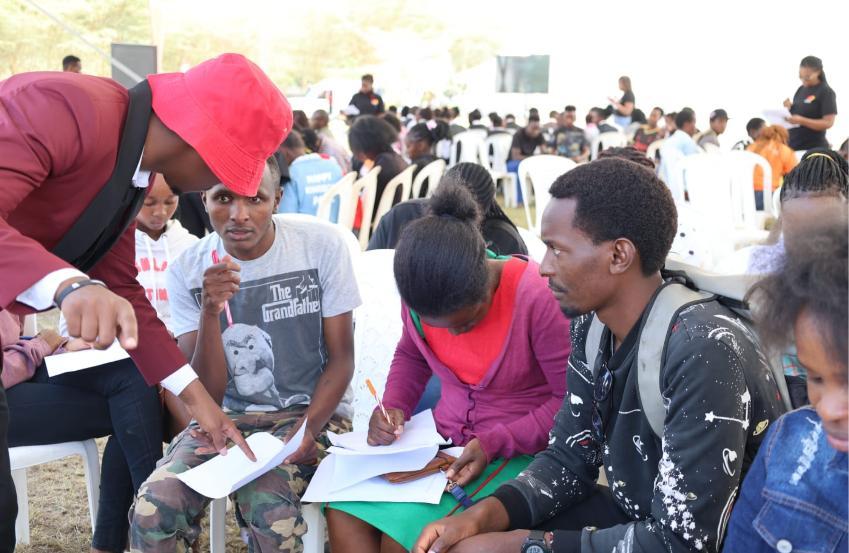
She spoke during a career clinic and industry fair in Naivasha, organised to educate youths on soft skills and digital career tools.
The programme is aimed at advancing young people from Naivasha and its environs to enable youth and marginalised groups to fully participate fully in the labour market, apprenticeships and entrepreneurship.
For instance, employers in Naivasha are actively seeking job-ready talent but face the same challenges, they said.
Naivasha is an economic powerhouse with concentrated employer demand yet, it faces a critical talent readiness gap.
The region hosts hundreds of flower farms, cold-chain logistics providers, transport companies, industrial plants, financial institutions, insurers, and telecom operators.
Despite this economic vibrancy, jobseekers in Naivasha and its environs face critical barriers: limited access to structured career guidance, low digital job-search skills, limited awareness of cross-sector opportunities and minimal direct engagement with employers.
This disconnect between economic opportunity and jobseeker preparedness is a key constraint on regional growth, according to experts.
“Through the GenKazi me in partnership with Mastercard Foundation, the initiative is designed to accelerate women’s and youth participation in workforce market and dignified economic opportunities in Naivasha and its environs,” Penina said.
She said BrighterMonday continues to work closely with employers to enhance candidate matching and job placements.
“We have already trained over 210,000 women, nonurban youth, persons with disabilities, displaced persons on soft skills. Additionally, we have created over 48,000 job placements for young people” she said.
The initiative demonstrates a scalable solution to Kenya’s youth unemployment crisis.
The model is replicable across Kenya’s key economic zones with the aim of transforming youth employment outcomes nationwide, towards national transformation towards dignified work and entrepreneurship.
The Generation Kazi programme, implemented by BrighterMonday Kenya, continues to drive gender-responsive workforce transformation, targeting 70 per cent women, 70 per cent non-urban youth, 10 per cent persons with disabilities and 10 per cent displaced persons.
This, is to ensure that those furthest from formal opportunity are positioned at the centre of labour market interventions.