NZAU MUSAU
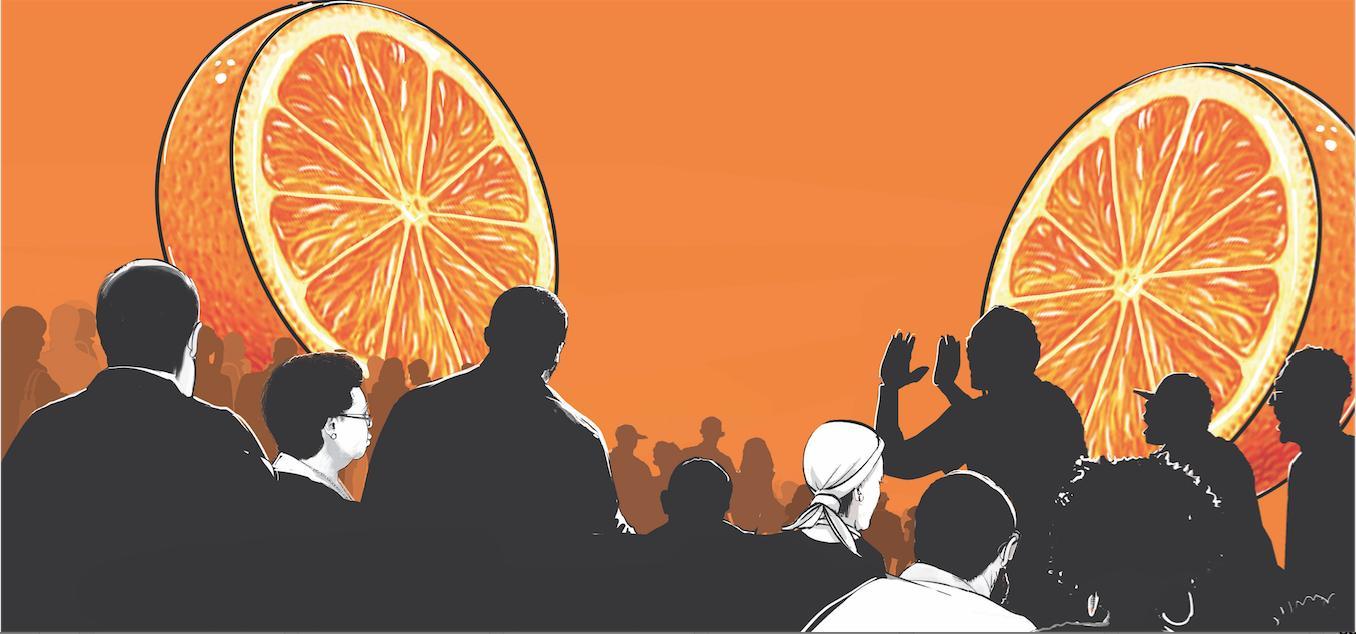
Africa-Press – Kenya. On November 26, 2005, the leaders of the “Orange Movement” hosted a rally at the historic Uhuru Park grounds to celebrate their resounding victory in the “Banana vs Oranges” constitutional referendum conducted a few days earlier.
Resplendent in bright orange colours, speaking in orange tongues after swallowing a humongous orange cake, they gave every indication that the victorious movement was much more than a referendum outfit.
And true to their promise, the Orange Democratic Movement (ODM) was born soon thereafter. The party went on to become a formidable political force that defined the country’s political terrain for the next two decades.
Over the 20-year period, I have either attended or observed virtually every important ODM gathering, including National Delegates Conferences (NDCs) and other important party conventions.
Like many of us, I have pitifully watched as the ODM shrank in shape, form and substance. From an effortlessly national political outfit, ODM regionalised its core support in select “bedrooms” or “bedrocks”.
His unparalleled charisma, experience and political foresight notwithstanding, the late party leader Raila Odinga never quite succeeded in stopping the haemorrhage. Unbridled ambition, mismanaged internal competition and “personalisation” of party affairs have been the bane of ODM’s full-blown success.
I was stationed in Mombasa when the first rupture of the nascent party took place in Khadija grounds, Kisauni. Kalonzo Musyoka, then a party luminary, landed into a political set-up where hammer-wielding party adherents shouted him down.
Humiliated and hurt, Kalonzo sliced a quarter of the Orange and left with it. This rupture heavily dented Raila’s prospects for the 2007 presidential race and set the stage for the events that ensued.
While the country paid a heavy price through the post-election violence, a moment to reform the country’s equally dented systems presented itself. Largely owing to the events of 2007, Kenya was born again in 2010.
In December of 2009, I attended an equally important ODM NDC in Bomas, which set the stage for further disintegration of ODM.
In the convention, Raila’s strategy of splitting up the deputy party leader post to accommodate ambitions of William Ruto and Musalia Mudavadi almost paid off, until Najib Balala’s ego was irredeemably bruised.
A party luminary at the time, Balala left Bomas empty-handed. He did not even clinch any of the vice chairman positions, which were divided and dished out to party strongholds.
Disgruntled, Balala slowly ebbed away from ODM, eventually forming the Republican Congress Party. The winners of the NDC – Ruto and Mudavadi – moved faster than him. Ruto initially cavorted with UDM and later settled on URP, while Mudavadi founded ANC.
I have observed many other NDCs, including the 2014 one when the ‘men-in-black’ experience happened. Rather than consolidate party unity, these meetings left the party more divided.
Perhaps as a result of this realisation, ODM conventions became few and far between. I personally do not remember when the last ODM NDC, which elected the former party leader, was held.
Still, I do not know of any surviving political party in Kenya that can hold a candle to ODM’s resilience, resurgence and record in national politics. ODM is simply the most consequential political party the country has witnessed in the last two decades.
The party boasts of tangible contributions to national development through its political ideas. The 2010 constitution and its core derivatives, devolution of power and of resources, were its unmistakable handiwork.
Despite suffering decremental fortunes, the party has remained sizable, attractive and influential enough to define important conversations and processes. With its founding leader now gone, ODM needs to take measured steps.
I never quite understood what the rush to identify a new party leader was all for. As if that was not enough, pressure is now being brought to bear on the new party leader to call an NDC before internal disputes are ironed out.
The very history of the party recounted above betrays this “wisdom”. This may as well be the NDC that will split the party right in the middle or bury it altogether. With a weakened or split ODM, the country will be all the poorer for it.
Musau, an advocate of the High Court, is a Senior Project Manager with the Friedrich Naumann Foundation and member, Media Complaints Commission. The views expressed here are his own
Source: The Star