What You Need to Know
Chinese Ambassador Guo Haiyan urged Kenyan businesses to leverage the new zero-tariff policy aimed at boosting trade and investment between China and Kenya. The policy, effective from May 1, is expected to enhance market access and promote industrial cooperation, with a focus on product quality and branding to meet Chinese market standards.
Africa-Press – Kenya. Chinese Ambassador to Kenya Guo Haiyan on Monday called on Kenyan enterprises to seize opportunities presented by China’s new zero-tariff policy for African countries.
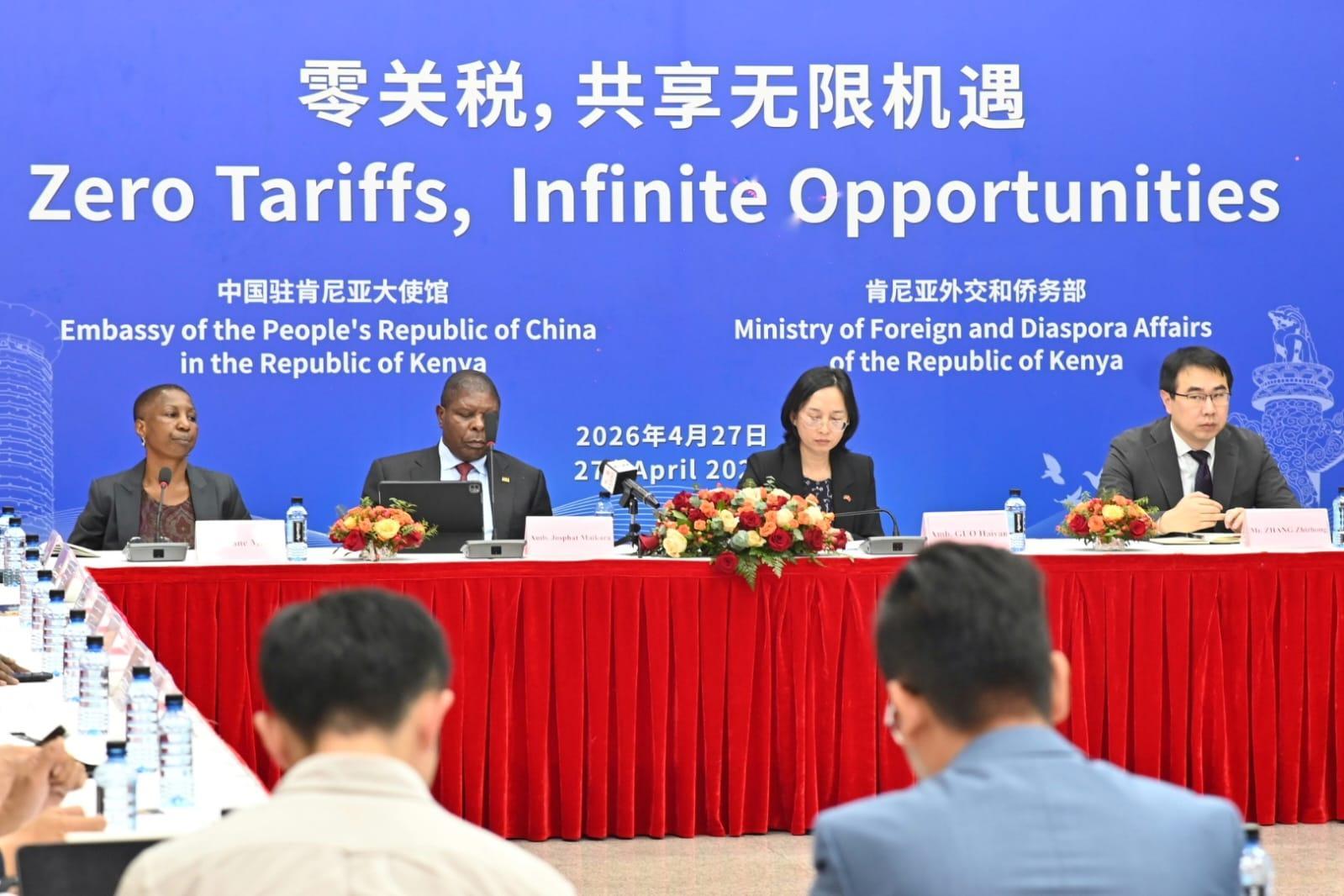
During a symposium with stakeholders in Nairobi, she urged faster market access procedures, stronger branding, and greater participation in major trade fairs. Ambassador Guo said the initiative represents a major step forward in China-Africa relations, extending beyond trade to investment and industrial cooperation.
“Zero-tariff policy is a big step in China-Africa relations. By implementing it, we are aiming at not only trade but also investment. It is important to support the industrialisation of African countries, Kenya included,” Guo told journalists after the meeting.
The ambassador outlined six priority areas to help Kenya maximise benefits from the policy. The new trade relief, announced by Chinese President Xi Jinping in his congratulatory message to the 39th African Union Summit, takes effect starting May 1.
Attendees follow proceedings at the symposium. /VICTOR IMBOTOShe stressed that completing market access procedures is the prerequisite and foundation, calling on Kenyan authorities to prioritise negotiations for competitive products with Chinese customs to move from “potentially exportable” to “actually exportable”.
She also urged Kenyan food enterprises to complete registration with China’s General Administration of Customs (GACC), noting that without registration, companies cannot export or enjoy preferential policies.
“We hope the Kenyan side will maintain close coordination with Chinese customs and enhance policy outreach for enterprises in Kenya,” she said.
Avocado Society of Kenya leader Muthomi Ernest speaks at the forum. /VICTOR IMBOTOThe envoy also emphasised the need for the industry players to pay attention to product quality, and standards were another key focus. Ambassador Guo urged importers to note that the Chinese market has high requirements for food safety and traceability. She encouraged Kenyan enterprises and industry associations to align with internationally accepted rules and Chinese standards.
“The Embassy is also willing to promote exchanges and cooperation between the standards departments of the two countries,” she added.
On supply capacity, the ambassador called for stronger industrial cooperation with Chinese firms to introduce advanced technology and management expertise. She said the players should aim at building a more stable and efficient supply chain to sustain the market demand. The envoy also welcomed Kenyan companies to make full use of platforms such as the China International Import Expo and the Canton Fair.
“We will support Kenyan associations to open offices in China,” she said.
Further, Ambassador Guo emphasised the importance of brand development.
“Branding is a key pillar for increasing product value and market recognition. Kenyan enterprises are encouraged to step up efforts in brand building and marketing, tell compelling ‘Kenya stories’, so that more Chinese consumers can learn about and appreciate Kenyan products.”
Chinese Ambassador to Kenya Guo Haiyan and Minister Counselor Zhang Zhizhong / VICTOR IMBOTOQuoting an East African proverb, which says, “a friend is someone you share your path with,” she said China and Kenya are not only true friends but also companions on the path to development.
“Let us take the implementation of the zero-tariff policy as a new starting point and join hands to use the ‘golden key’ of zero-tariff to unlock the door of common development.”
Foreign Affairs PS Korir Sing’oei, in a speech read on his behalf by Amb Josphat Maikara, urged China to work with Kenya on realising the goals of the tariff policy. He urged the removal of ‘impediments’ so that the two sides “get the full potential of the tariff policy”.
“This is a demonstration that Kenya is ready to move forward…zero tariff will not only facilitate bilateral trade but also would be an example for other countries to emulate,” the PS said.
Jane Makori, the Foreign Affairs ministry’s deputy director general in charge of Asia and Pacific Affairs, said Kenya had taken concrete steps to implement the agreement.
“We have gone a step further to negotiate, we will ensure the agreement is ratified in line with the World Trade Organisation.” Ambassador Guo reaffirmed China’s commitment to supporting Kenyan associations, improving financial services, and promoting technical cooperation.
The measures are all aimed at ensuring the policy benefits people on both sides. The symposium was attended by among others Kenya National Chamber of Commerce and Industry President Erick Rutto.
He said, “We are elated by the zero-tariff policy, since it positions us for better trade terms with the world’s second-largest economy.”
Rutto added, “This policy will make our products competitive in the Chinese market. We have opened an office in China and we have been able to enhance exports of tea, coffee, avocado, avocado oil, and leather products. We want to double or triple our trade.”
He urged the importers to take advantage of the policy, adding that the chamber would help facilitate its membership by training on the Chinese entry requirements.
Representatives of the Kenya Revenue Authority, Kenya Tea Board, Kenya Coffee Board, Horticultural Crops Directorate Authority, Kenya Flower Council, Kenya Tea Development Authority, Avocado Society of Kenya, Kenya Coffee Traders Association, and Trade Ministry attended the forum.
They vouched for a review of the phytosanitary requirements for exports to allow ease of entry into the Chinese market.
The relationship between China and Kenya has been growing steadily over the years, marked by increased trade and investment initiatives. The introduction of the zero-tariff policy is seen as a significant milestone in this partnership, aiming to facilitate smoother trade flows and strengthen economic ties. This policy reflects China’s commitment to supporting African nations in their industrialization efforts, particularly in sectors like agriculture and manufacturing, which are vital for Kenya’s economic development.