ABDI GULIYE
Africa-Press – Kenya. For months now, official reports have described the drought affecting Mandera and other arid counties as “alarming.” It is a convenient word. It suggests concern without responsibility.
But after recently visiting Mandera North and interacting directly with families across several locations, I can say this without fear of contradiction: What we are witnessing is no longer alarming. It is a full-blown humanitarian crisis.
The distinction matters because language shapes response. When institutions downgrade suffering with cautious terminology, urgency is lost. Mandera is not experiencing drought in isolation. Its reality is shaped by geography and geopolitics.
The county borders Somalia and Ethiopia, regions that have endured prolonged climatic shocks, insecurity and displacement. The spillover effects are real and relentless. Pastoral migration has intensified, pasture has vanished, water points have collapsed and communities are stretched far beyond their coping capacity.
During my recent visit to Mandera North, I was privileged to donate and accompany the distribution of food rations and basic household items to areas hardest hit by the drought. These were acts of necessity.
What stayed with me most, however, was not the logistics of relief but the faces of the people: exhausted mothers, malnourished children, elders who have watched livelihoods disappear season after season.
Yet the National Drought Management Authority continues to classify parts of Mandera under “alarm” phase. On paper, this suggests preparedness and monitoring. On the ground, it translates into delayed scaling of response, limited resource mobilisation and an overreliance on resilience language when what is needed is emergency intervention.
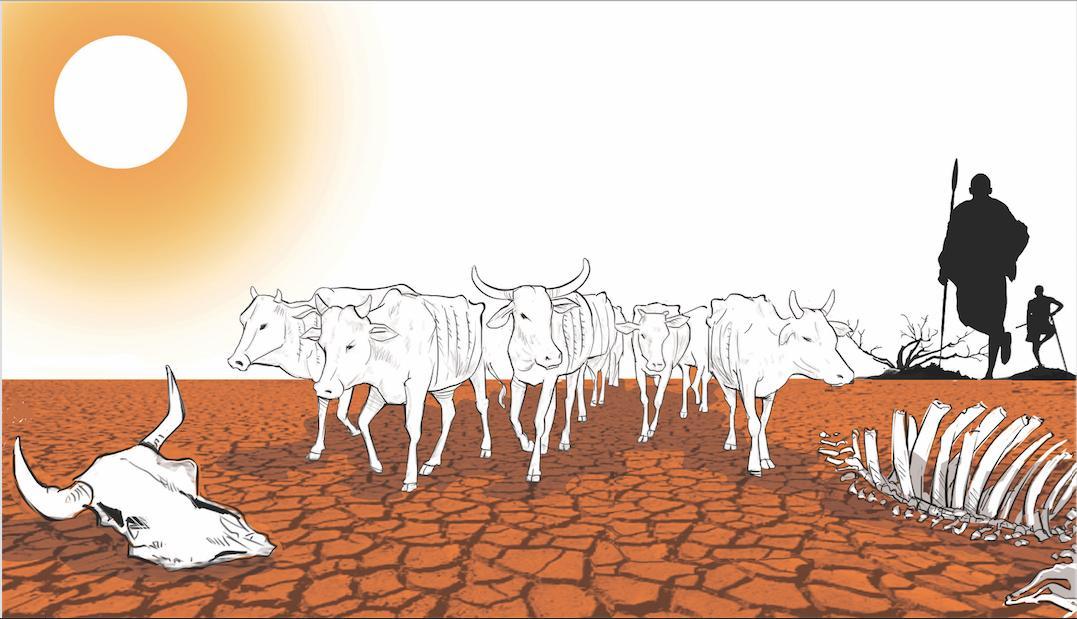
Mandera has endured repeated drought cycles, but the current situation is compounded by regional instability, shrinking humanitarian space and rising food prices. Livestock deaths are no longer sporadic. They are systemic. Water trucking has shifted from a temporary measure to a permanent crutch. Schools are affected as children migrate with families in search of pasture and assistance.
To describe this as merely “alarming” is to understate the collapse unfolding quietly. The NDMA must reassess its classification framework, not as a technical exercise but as a moral obligation and reassess its response.
Crisis-level designation is not an admission of failure; it is a call to action. It unlocks faster coordination, stronger inter-agency response and clearer accountability.
Drought response cannot be managed from Nairobi dashboards alone. It must be informed by presence, by listening, by walking the dry riverbeds and sitting with families who have nothing left to sell. Data is essential yes, but so is proximity.
Mandera North, like much of northern Kenya, asks for seriousness. It asks that institutions speak plainly and act decisively. Climatic shocks may be inevitable, but neglect is a choice.
If we continue to soften the language of suffering, we will also soften our response. And the cost of that hesitation will be paid by the most vulnerable.
The drought ravaging Mandera is not looming. It is here. The time for phrases has passed. What is needed now is honest classification, urgent action and sustained commitment.
The writer is an MP aspirant for Mandera North constituency in the 2027 election
Source: The Star