
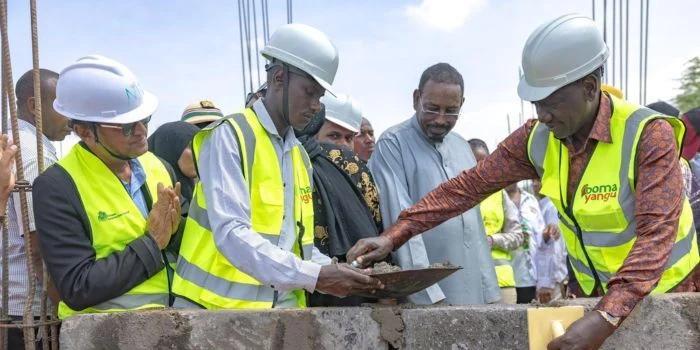
The Ethics and Anti-Corruption Commission (EACC) has launched a compliance monitoring exercise for the Affordable Housing Programme as part of efforts to strengthen transparency, accountability, and integrity in its implementation.
The exercise was officially launched at the Affordable Housing Board headquarters at Prism Towers and will focus on proactively identifying compliance gaps, assessing corruption risks, and recommending preventive measures during the rollout of the programme.
EACC’s Vincent Okongo announced during the launch that the new compliance monitoring for affordable housing will proactively spot corruption risks, strengthen integrity measures, and ensure more efficient delivery of the government’s flagship projects.
” The exercise is meant to proactively identify compliance gaps, assess risks, and put in place corruption preventive measures during the implementation of the programme,” he stated.
Okongo added that the monitoring process will involve reviewing existing procedures, assessing risk exposure, and proposing corrective measures to enhance compliance with relevant laws, policies, and best practices.
Affordable Housing Board Acting Chief Executive Officer Joseph Kagicha welcomed the initiative, describing it as a timely intervention that will help improve governance within the programme. He said the Board views prevention as a key pillar in safeguarding public resources and achieving programme objectives.
Kagicha assured the Commission of the Board’s full cooperation throughout the exercise and committed to implementing recommendations that will arise from the monitoring process.
Earlier on an Auditor-General’s report published in January 2026 raised questions over the accountability of billions of shillings allocated to the programme, citing instances where documentation to support expenditure was incomplete or unavailable. The report did not make findings of guilt but recommended further verification and strengthened financial controls.
Lawmakers in the National Assembly have spotlighted serious corruption risks in the affordable housing initiative, highlighting specific accusations that certain contractors bribed public officials to secure contracts or influence decisions. The revelations have already sparked internal reviews and formal investigations by relevant authorities.
Separately, civil society groups and affected communities raised issues related to land ownership, project siting, and evictions, alleging that some developments were initiated on contested land or led to displacement without adequate consultation or compensation.
Government officials and implementing agencies have consistently denied wrongdoing, stating that the programme has built-in safeguards, including standardised construction costs, centralised procurement frameworks, and oversight by multiple institutions.
They have maintained that the project is designed to minimise opportunities for corruption and have encouraged any individuals or institutions with evidence of malpractice to submit it to the Ethics and Anti-Corruption Commission for investigation. Oversight, audits, and compliance monitoring exercises are ongoing as part of efforts to address the concerns and strengthen accountability in the implementation of the Affordable Housing Programme.