
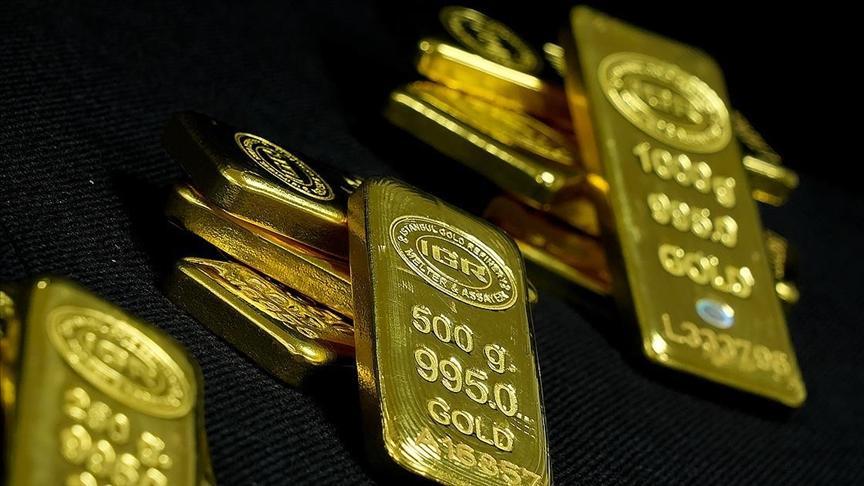
Africa-Press – Kenya. Gold and silver have surged to fresh record highs in recent weeks, extending a dramatic rally that began in 2025 and leaving analysts and investment banks struggling to keep up with a fast-moving market.
Gold surpassed $4,900 an ounce on Friday, hitting an all-time high of $4,967.48, up around 80% over the past 12 months.
lver’s rise has been even more striking – 225% over the past 12 months. After trading near $90 per ounce in mid-January – already well above the $78-$83 range seen in the first trading week of 2026 – prices pushed to a record high of $99.38 per ounce on Friday. As of 1100GMT Friday, silver was trading at $98.8.
With both metals now deeply in uncharted territory, market forecasts that once looked bold have been overtaken by reality. Gold ended 2025 near $4,400 per ounce and silver around $70 – levels that set the stage for an explosive start to 2026.
The rush into precious metals has been fueled by a volatile mix of tariff threats, geopolitical uncertainty, and the increasingly Fed-centered debate over interest rates. But analysts say what stands out most is the durability of demand, even as prices continue to rise.
“These levels are unprecedented. I think what’s amazing for gold and silver is that the level of selling back… in both metals has been very modest,” said Philip Newman, managing director of London-based independent precious metals consultancy Metals Focus.
That lack of profit-taking, he said, is part of what makes forecasting so difficult. Metals Focus expects gold to reach a high of $5,500 in 2026 and silver to hit a high of $100, Newman added.
Forecasts struggle to keep pace
Investors have been watching for guidance from major investment banks, but many forecasts for late 2026 have already been met or left behind.
JP Morgan said gold posted continuous gains in 2025 as trade concerns, reduced demand for the US dollar and increased central bank buying combined to create ideal conditions for the rally.
The bank forecasts an average gold price of $5,055 per ounce by the final quarter of 2026, rising toward $5,400 by the end of 2027.
Goldman Sachs, in December 2025, projected gold would rise to $4,900 per ounce by December 2026 – a target now being tested far earlier than expected. Morgan Stanley predicted in January that gold would hit $4,800 per ounce by the fourth quarter of this year, while Citigroup’s gold forecast stood at $5,000 for the first quarter of this year.
Joe Cavatoni, senior market strategist of the Americas at the World Gold Council, said the rally is being driven by forces that have strengthened over the past several years.
The structural drivers that have underpinned gold in recent years – geopolitical uncertainty, central bank diversification, and investor demand for portfolio hedging – are still firmly in place, he told Anadolu.
Cavatoni said silver’s outlook is less purely “safe haven” and more sensitive to the global economy.
“Silver’s outlook is more closely tied to the industrial cycle and energy-transition investment, alongside the same macro themes that benefit gold. Historically, silver tends to outperform in intense risk-on phases and underperform when risk aversion rises,” he explained.
Central bank demand, Fed expectations and geopolitical anxiety
Ewa Manthey, a commodities strategist at ING Bank, said gold and silver entered 2026 with momentum because multiple forces are hitting the market at the same time.
“Expectations for Fed rate cuts are central – once the market believes the easing cycle is locked in, real yields fall, the dollar softens, and precious metals typically see strong inflows. ETF demand is already picking up in anticipation,” she told Anadolu.
She said central banks have also played a crucial role in sustaining demand, offering a base of buying that does not depend on short-term market swings.
She added that supply dynamics are also strengthening the rally, especially in silver, where deficits have compounded over several years. Energy disruptions, Manthey said, have amplified inflation concerns and supply-chain risks – both of which historically support demand for precious metals.
Newman also pointed to an intensifying global political climate, including fresh fears about the direction of US policy.
Why silver is moving faster than gold
While gold’s rally has been powerful, it is silver that has become the standout performer, a move analysts attribute to tightening physical conditions and surging industrial consumption.
“Silver has tighter inventories, higher lease rates, and more acute supply constraints than gold,” Manthey said.
“That tightness makes silver more sensitive to demand shifts – and often more explosive when investors pile in.”
She noted that industrial demand remains central. Solar manufacturing, semiconductors, electronics and electric vehicles are major drivers of consumption, and those sectors have been expanding rapidly.
Manthey said the pause in planned US minerals tariffs has also reduced uncertainty for manufacturers, allowing procurement activity to normalize.
Looking ahead, she expects gold to keep rising, but at a slower pace.
China’s growing demand adds another layer
Recent reports suggest that China’s appetite for silver has also accelerated sharply, amplifying momentum in an already tight market.
Cavatoni said China remains influential across both metals, but its impact on silver is particularly pronounced because the market is smaller and more exposed to industrial cycles.
“On the silver side, increased buying likely reflects a combination of industrial demand, particularly linked to solar capacity and electronics manufacturing, and local investor interest in the broader precious-metals theme,” he said.
He cautioned, however, that gold’s demand story is broader and more globally diversified.
“In gold, Chinese household and official-sector demand sits within a globally diversified ecosystem, where gold serves as a reserve asset and a long-term store of value across regions,” Cavatoni said.
“So, while China’s silver purchases matter for that market, the broader strategic narrative in precious metals continues to center on gold’s role in portfolios and reserves worldwide,” he added.
With both metals continuing to set records, analysts say the rally is no longer just about short-term speculation. Instead, it reflects a global market recalibrating around a more fragile geopolitical order, a shifting monetary outlook and tightening physical supply – forces that may keep precious metals elevated well beyond 2026.