
What You Need to Know
The Kenyan government is advocating for the Kakamega gold mining project, valued at Sh680 billion, despite community petitions raising concerns. The project promises significant economic benefits for local communities and the county government, with a commitment to adhere to legal requirements and ensure public participation throughout the process.
Africa-Press – Kenya. The national government has moved to underscore the massive economic potential of the proposed gold mining project in Ikolomani, Kakamega County, even as growing community concerns threaten to stall its implementation.
The State Department for Mining Principal Secretary (PS) Harry Kimtai said the Isulu–Bushiangala gold project licensed to Shanta Gold Mining Company holds an estimated 1.2 million ounces of gold valued at approximately Sh680 billion, placing it among Kenya’s most significant extractive investments.
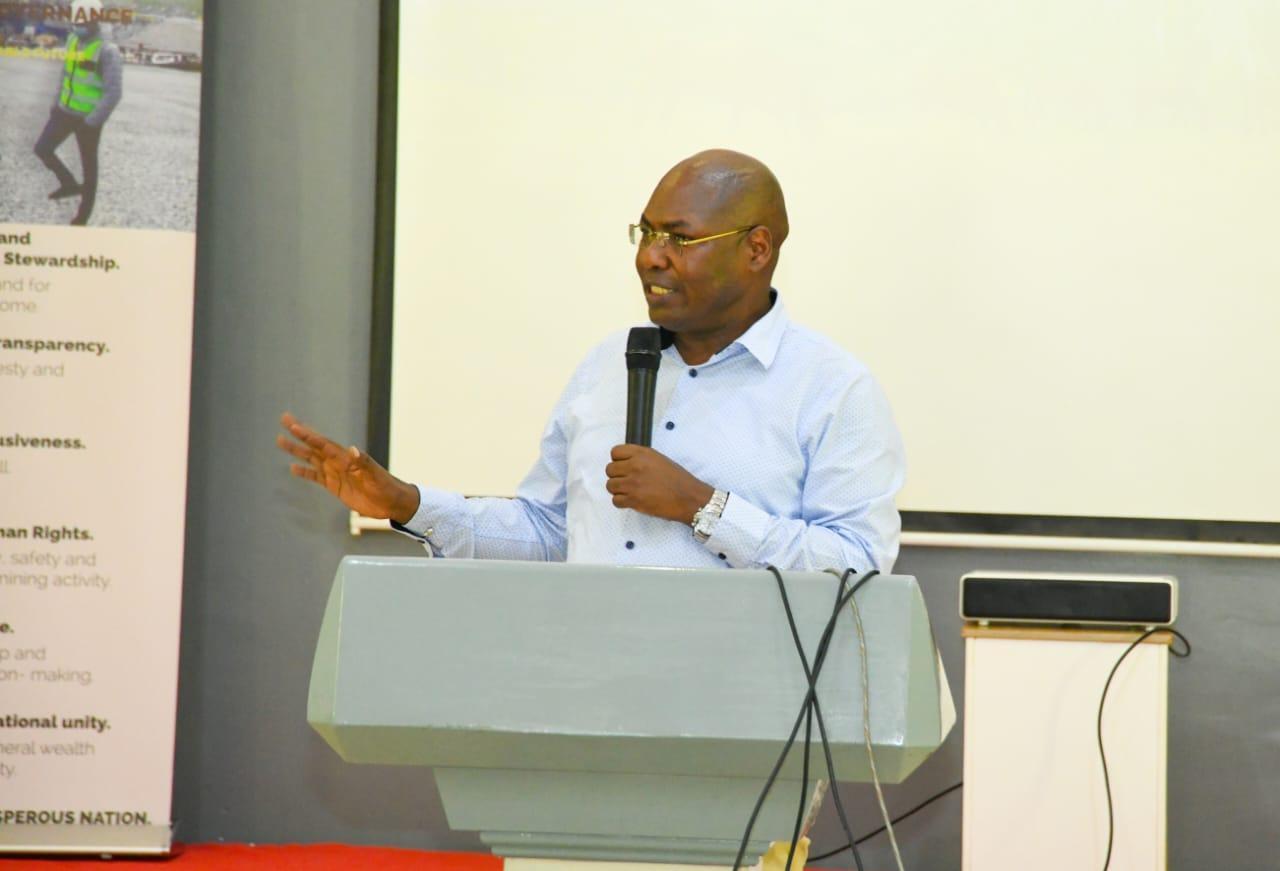
Speaking in Kisumu during an induction workshop for Members of the Kakamega County Assembly (MCAs), the PS emphasised that the project is of national scale, with the potential to transform both the local and national economies if implemented within the law.
“With an estimated 1.2 million ounces of gold valued at about Sh680 billion, this is not just any project. It is one of national importance, but also a local matter that directly affects the people of Kakamega,” he said.
The PS sought to allay fears by outlining the financial benefits structure under the Mining Act, 2016, noting that local communities and the county government stand to gain substantially.
He said the law provides for 10 per cent of royalties to go directly to the community, while 20 per cent is allocated to the county government.
Based on projected revenues, Kimtai disclosed that the local community is expected to receive about Sh2 billion over the project’s lifespan, while Kakamega County could earn about Sh4.1 billion. Additionally, one per cent of gross sales estimated at Sh6.8 billion will go directly to the community, separate from royalties.
He stressed that these funds would be disbursed directly by the State Department for Mining, eliminating delays previously experienced under the National Treasury system.
“The community bearing the greatest impact must also benefit directly. These funds will not pass through intermediaries. They will go straight to the people,” Kimtai said.
He maintained that no mining would commence without strict adherence to legal requirements, including consent of landowners and occupiers; full compensation before operations begin; mandatory public participation through a 42-day gazette notice period; and approved Environmental and Social Impact Assessments.
The PS added that the government would respect the outcome of the ongoing petition process, warning that mistrust and conflict could derail the project.
“We do not want to operate in an environment of suspicion. If there is no consensus, it becomes difficult to proceed,” he said.
Speaking during the same occasion, Kakamega County Assembly Speaker James Wanzala Namatsi confirmed that the House has already received two petitions from the public raising concerns over the mining activities in the Isulu, Bushiangala and Ikolomani areas.
The petitions, he said, touch on environmental risks, community rights and the broader socio-economic impact of the project, placing the Assembly at the centre of a sensitive and high-stakes process.
“These petitions raise critical issues. As an Assembly, we must address them with seriousness, professionalism and fidelity to the law,” he said.
Namatsi noted that the Assembly is constitutionally mandated to represent the interests of residents and ensure accountability, adding that the petition process is a key mechanism for public engagement.
He revealed that the House is considering holding sittings within affected communities to enhance public participation and ensure residents’ voices are heard directly.
The Speaker cautioned that mining projects often generate tension and must be handled carefully to balance development and community welfare.
“Mining, especially gold mining, can easily create conflict. We must approach this process with wisdom, fairness and integrity to ensure justice is not only done but seen to be done,” Namatsi said.
The induction workshop, organised by the County Assemblies Liaison Committee Secretariat (CLACS) in collaboration with the State Department for Mining, aims to equip MCAs with legal and procedural knowledge on handling petitions.
Gold mining has been a contentious issue in Kenya, particularly in regions like Kakamega, where local communities often express concerns over environmental impacts and socio-economic effects. The Kakamega gold project, licensed to Shanta Gold Mining Company, is seen as a potential economic boon, yet it faces scrutiny from residents who fear the implications of mining activities on their livelihoods and environment. The government’s approach aims to balance economic development with community welfare, emphasizing transparency and direct benefits to local populations.