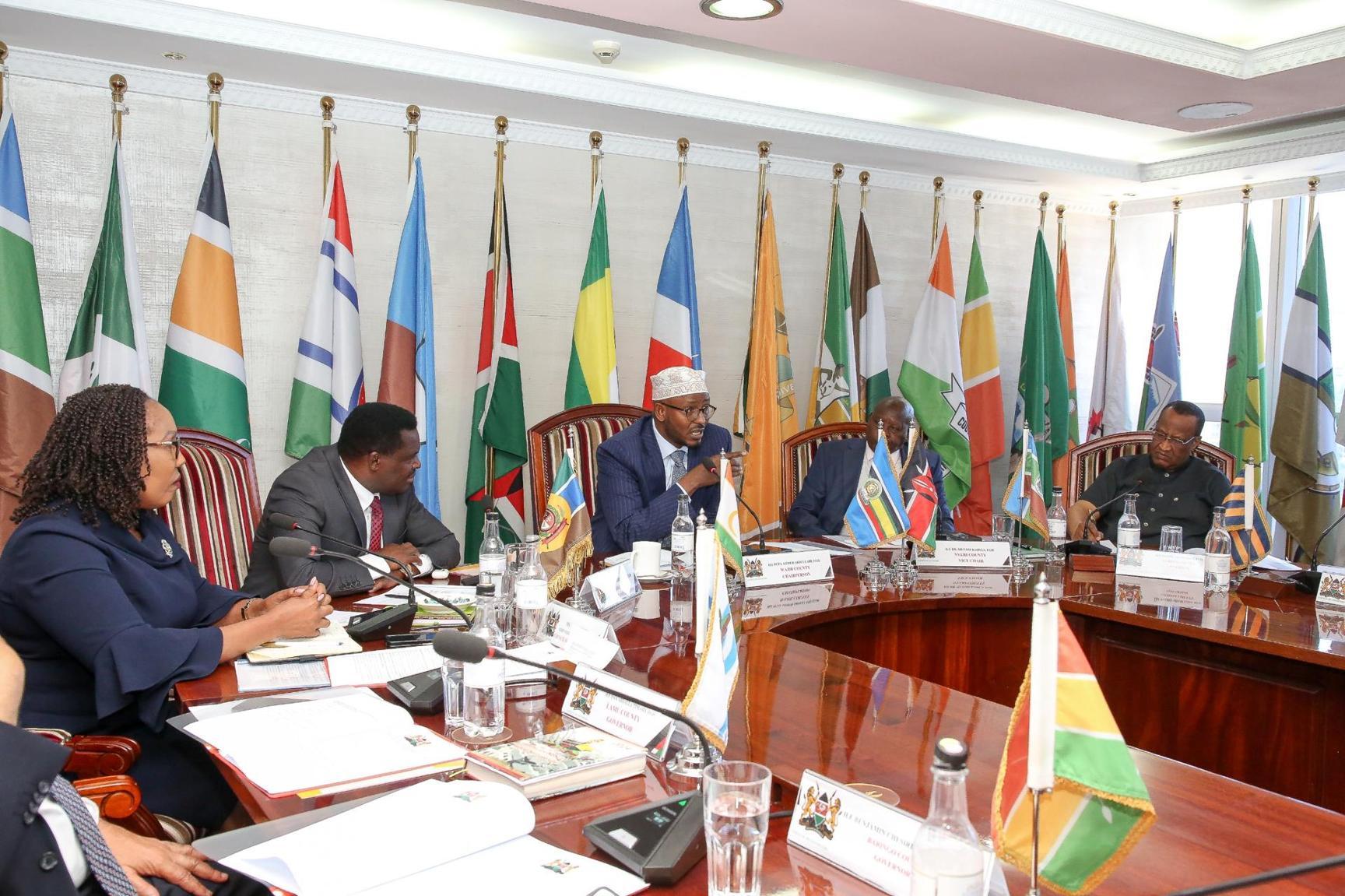
Africa-Press – Kenya. Governors have escalated their standoff with the Senate by formally identifying four senators they accuse of harassment and intimidation during oversight sessions. They made the move while reaffirming their boycott of the Senate County Public Accounts Committee (CPAC).
In a signed resolution submitted to the Senate Speaker, the Council of Governors (CoG) said the four legislators had been “consistently cited” in complaints over the conduct of CPAC proceedings, which county chiefs claim have been marked by political witch-hunts, extortion, and intimidation.
The Council is demanding the removal of the senators from the affected committees as a condition for restoring confidence and fairness in the oversight process.
At the same time, governors confirmed they would maintain their decision to suspend appearances before CPAC until their concerns are addressed. The resolution, signed by 41 county bosses, was submitted alongside a request for urgent high-level talks with Senate leadership to resolve the growing dispute.
“As requested in our earlier correspondence, we request an urgent engagement with the leadership of the Senate at the earliest opportunity,” CoG chairperson said in a letter to the Speaker.
“We reiterate our commitment to protecting and defending devolution and good governance as espoused in our Constitution.”
The standoff began on Monday after governors announced in a meeting in Mombasa that they would suspend appearances before CPAC and limit attendance before the County Public Investments and Special Funds Committee (CPIC) to once per audit cycle, citing harassment by some senators. Senators denied the allegations, insisting that accountability and appearances before committees are nonnegotiable.
They maintained that the oversight mandate is constitutional and cannot be curtailed. Speaker Kingi dismissed the governors’ attempt to suspend appearances before audit committees, warning that any move undermining scrutiny of county spending threatens accountability and devolution.
In a statement dated February 10, the Speaker said he had taken note “with grave concern” of governors’ allegations of political witch-hunts, harassment, extortion, and intimidation.
“The Senate wishes to reiterate that its oversight role over county governments is firmly anchored in the Constitution,” he said, citing Article 96, which gives the House authority to oversee national revenue allocated to counties.
He added that the Senate “represents the counties and serves to protect the interests of the counties and their governments,” noting that scrutiny of public funds is central to that role. Senate Majority Leader said governors’ appearance before Senate committees is a constitutional obligation.
“It’s not a privilege to be waived at will, particularly when there are serious accountability matters at stake across the country. We can discuss any matter as a going concern, never as a threat to non-appearance,” he said. Homa Bay Senator, who chairs CPAC, said the claims by CoG were false and diversionary.
“In their statement, they imply they will only appear before Senate oversight committees under their terms. They want to choose who sits in the committees, when they should appear, and how they should be questioned. I have never seen a case where suspects demand to empanel the bench,” he said.
“Kenyans are not foolish; they have seen the plunder in counties, and they can tell that governors are bullying the Senate to stop asking hard questions.” He further welcomed governors to submit any evidence they may have of extortion and harassment to the relevant institutions.
The CoG stressed that its action should not be interpreted as resistance to accountability, noting that it fully recognises the Senate’s constitutional mandate to oversee the use of national revenue allocated to counties.
Governors cited the 2022 Supreme Court ruling affirming the Senate’s authority to summon them to answer questions and provide information. They argued, however, that while the legal mandate is clear, some oversight sessions have fallen short of constitutional standards.
The resolution noted “persistent reports and experiences of extortion, political witch-hunt, intimidation, and harassment of governors during appearances before the watchdog committee.”
To resolve the impasse, the Council proposed a structured intergovernmental engagement forum between Senate leadership and governors to agree on new modalities for appearances.
Among the issues governors want addressed are clear, transparent, and respectful procedures for hearings, safeguards against what they describe as political persecution, and timelines that avoid repeated summons over the same audit matters.
“The Council of Governors reaffirms its unwavering commitment to accountability and prudent use of public resources,” the resolution states.
“However, oversight must be exercised lawfully, ethically and without abuse of office.”
Governors anchored their position on Articles 6(2), 174, and 189 of the Constitution, which establish the devolved system of government and require cooperation, consultation, and mutual respect between the national and county levels.
They argued that oversight should strengthen devolution and service delivery rather than create confrontational institutional relationships. Despite the hardline stance, the Council said it remained open to dialogue and institutional solutions.
By appending their signatures to the resolution, governors declared their “agreement, approval, and commitment” to the Council’s position and its call for urgent engagement.
“We remain committed to protecting and defending devolution and good governance,” the CoG chairperson said, adding that governors’ actions were guided by the need to uphold constitutionalism, integrity, and mutual institutional respect.