WYCLIFFE MUGA
Africa-Press – Kenya. If you read the business and economics pages of our local newspapers, you will often see mention of the names of certain manufacturers and service providers, being referenced as ‘valuable brands’.
For example, if you buy your child shoes from a certain famous Limuru-based manufacturer which has been around since the early years of independence, you can be confident that these shoes will last for at least a year or two.
Such is the value of their brand.
In contrast there are shoes to be found which are imported from somewhere in East Asia, which seem perfect when new, but will fall apart the first time your son plays football in the rain, without bothering to take off his ‘school shoes’. Those who have bought such shoes – often at the urging of their kids who find these shoes to be so ‘nice’ – never ever buy them a second time.
Well, whereas ‘branding’ is a top priority in most businesses, not much thought is given to it by our politicians. Very few manage to get identified with a specific idea or cause. Basically, they just hope to be seen as bringers of ‘development’ in the most mundane way possible.
But there are exceptions.
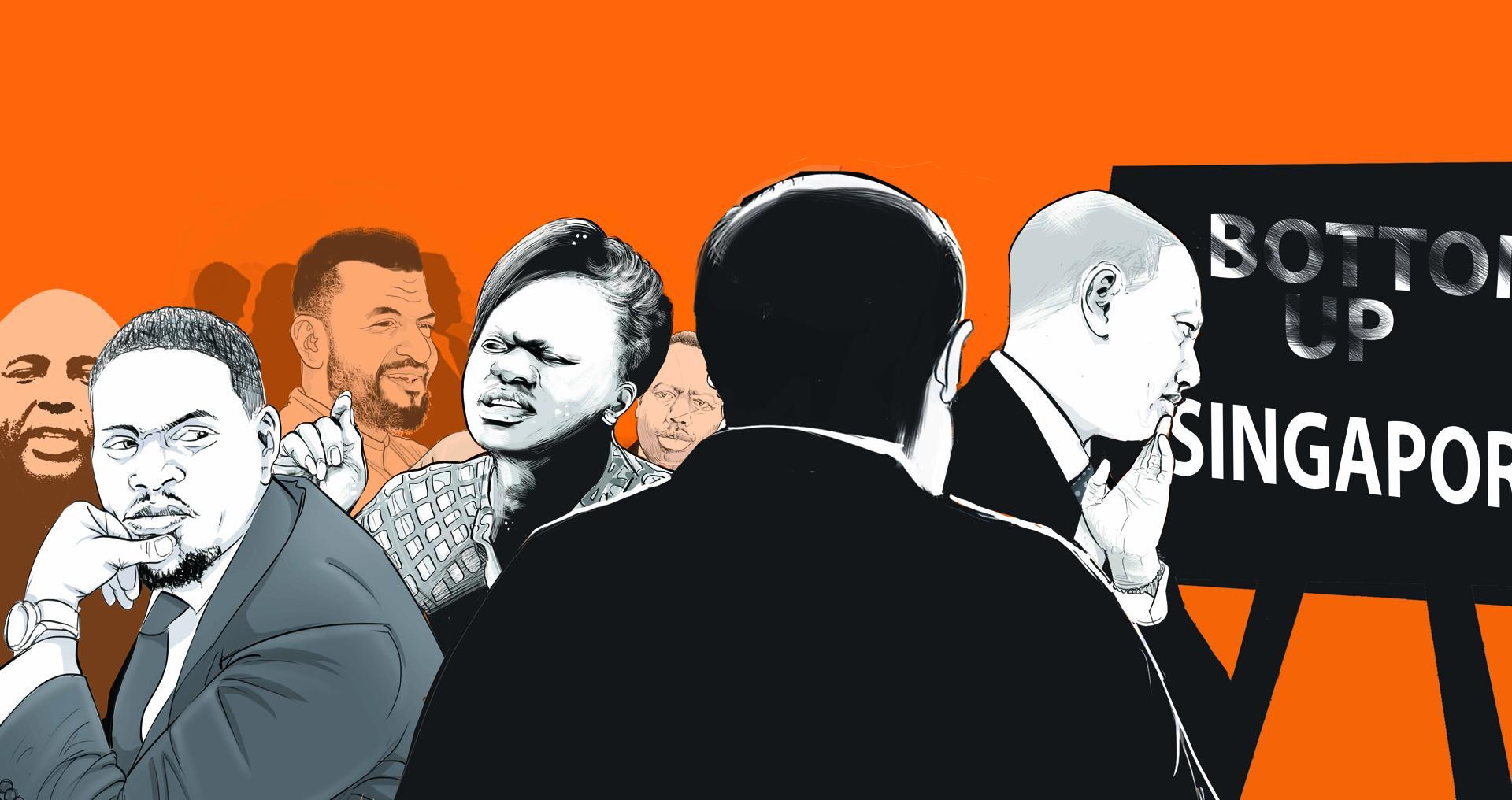
Many of those who voted for President William Ruto in the last election, genuinely believed that his continuous emphasis on ‘bottom-up’ economics, was a real programme for change. Kenyan technocratic elites and academics who knew very well that this was a meaningless slogan, were to be stunned when they eventually realised that this slogan actually resonated very deeply with the poor majority in the country. That the poor were thirsty for a promise that the day would soon come when they who were undoubtedly at the ‘bottom’ would miraculously find themselves ‘up’.
This simple idea was a masterstroke of political branding.
Something similar that I remember from many years ago, is a conversation I had at a wedding which was attended by a rather large number of lawyers. Among these lawyers – though not in the group I was chatting with – was a lawyer who was often in the news, and we non-lawyers were remarking on his brilliance.
To our great surprise, the lawyers present in our small group did not share this view. Without exception, they said that although in no way a mediocrity, this famous man could not by any stretch of the imagination be counted among the truly brilliant legal minds in Kenya.
Back then I thought that this dismissive view of a man so famous, was coloured by professional jealousy. But now that I know better the ways of the world, it is obvious that the real talent this famous lawyer had was for self-promotion through the media. For this is what had led to his being so highly regarded by us common folk. And thus was he was ‘branded’ a great legal mind, when – in the opinion of his peers – he was no such thing.
This brings me to the 2027 election – an event for which the campaigns have effectively begun in earnest.
I think most of the serving governors, in particular, have no real idea what political branding is. And though I am in no way an expert in this field, I do know poor branding when I see it.
In the case of governors, they are particularly vulnerable to the impacts of poor branding because they control large sums which local voters consider to be ‘our share of the national cake’.
Consider the example of corruption.
Once a governor somehow gets a reputation for being corrupt – even if this be a very unfair accusation – they will have a truly uphill task of seeking reelection.
If the governor sets out to build a big, new, elaborately equipped hospital, the residents will whisper that the construction of the hospital was but an effective mechanism for stealing large sums of public funds, through inflated invoicing. If roads are upgraded, it will soon be widely understood that a ‘cousin’ of the governor is a shareholder in the company which got most of those contracts.
And so on.
In other words, the ‘brand’ creates a lens through which we interpret everything that the governor says or does.
Source: The Star