Africa-Press – Kenya. Kenya has come under sharp scrutiny in Geneva over the government’s response to anti-tax protests, rising public debt and national budget priorities. It was put on the spot by the Committee on Economic, Social and Cultural Rights.
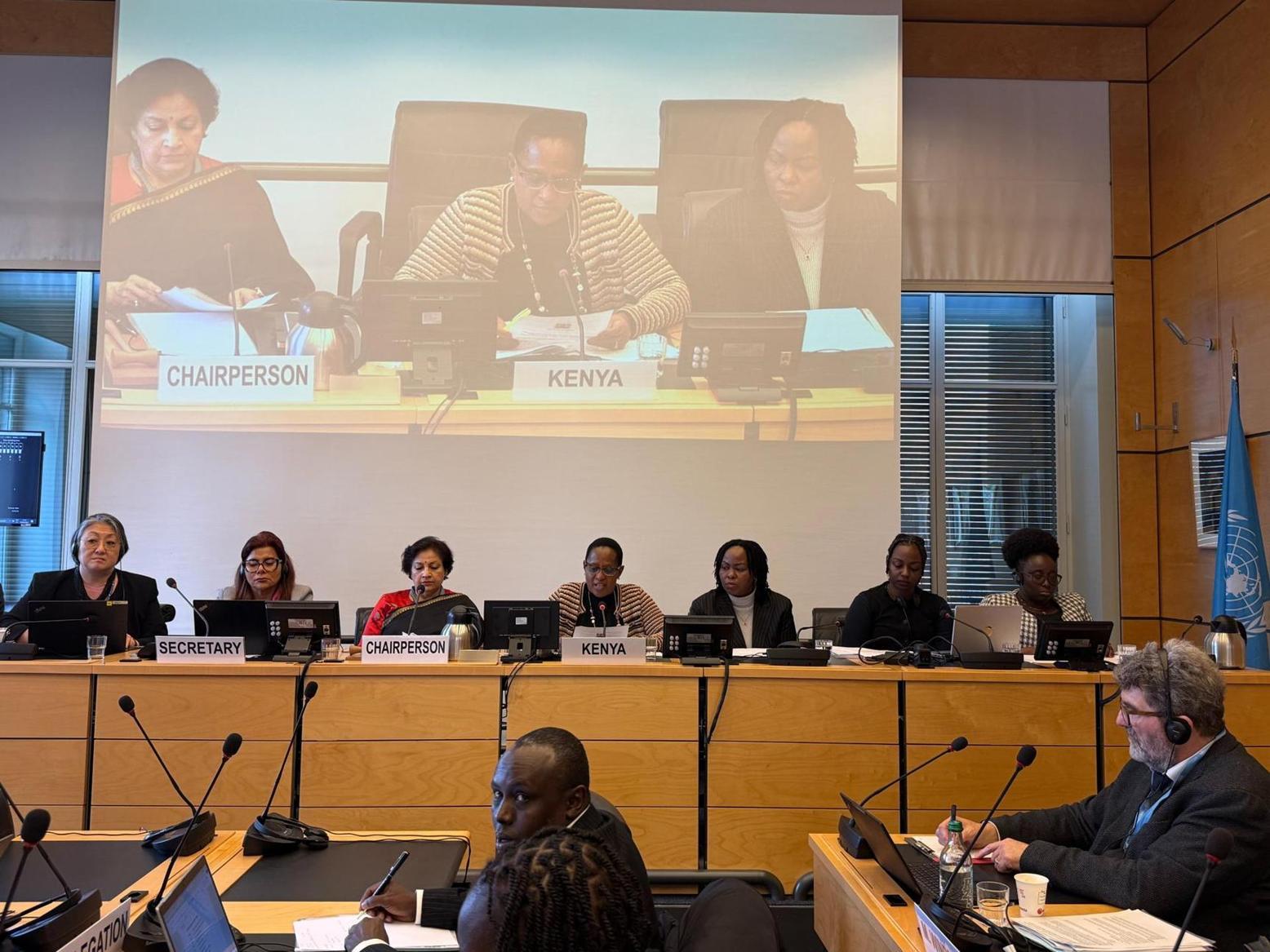
The review took place during the Committee’s seventy-ninth session, where Kenya’s compliance with the International Covenant on Economic, Social and Cultural Rights was evaluated.
In response, the Kenya delegation, led by Justice PS Judith Pareno, presented its sixth periodic report outlining progress in implementing economic, social and cultural rights.
While the committee acknowledged gains in social protection and legislative reforms, experts pressed the delegation over what they described as a regressive response to social protests in 2024 and 2025, triggered largely by contentious fiscal measures.
Committee expert Julieta Rossi said they had received “extremely worrying information” regarding the state’s response to demonstrations in June, July and August 2024, following the Finance Bill, as well as protests in June last year.
She cited reports of deaths, injuries, enforced disappearances, kidnappings, torture and arbitrary detentions, including against human rights defenders and journalists.
In this regard, Rossi sought clarification on what measures Kenya was taking to prevent illegal repression of social protest and to ensure accountability for alleged violations.
“What is the status of investigations, criminal proceedings initiated, sanctions imposed and reparations granted to victims?” she asked.
The committee linked the unrest to broader socioeconomic pressures, including austerity measures and tax reforms that had deepened hardship among vulnerable populations. Experts referenced national data indicating that nearly 40 per cent of Kenyans live in poverty, particularly in arid and semi-arid regions.
In response, the Kenyan delegation acknowledged the challenges posed by the protests, stating that while young people had a right to demonstrate, protests needed to remain peaceful.
“There has to be a balance between the protection of property and life, and the right to peaceful protest,” the delegation said, adding that deaths during protests were “regretful”.
Officials said both civilians and police officers had been prosecuted for violating rights and pointed to oversight mechanisms, such as the Independent Policing Oversight Authority. Kenya’s high public debt levels also featured prominently in the discussions.
Committee expert Michael Windfuhr said Kenya was among the most-indebted countries, and questioned how the government reconciled increasing revenue collection with lowering certain taxes.
“Kenya is trying to increase revenue collection, but is also lowering taxes, so how does this work?” he asked.
He further inquired about the national policy on debt restructuring and whether debt repayments were undermining the realisation of economic and social rights.
The committee expressed concern that austerity measures and regressive tax policies, including increased VAT and reduced exemptions on essential goods, had adverse effects on low-income families.
Experts asked whether the government had conducted human rights impact assessments before implementing tax reforms and whether regressive measures would be reviewed.
Kenya’s delegation said the debt-to-gross domestic product ratio had been increasing but emphasised that measures were being taken to broaden the tax base and improve revenue collection. Tax relief measures, they said, targeted lower-income groups.
“The debt repayment problem is a work in progress. So far, the State has not defaulted, meaning the repayment process is working,” the delegation said.
Beyond debt, the Committee scrutinised Kenya’s budget allocations in key sectors such as health, education, housing, water and sanitation, and social protection.
Experts asked whether public spending decisions reflected actual needs on the ground and whether allocations were sufficient to guarantee the progressive realisation of Covenant rights. Kenya highlighted that education spending had risen to more than 16 per cent of the national budget in the 2025-26 financial year.
The delegation also pointed to expanded social protection programmes, including cash transfers for older persons, persons with disabilities and vulnerable households under the Social Protection Act 2025.
In health, the government cited reforms under new legislation enacted in 2023, including the contentious Social Health Insurance Act and the Primary Health Care Act, aimed at consolidating fragmented schemes and strengthening equity.
However, committee members questioned chronic underfunding, infrastructure gaps and shortages of health personnel, as well as the sustainability of programmes reliant on donor funding.
The committee also linked fiscal pressures to broader inequality concerns. Citing external data, a committee member noted that the wealth of the richest 125 individuals in Kenya exceeded that of three-quarters of the population, raising questions about progressive taxation and redistribution.
Experts further asked whether Kenya planned to ratify the Optional Protocol to the Covenant, and whether a formal mechanism existed within government to systematically implement treaty body recommendations.
In closing remarks, Rossi acknowledged progress in areas such as social protection but said structural issues — including high public debt, fiscal policy choices and the handling of protests — required urgent attention.
The committee is expected to issue its concluding observations in the coming weeks, outlining recommendations that could shape Kenya’s fiscal, social and governance reforms.