
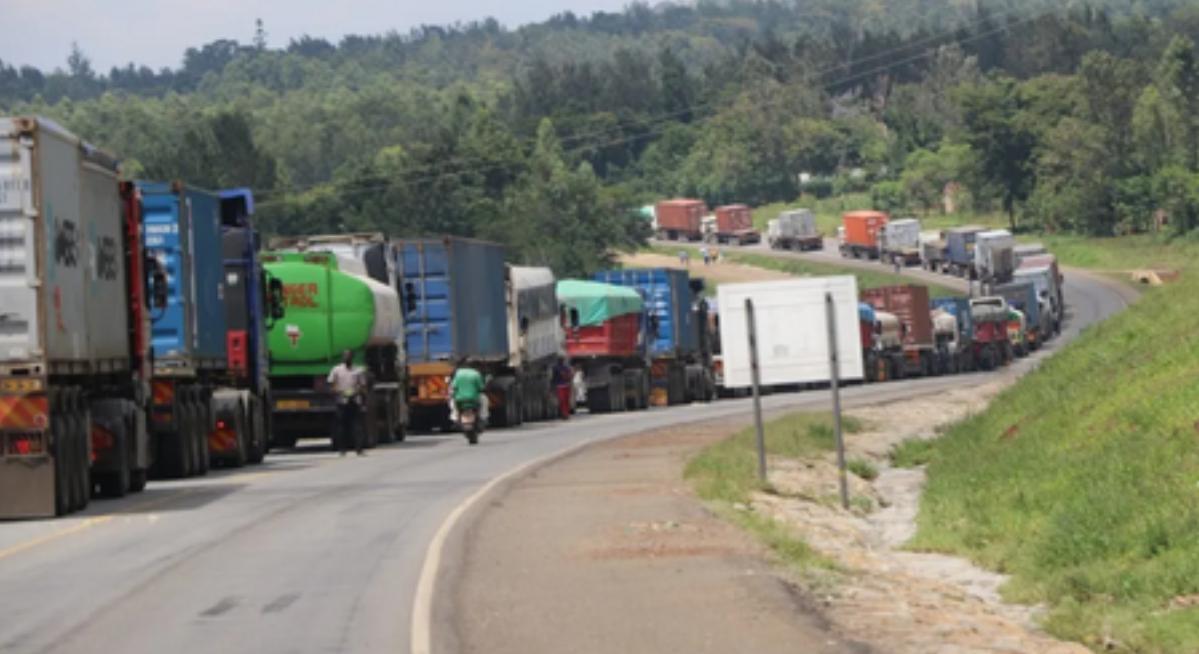
Africa-Press – Kenya. KENYA loses between five to eight per cent of high-value transit cargo annually, the State Department of East African Community now says, as Tanzania remains the main competitor.
This is on inefficiencies along the Northern Corridor mainly non-tariff barriers, which are driving cargo diversion to Dar es Salaam.
The Northern Corridor which runs between Mombasa (Kenya), Uganda, South Sudan, Rwanda, Burundi and Eastern DRC remains the vital lifeline of regional trade, handling over 35.84 million metric tonnes of cargo annually and accounting for more than 80 per cent of Kenya’s transit trade.
While the 1,700 kilometre-long corridor is the most preferred for transit goods by traders, it has continued to face increasing competition from the Central Corridor.
This is the 1,300 kilometre-long Central Corridor that serves Tanzania, Rwanda, Burundi, Uganda and Eastern D.R. Congo, with an exit and entry point at the port of Dar es Salaam.
“Kenya is fast losing her competitive and comparative advantage in the East Africa Community. We can’t continue to sit pretty,” Kenya’s East African Community Affairs Principal Secretary, Caroline Karugu, said.
She spoke yesterday during a sensitisation forum on the elimination of non-tariff barriers (NTBs) for Kenya’s biggest market, where major reforms were announced.
Citing critical findings from a December 2025 monitoring exercise, the State Department unveiled a strategic roadmap to eliminate persistent NTBs that currently undermine Kenya’s regional competitiveness.
Data shows the Malaba One Stop Border Post processes approximately 2,000 trucks daily with Busia processing at least 1,500 trucks on a single day.
“Beyond the statistics, they represent jobs, revenue and Kenya’s standing as the premier gateway to East Africa,” the PS reiterated, “Every delay and inefficiency directly impacts our national revenue and the cost of goods for consumers across the region.”
Despite regional frameworks, a December 2025 evaluation revealed that NTBs remain deeply entrenched.
For instance, there are currently 22 to 27 active police roadblocks along the corridor, significantly exceeding the regional target of fewer than five.
The Mombasa-Malaba transit time now averages 76 to 80 hours, nearly double the target of 36 to 48 hours.
There are also security concerns where resourcing of the Northern Corridor Transit Patrol Unit (NCTPU) has contributed to a four to six hours lag in response times to security alerts.
The corridor also faces ICT failures where system downtime occurring two to eight times per month has led to data transmission delays of up to one week, resulting in significant penalties.
To restore the corridor’s efficiency, the State Department for EAC Affairs, in coordination with agencies including Kenya Revenue Authority, Kenya Ports Authority and the National Police Service, has committed to reduce police roadblocks to less than five gazette stops.
The Regional Electronic Cargo Tracking System (RECTS) response will be reduced to less than one hour from the current four to six hour lag.
RECTS is a digital surveillance system used by Kenya, Uganda, Rwanda DRC to monitor transit cargo in real-time from ports to final destinations, reducing tax fraud and cargo tampering.
Meanwhile, Kenya also plans to reduce transit time to between 36–48 hours.
Reducing transit delays by 50 per cent is estimated to save transporters between $288 (Sh37,172) and $360 (Sh46,465 ) per trip.
Nationally, the elimination of delay-related NTBs could result in annual savings of $43 million (Sh5.6 billion) to $54 million (Sh6.9 billion).
“The State Department will not allow this initiative to become another talk shop. A clear action matrix with specific deliverables and timelines has been established. The Department will be convening follow-up meetings regularly to review the progress of all responsible agencies,” Karugu said.