
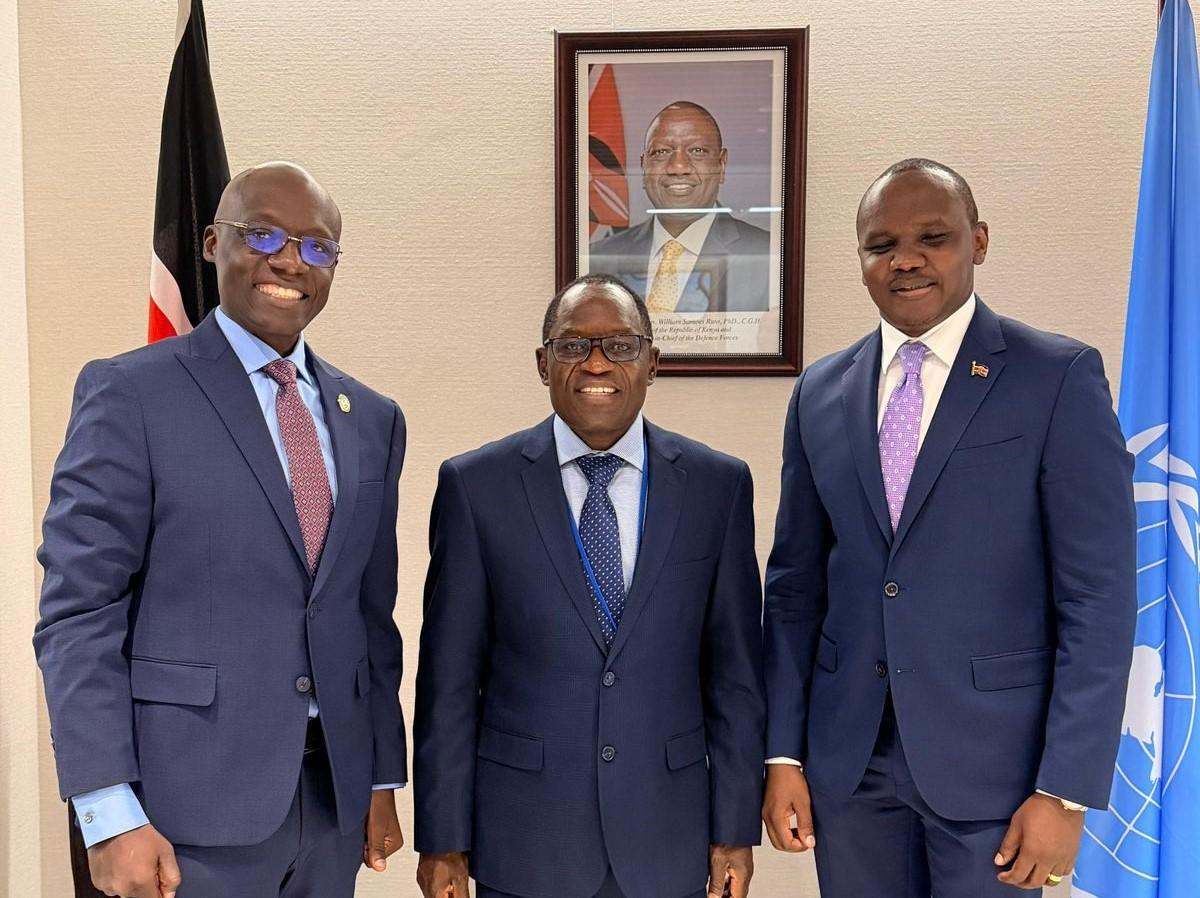
Africa-Press – Kenya. Kenya has committed to building a people-centred and inclusive information society, underscoring the importance of affordable, secure and meaningful connectivity as a driver of education, healthcare, civic participation and economic growth.
The commitment was made during the World Summit on the Information Society (WSIS+20) High-Level Meeting held from December 16 to 17, 2025, in New York, United States.
The meeting brought together Member States, United Nations leadership and a broad range of stakeholders to assess two decades of progress under the WSIS framework and to agree on priorities for advancing global digital cooperation in the years ahead.
At the forum, countries committed to accelerating action to address the persistent digital divide, particularly between developed and developing nations, and between urban and rural communities.
The outcome of the meeting emphasised the need for increased investment in digital infrastructure, stronger digital skills development and the responsible governance of emerging technologies, including artificial intelligence and data ecosystems, in line with human rights, trust and inclusivity.
In a statement delivered during the High-Level Meeting of the United Nations General Assembly, Cabinet Secretary for Information, Communications and the Digital Economy William Kabogo said Kenya had embarked on aggressive efforts to bridge the digital divide.
He noted that the government is expanding broadband and mobile connectivity to the remotest parts of the country while rolling out ICT hubs nationwide to stimulate socio-economic development.
“Our Universal Service Fund has bridged urban-rural divides, ensuring access to mobile network services for unserved and underserved populations,” Kabogo said in a statement delivered on his behalf by Stephen Isaboke, Principal Secretary in the State Department for Broadcasting and Telecommunications.
“We are now extending this mission through digital hubs in every lowest administrative unit — 1,450 of them — connecting public offices to broadband and catalysing growth in education, justice and agriculture.”
The Cabinet Secretary added that Kenya continues to prioritise digital skills development and gender equality, with targeted programmes aimed at empowering women and girls in science, technology, engineering and mathematics (STEM).
He said these initiatives are enabling thousands of young people to access economic opportunities online and participate meaningfully in the digital economy.
Kenya played a central role in the WSIS+20 process as a co-facilitator alongside Albania.
Kabogo said the country helped steer critical discussions on artificial intelligence capacity building, digital public infrastructure and cybersecurity frameworks designed to protect children and vulnerable users from online harm.
“Kenya leads with pride in ICT development. As co-facilitator of this review alongside Albania, we have guided global dialogue on AI, digital public infrastructure and cybersecurity frameworks.