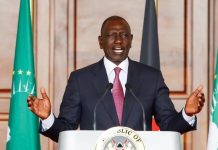
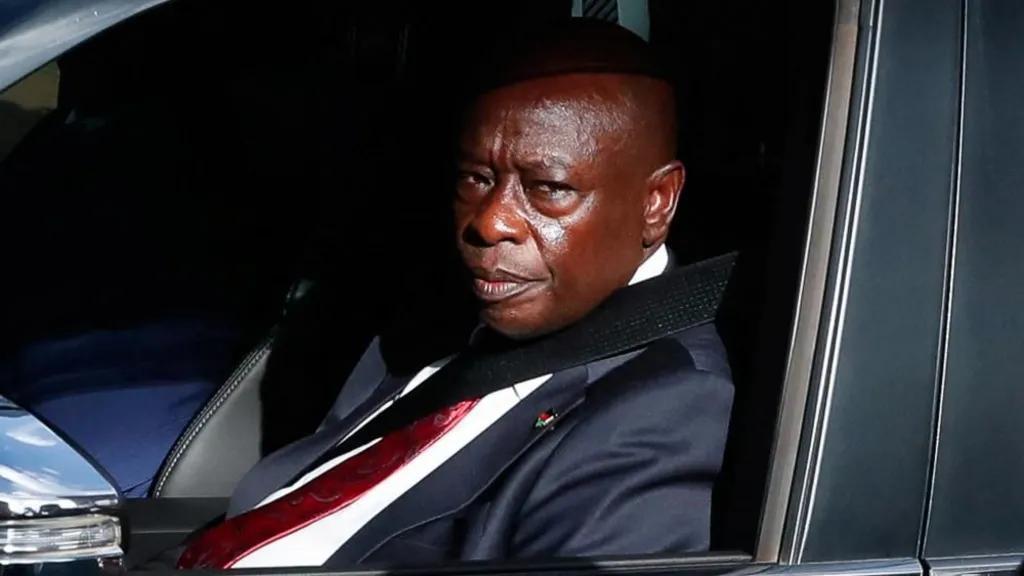
Africa-Press – Kenya. A Kenyan court upheld the decision to remove former Deputy President Rigathi Gachagua, which was carried out in 2024, and barred him from holding any public office.
Three judges in the Supreme Court rejected Gachagua’s claims, including his assertion that the removal process was politically biased against him. However, the court found that the Senate violated Gachagua’s rights by not adjourning the session after he fell ill during the proceedings.
The court stated that this does not invalidate the removal decision, but it awarded him compensation of 50 million shillings (386,000 USD; 290,000 GBP). Gachagua has become a vocal critic of President William Ruto. This ruling undermines his ambition to run for the presidency, as the removal prevents him from holding any public office. Gachagua was not present in court when the 350-page ruling was issued, but his legal team pledged to appeal.
His sudden removal from office followed a dispute with Ruto. A significant majority of lawmakers voted in favor of his removal, accusing him of corruption, inciting ethnic tensions, and undermining the government.
Gachagua challenged the removal decision, asserting that the charges were “baseless” and politically motivated, and that he was denied a fair trial. In addition to upholding Gachagua’s removal, the court on Monday approved the appointment of Kithure Kindiki as his successor.
Since his removal, Gachagua has launched a vigorous campaign against the government and has gained widespread popularity in his stronghold in Mount Kenya. Before the ruling, he urged his supporters to remain calm, adding that he was prepared for any outcome, but hoped for “justice for Rigathi Gachagua and millions of his supporters across the country.” He asked his supporters to wait until next year “to express their anger at the ballot box.”
Ruto and Gachagua were elected together in the 2022 elections, and this alliance helped Ruto win by rallying support in Mount Kenya, the stronghold of the Kikuyu people, who represent the largest voting bloc in Kenya.
Gachagua’s trial came months after massive anti-government protests swept across Kenya, where demonstrators breached security measures and set part of the parliament building on fire. Dozens of protesters were killed in a crackdown by security forces.
The protests followed unpopular tax increases that forced the government to backtrack. However, public discontent continued, with demonstrations held last month in protest of rising fuel prices.