Faridah N Kulumba
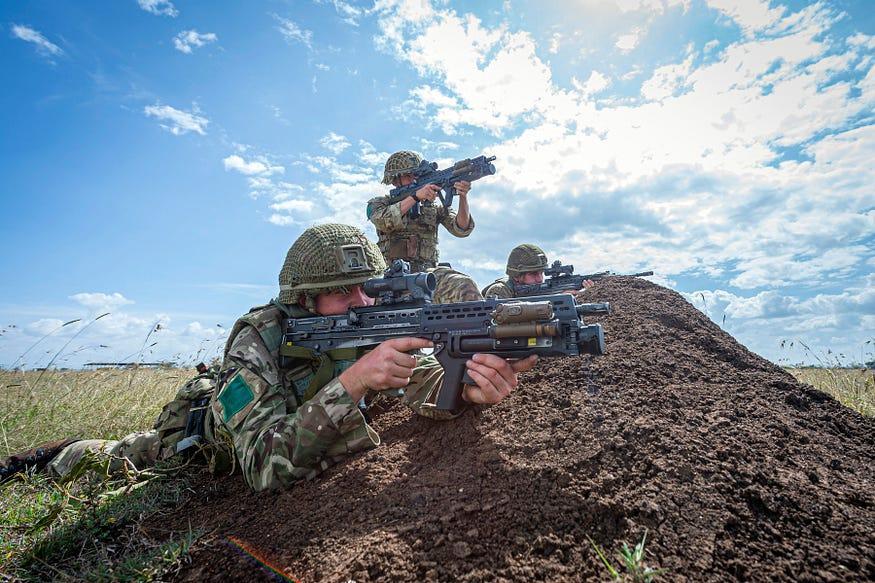
Africa-Press – Kenya. The Kenyan parliament set in motion an inquiry into alleged human rights violations and ethical breaches by a British forces training unit that has been active for decades in the East African country.
This followed some Kenyans raising concerns about the way British forces treat local residents and the environment in arid, bandit-plagued areas north of Mt. Kenya where they conduct training.
The inquiry is intended to examine the activities of the British Army Training Unit Kenya (Batuk), whose soldiers have been accused of murder, sexual abuse, and damaging land close to its base in Nanyuki, about 125 miles (200km) north of the capital, Nairobi.
According to Kelvin Kubai, a Kenyan lawyer, the inquiry is a “significant” move. Due to the fact that this is the first time that British army activities are being reviewed in this manner since the country gained independence from the UK in 1963.
There are about 200 British military personnel permanently based in Kenya. Most of them currently are training more than 1,000 Kenyan soldiers a year before their deployment to neighboring Somalia to combat al-Qaida’s longtime East Africa affiliate, al-Shabab.
Kenya and the UK have enjoyed long-standing historical bilateral relations, and the government has continued to receive support from the UK over the years in various sections that are most critical.
In 2021 Britain and Kenya signed a five-year defense cooperation agreement that built on the existing one providing a basis for the exchange of military personnel for defense activity, allowing for enhanced training opportunities and increasing collaboration in peace support.
Investigations procedure
The inquiries are due to begin this month and will start with Kenya’s parliamentary defense committee, calling upon the public to submit petitions of any alleged crimes or wrongdoings by the army. After the submission of the petitions then the investigations will begin in October 2023.
The committee will then call on Batuk to respond to the claims and is expected to submit a report of its findings to parliament by the end of this year.
The report will include recommendations that could have consequences for a defense deal between Kenya and the UK, which allows British troops to train in Kenya.
The Kenyan parliamentary defense committee chairperson Nelson Koech enlighted that the inquiries will have serious consequences for the defense cooperation agreement signed between the two nations if they discover that there’s been a lot of activity that spits in the face of [the treaty], because this will lead the committee to re-look at the agreement and may exit it.
Among the claims to be reopened in the investigations is the 2012 murder of Agnes Wanjiru, a 21-year-old mother who was last seen with British troops at a hotel near the barracks, then after her body was found in a septic tank at a nearby lodge with stab wounds.
A 2019 inquest in Kenya concluded that British soldiers were responsible for her murder and ordered further investigations but until today no one has ever been charged.
Other claims to be examined include unexploded bombs left by the British army on land accessible to the public as well as reports that dangerous chemicals being used during drills are putting lives at risk. Allegations of sexual abuse will also be examined. The army has been dogged by abuse claims for years and recent local media reports say cases persist.
In 2021, an advocacy group and other Kenyans petitioned the court alleging that a British army training exercise caused a devastating fire at a wildlife conservancy. More than 10,000 acres (15 square miles) were destroyed.
UK’s reaction
The British High Commission in Nairobi and the training mission promised that they intend to cooperate fully with the inquiry.
Also, British army spokesperson issued a statement saying that all allegations made against UK service personnel are taken seriously, and they are investigated swiftly by the service authorities or the host nation authorities with appropriate support from the armed forces.
The statement added that the British army uses white phosphorus illuminant rounds on training exercises in the UK and overseas, but they are never used as a weapon. They are not considered to be hazardous to health and safety, provided that the existing safety precautions are followed.
In Kenya, the British army only fires white phosphorus in Archer’s Post training area, which is a Kenyan Ministry of Defence gazetted training area and not communal land.
A UK government spokesperson said Wanjiru’s case “is a priority for the UK government, and we fully appreciate the seriousness and importance of justice for Agnes Wanjiru”, adding: “The jurisdiction for this investigation lies with the Kenyan police service, and the UK government is working closely with the government of Kenya to accelerate progress.”
The British government invests more than £6.5 million (1.2 billion Kenyan shillings) every year into the partnership and provides anti-terrorism training support. It estimates that Batuk’s presence has contributed 5.8bn shillings to the local economy since 2016.
Treaty ratification
In July 2021 Kenya and the UK renewed the defense cooperation agreement, but it was ratified in April this year due to a wave of objections from communities who live near the army base and by resurgent anger over Wanjiru’s case after the publication of a reported confession to her murder by a British soldier.
Kenyan and UK authorities have faced criticism for laxity and neglect in the handling of her case, and the British army has been accused of “cover-ups.”
When ratifying the defense deal, Nairobi members of parliament (MPs) expressed “reservations” about the treaty’s failure to list murder as a crime British soldiers can be tried for in Kenya.
Some Kenyan officials also called upon the lawmakers to look into Kenyans’ grievances before the defense deal was ratified.
In September 2021, after the Kenya and UK had signed the joint defense treaty the then British High Commissioner to Kenya Jane Marriot, assured that, the UK is stepping up work with Kenya, Somalia, and neighbouring countries and international partners, to help the region reduce the immediate threat, bring about the group’s longer-term weakening and support conditions conducive to lasting solutions.
She added that building trust between national and county governments and local communities is a key strand of this work.
For More News And Analysis About Kenya Follow Africa-Press