
Africa-Press – Kenya. President William Ruto’s declaration that Kenya can rise from a developing nation to a First World economy by 2055 has ignited national debate, curiosity and, in some quarters, scepticism.
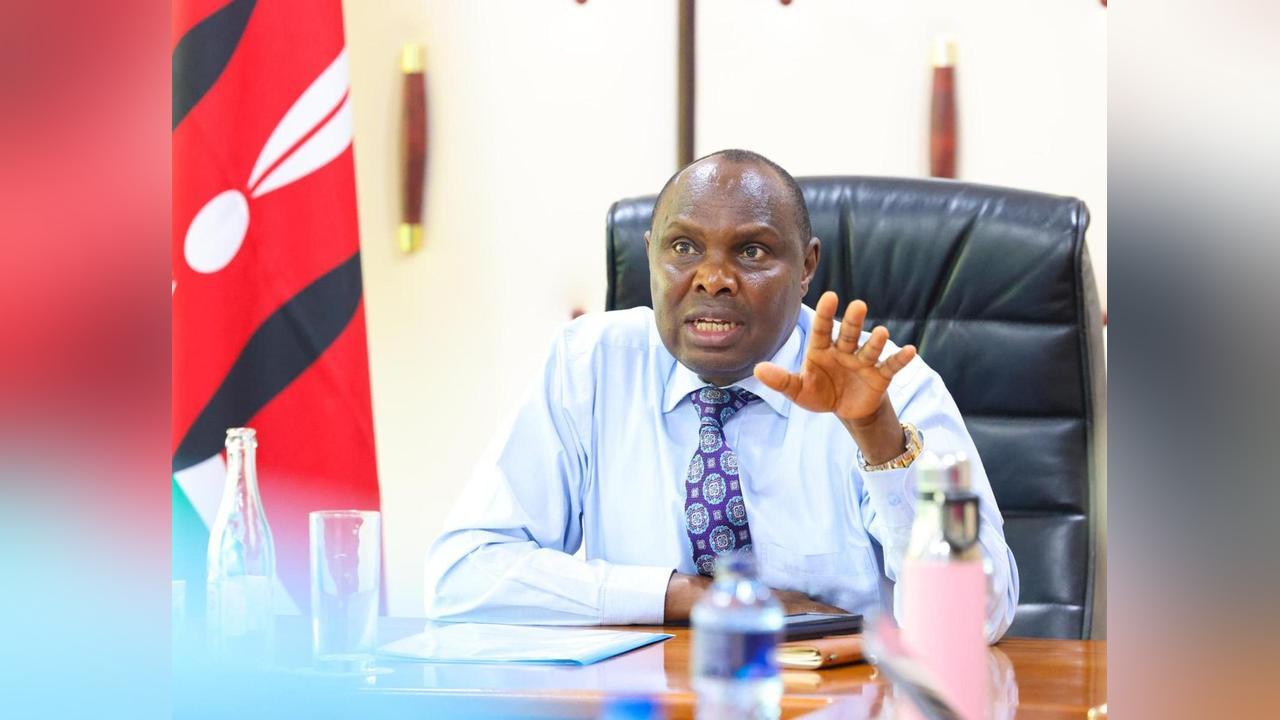
Now, Chief of Staff and Head of Public Service Felix Koskei has offered a clearer picture of how the Kenya Kwanza administration intends to turn that ambition into reality, outlining what he describes as the “make-or-break” factors that will define Kenya’s long-term transformation.
At the heart of the vision, Koskei says, is a fundamental shift in how the economy works.
“The path to the ‘First World’ is not just about wealth, but about productivity,” he explains, arguing that Kenya must abandon the model of consuming finished goods while exporting raw materials.
Instead, he says the country must shift to creating high-value products and services.
“Instead of exporting raw materials, Kenya must process them locally (e.g roasted coffee instead of beans) to retain higher profit margins,” he said.
Koskei adds that a key pillar of that shift is industrialisation and export diversification to increase Kenya’s manufacturing share.
He argues that Kenya’s economy has long relied on agricultural exports such as tea, coffee and flowers, but while these remain important, the government believes they are no longer sufficient.
He notes that Kenya must move up the value chain by expanding manufacturing and agro-processing so that more value — and profit — is retained locally.
“Increasing manufacturing’s share is vital. This requires lowering the cost of electricity and improving logistics,” he said, a move whose endgame is to make Kenyan products competitive.
Technology is also central to the plan. Koskei pointed out that building on Kenya’s reputation as the “Silicon Savannah,” the government plans to position the country as a global hub for software development and digital services, allowing innovation to drive exports and create high-quality jobs.
However, Koskei stressed that the envisioned economic ambition will not succeed unless strong institutional integrity is established to slay the corruption, which remains a big threat to development.
Governance and integrity, he says, are non-negotiable as high levels of public fund leakages are known to undermine investor confidence and divert resources away from essential infrastructure.
Equally critical, he adds, is the rule of law.
“Consistent enforcement of contracts and protection of property rights are necessary to attract long-term Foreign Direct Investment,” Koskei notes in his statement.
Political stability also features prominently, with a call to move away from ethnicity-based politics towards issue-based leadership to ensure continuity of policy across different administrations.
Education and human capital development form another cornerstone of the strategy. As a First World economy, Koskei argues, Kenya requires a workforce capable of high-tech and high-efficiency output.
This means a stronger focus on science, technology, engineering and mathematics, alongside expanded technical and vocational training to bridge skills “so that the youth—who make up the majority of the population—are employable in modern industries”.
Innovation funding is also flagged, with the government aiming to increase research and development spending from the current level of about 0.8 per cent of GDP towards the 2 to 3 per cent typical of developed economies.
The plan also confronts Kenya’s fiscal realities. Koskei acknowledges that the First World ambition demands tighter macroeconomic management, particularly around public debt, which currently stands at Sh12 trillion.
Koskei said the government plans to shift away from expensive commercial borrowing towards more sustainable financing to avoid debt distress that could choke growth.
Expanding the tax base is another priority, but with an emphasis on fairness so as not to suffocate the private sector or the informal “hustler” economy, the majority of whom are already struggling following the introduction of new tax measures under the 2025 finance bill.
Infrastructure and energy complete the picture. Koskei says the plan is to achieve 100 per cent transition to reliable and affordable geothermal, wind and solar energy to power heavy industries, resulting in low production cost and highly competitive products.
At the regional level, the government wants Kenyan firms to leverage the East African Community as a single market, allowing them to scale beyond national borders.
Ultimately, Koskei frames the journey as a collective one that will require them to abandon their politico-ethnic differences and focus on developing the country as a bloc.
With focus on these critical factors, he says, “there is no doubt that Kenya is marching forward to the first world”.