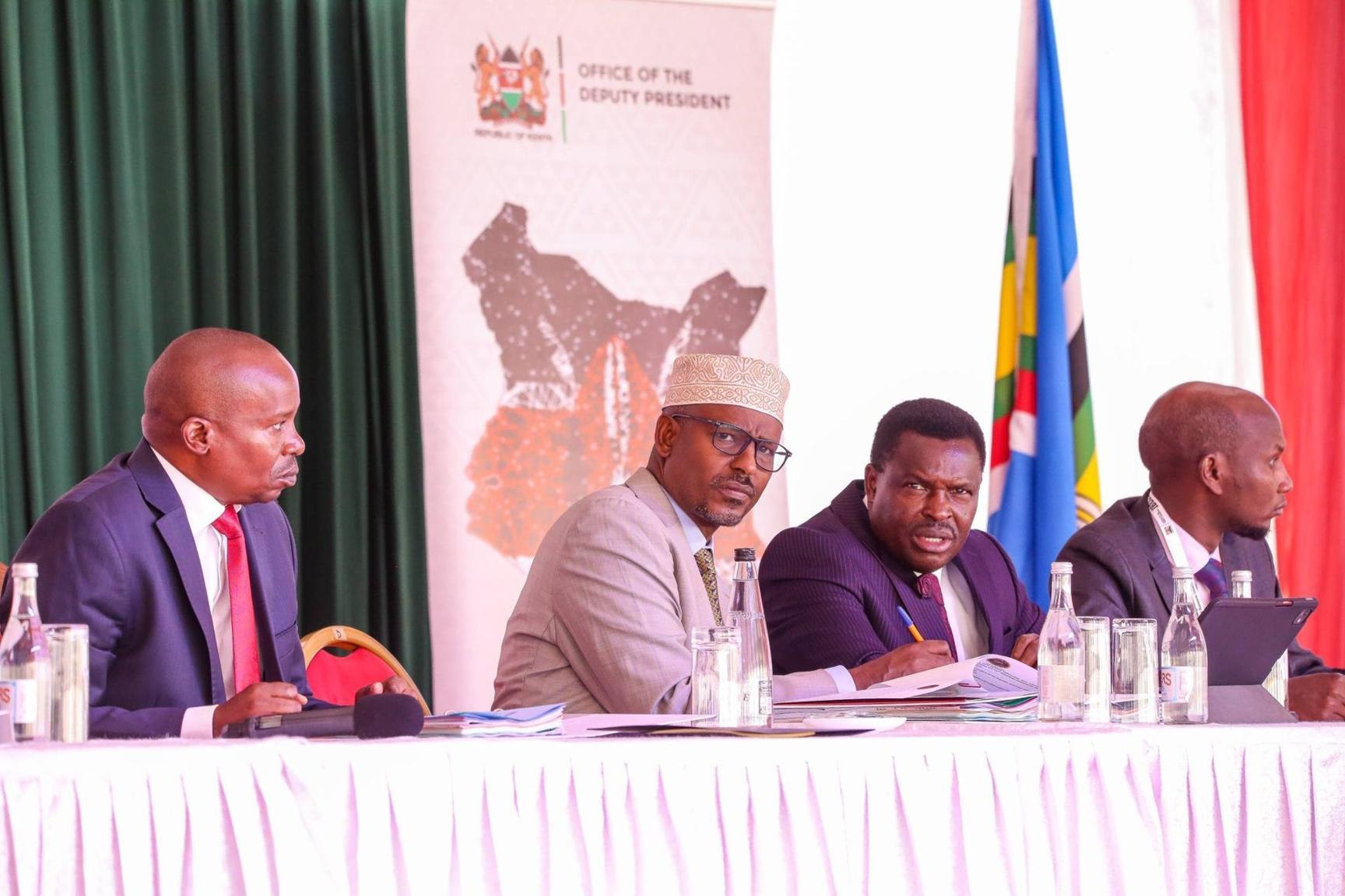
Africa-Press – Kenya. Civil society organisations under the Okoa Uchumi Campaign and the National Integrity Alliance (NIA) have raised alarm over the Council of Governors’ decision to suspend appearances before the Senate County Public Accounts Committee (CPAC).
In a joint statement issued on Monday, February 16, 2026, the groups said the move risks undermining constitutionally mandated oversight even as they called for investigations into allegations of misconduct raised by governors.
The Council of Governors had earlier accused the Senate CPAC and the County Public Investments and Special Funds Committee (CPIC) of political witch-hunts, extortion, and harassment and demanded the reconstitution of CPAC.
However, the lobbyists cautioned that a boycott of Senate summons could weaken accountability mechanisms.
“The CoG’s resolution to boycott appearances before CPAC signals a troubling trend: an attempt to evade constitutionally mandated accountability. Under Articles 96 and 125, respectively, the Senate has the authority to exercise oversight over national revenue allocated to county governments and to summon any person to appear before it,” the statement read.
They noted that under Articles 96 and 125 of the Constitution, the Senate has authority to oversee national revenue allocated to counties and to summon any person to appear before it.
They added that any allegations of misconduct should be independently investigated without disrupting oversight.
“This does not, however, mean that allegations of misconduct should be ignored. They must be independently investigated but cannot be used as a means to justify the avoidance of oversight, as in this instance.”
The organisations also cited persistent concerns raised by the Office of the Auditor General over misuse of public funds and delays in audit processes, warning that such gaps continue to weaken financial accountability at both national and county levels.
They further linked the standoff to declining public trust in governance, noting that recent youth-led civic actions had highlighted widespread frustration over transparency and service delivery.
Among their key demands, the groups called on the CoG to formally report its allegations to the Ethics and Anti-Corruption Commission and urged the Senate to institute disciplinary proceedings to address the claims raised.
They also asked the Office of the Director of Public Prosecutions to prioritise corruption and economic crimes emerging from audit and parliamentary oversight processes.
The lobbyists warned that failure by oversight and investigative agencies to act could trigger civic and judicial interventions by Kenyans seeking enforcement of Chapter Six of the Constitution on leadership and integrity.
The 18 lobbyists include: The Institute for Social Accountability (TISA), Transparency International Kenya, Kenya Human Rights Commission, Inuka Kenya Ni Sisi, Mzalendo Trust, Katiba Institute, International Commission of Jurists (Kenyan Section), National Taxpayers Association, Social Justice Center Working Group, Crawn Trust, EATGN, Econews Africa, Institute of Public Finance Kenya, Kenya Tuitakayo, Okoa Mombasa, Amnesty International Kenya, Bunge Mashinani Initiative, and Twaweza East Africa.
The Council of Governors and the Senate committees had not immediately responded to the statement by the time of publication.