What You Need to Know
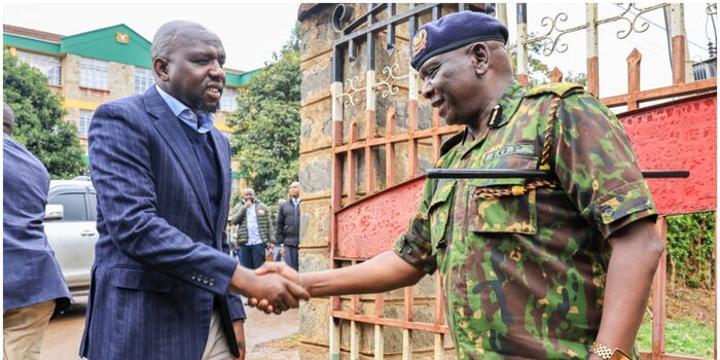
Interior Cabinet Secretary Kipchumba Murkomen has directed Inspector General of Police Douglas Kanja to accelerate investigations into increasing incidents of goonism and politically motivated violence in Kenya. Murkomen emphasized the need for decisive action against political figures involved in such chaos, highlighting recent violent events at political rallies and public gatherings.
Africa-Press – Kenya. Interior Cabinet Secretary Kipchumba Murkomen has called on Inspector General of Police Douglas Kanja to fast-track investigations into the rising cases of goonism and politically-instigated chaos across the country.
Murkomen spoke on Sunday during a church service in Kitale, Trans-Nzoia County, where he revealed that he had given the IG the go-ahead to use whatever means to bring the perpetrators of political violence to book.
The CS was adamant that the spate of violence and chaos witnessed in the country in recent days was the work of specific political elements, although he did not specifically mention their names.
“The Inspector General of Police has my full support and clear policy instructions to deal firmly, without fear or favour, with any political leader involved in sponsoring goons. We must not allow political considerations to interfere with efforts to resolve the challenges facing this country,” Murkomen said.
The CS spoke at the back of chaos, which was witnessed in Kikuyu Constituency on Saturday when former Deputy President Rigathi Gachagua’s event was disrupted, with reports of confrontations and police intervention.
During the rally, the opposition’s convoy was split into two, with Wiper Patriotic Front Party leader Kalonzo Musyoka alleging that police forced his convoy towards the Nairobi-Nakuru highway.
In a separate infamous incident, Vihiga Senator Godfrey Osotsi was left nursing serious injuries after an assault on Wednesday, April 8 in Kisumu in an attack which he has since claimed was politically motivated.
More worryingly, chaos was also witnessed in Kakamega during a burial ceremony, where rival political factions clashed, leading to the destruction of property and injuries to mourners. One man was stabbed in the Saturday incident.
In the wake of all these incidents, Murkomen appeared to fault political leaders, saying the Inspector General had received firm policy direction to act against those sponsoring goons.
“The greatest threat to national security is not the citizens, it is those who are wearing suits and are seeking high offices,” Murkomen said.
Adding, “These politicians are the quickest ones to criticise the government. But how do you expect the government to provide security if you have mobilised thousands of citizens with weapons?”
Incidentally, leaders allied to the opposition traded blame with the government, accusing the State of allegedly using police officers and hired goons to disrupt their political gatherings.
Gachagua, who led opposition leaders in a rally in Kajiado, condemned what he termed as infiltration and intimidation during their meetings.
“Yesterday, they used teargas and used gunfire on us, but we are the sons of Mau Mau. We battled with the police, and our meeting went on,” Gachagua said.
Kenya has a history of politically motivated violence, particularly during election periods. The rise of goonism, where hired thugs disrupt political events, has been a recurring issue, often linked to rival political factions. The government has faced criticism for its handling of such incidents, with accusations of complicity in using state resources to suppress opposition. Recent events have reignited concerns about the safety of political gatherings and the integrity of the electoral process.