
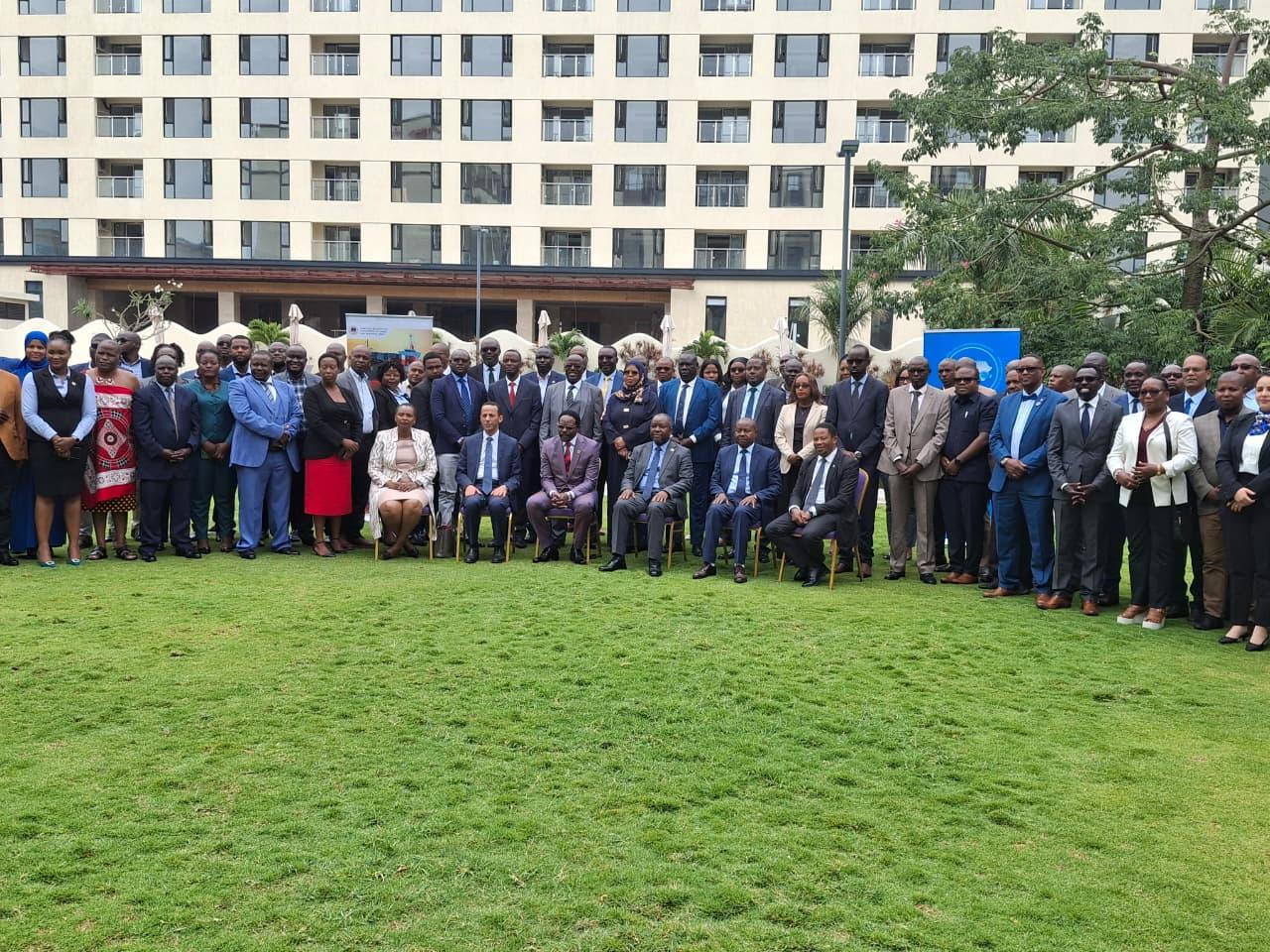
Africa-Press – Kenya. Efforts to lower the cost of doing business across Eastern, Southern and Northern Africa have gained momentum as MOESNA and COMESA convened a two-day stakeholders’ meeting to review proposals on regional shipping and maritime policy.
The workshop brought together government officials, regulators and private sector players to examine draft plans on establishing regional shipping lines and introducing a maritime cabotage framework for the ESNA region.
Speaking during the meeting, COMESA Assistant Secretary General Mohamed Kadah said African countries must reduce their reliance on foreign vessels to transport goods.
He noted that high shipping costs continue to burden regional economies, adding that a coordinated regional shipping system would give African states greater control over trade routes and help lower costs.
MOESNA Secretary General Kassim K. Mpaata described the meeting as a key step in turning years of discussions into practical policy.
He said stakeholders are refining proposals to ensure they are realistic and can be implemented effectively, noting that success will depend on aligning policy with the region’s operational realities.
A feasibility study presented at the meeting outlines how a regional shipping line could operate, including ownership structures, financing options and management models.
Stakeholders were told that such a system could improve efficiency in cargo movement and create opportunities for local investment.
Kenya also underscored the importance of the maritime sector in regional trade. Representing the Principal Secretary for Shipping and Maritime Affairs, Director of Shipping Julius Segera said the Port of Mombasa remains a key gateway for Eastern and Southern Africa, linking landlocked countries to global markets.
He emphasised the need for stronger regional cooperation in building reliable and African-owned shipping solutions.
Participants also discussed a proposed maritime cabotage protocol that would prioritise locally registered vessels in regional trade. Supporters said the move could boost local shipping capacity and create jobs.
Zambia’s Permanent Secretary for Transport and Logistics, Frederick Mwakusaka, who chairs the MOESNA Coordination Committee, said the region must invest in its own maritime capabilities to drive transformation.
He clarified that the proposal is not meant to restrict competition but to create space for local players while maintaining efficiency.
However, stakeholders raised concerns over financing, regulatory alignment and the need to ensure fair competition. There were also calls for a phased approach to allow countries and industry players time to adjust.
The meeting is expected to build consensus on the draft proposals, with feedback set to be incorporated into final reports before submission to policymakers, paving the way for reforms that could reshape maritime trade across the ESNA region.