What You Need to Know
President William Ruto has firmly stated that he will only humble himself before God and the Kenyan people, rejecting demands from critics to submit to their political conditions. Speaking in Murang’a County, he emphasized that leadership decisions belong to the citizens, not a select few, and challenged the notion that political influence can dictate voters’ choices.
Africa-Press – Kenya. President William Ruto has hit out at his critics, declaring that he will only bow to God and humble himself to the Kenyan people, but not to any individual.
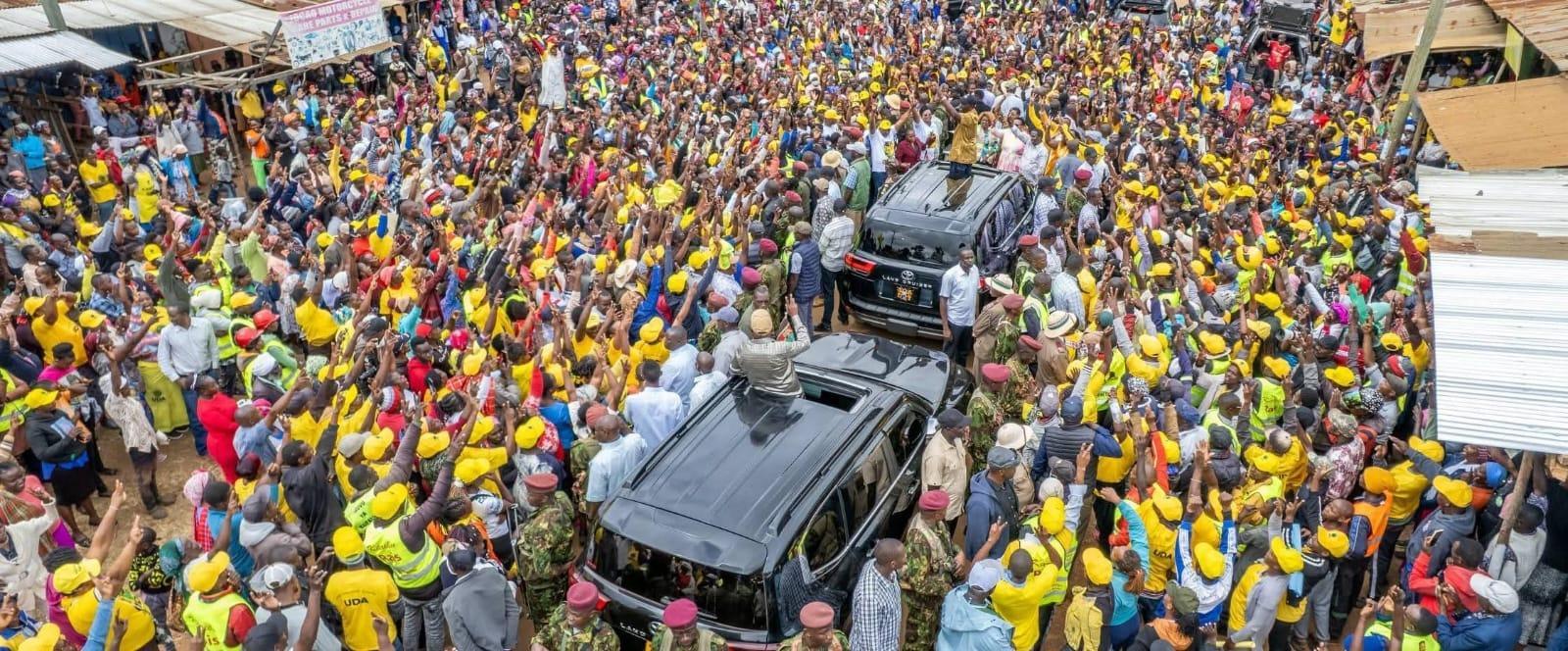
Speaking during a rally in Maragua Constituency, Murang’a County, the President issued a stern response to what he described as growing arrogance among some political opponents, whom he said were attempting to dictate terms in national politics.
He said rivals claim they alone can decide Kenya’s political direction, adding that some believe they control voters’ choices and can determine leadership outcomes at will.
“There are people who are very arrogant. They say they are the ones who will decide. They claim they are carrying people’s votes in their pockets,” the President said.
Ruto further said that some of his critics have attempted to impose conditions on him, suggesting that he must submit to their demands in order to secure political support.
“They are giving us conditions, saying if we don’t do this, then I must kneel before someone so that they can tell people to vote for me. They should forget about that completely and abandon that arrogance,” he said in response to critics.
The Head of State insisted that a few individuals do not determine leadership in Kenya but is a collective decision made by citizens under democratic principles.
He said it is ultimately the people who will choose their leaders, guided by performance and service delivery.
“Nitanyenyekea kwa wananchi na nipige magoti kwa Mungu, lakini kwa binadamu siwezi,” Ruto said, emphasising that no individual has the authority to override the will of the electorate.
(I will humble myself before the people and kneel before God, but I cannot kneel before a human being.)
Ruto also challenged the idea that political influence can be used to control citizens’ choices in areas such as religion, lifestyle, and leadership preferences.
He questioned whether any group could truly dictate how Kenyans live their lives or make their decisions.
“They want to decide for us the song we listen to, which church you will follow, where you will go, and which leaders you will choose. I want to ask you, will they decide for you or you decide for yourselves?” he posed to the crowd.
He further defended his leadership mandate, reminding supporters that his role is based on public trust.
“Didn’t you choose me to work for you?” he asked.
“Did you choose me to go and kneel before others? Didn’t you choose me to serve you?”
His remarks come amid heightened political activity in parts of the Mount Kenya region, where leaders have intensified their campaigns.
Deputy President Kithure Kindiki, who also addressed the rally, backed the President’s sentiments, calling for respectful and issue-based politics.
He referenced former President Mwai Kibaki, saying leadership should be guided by performance rather than insults.
“His Excellency Mwai Kibaki taught us leadership and politics free of insults, respectful, and work which speaks for itself,” Kindiki said.
The Deputy President added that Ruto’s leadership would ultimately be judged by his development record.
Kenya’s political landscape has been marked by intense rivalry and shifting alliances, especially in the lead-up to elections. The country’s history of political patronage and influence often leads to power struggles among leaders, with public trust being a critical factor in determining electoral outcomes. President Ruto’s remarks reflect ongoing tensions as he navigates these dynamics while asserting his authority and commitment to the electorate’s will. Political rhetoric in Kenya frequently emphasizes the importance of democratic principles and the collective decision-making of citizens, especially in the context of leadership accountability.