
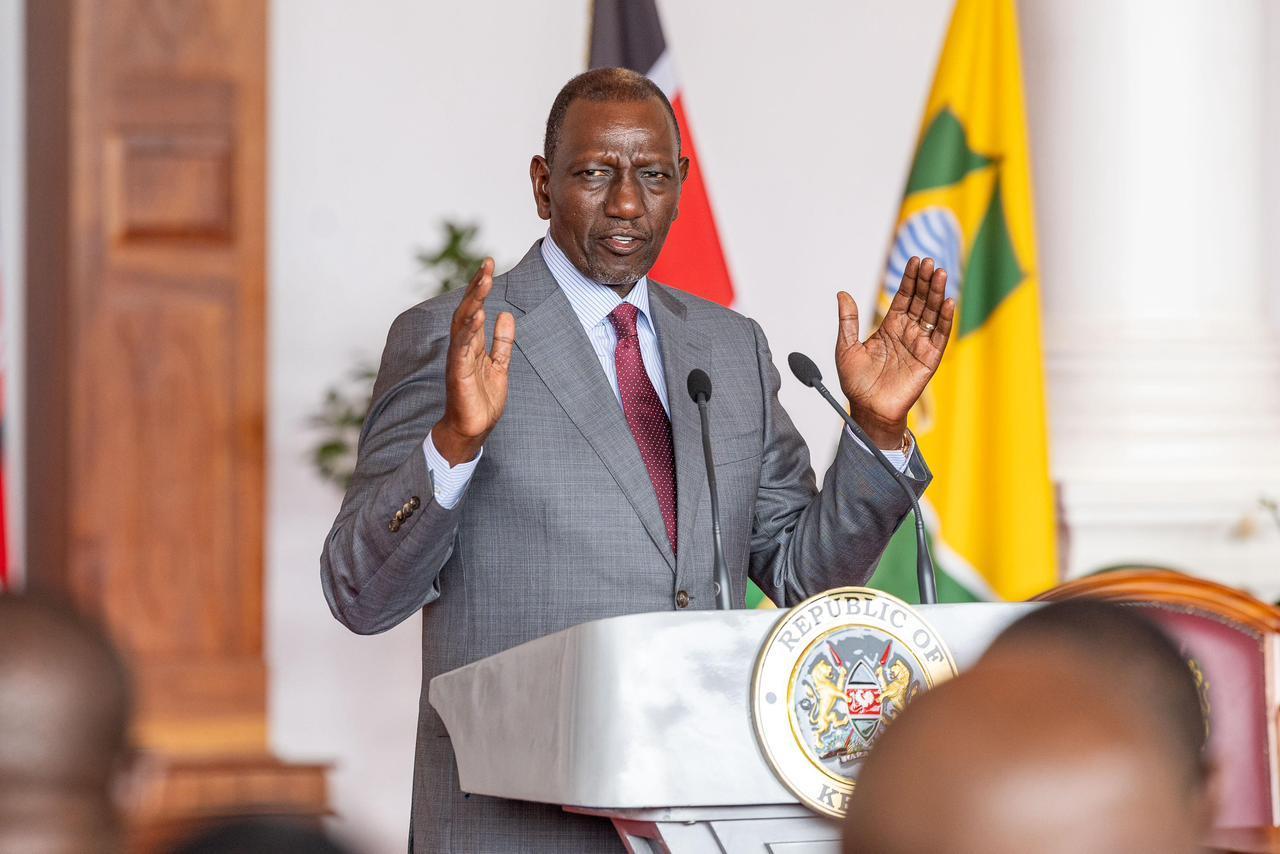
Africa-Press – Kenya. President William Ruto has ordered the disconnection of illegal power connections in parts of Nairobi, especially in informal settlements, saying the practice is unfair to residents and contributes to inequality in access to electricity.
Speaking at State House on Tuesday, the President said it was unacceptable that some neighbourhoods remain in darkness due to irregular supply arrangements.
“It is not right that some residents in some parts of Nairobi live in darkness,” he said. Ruto directed that illegal connections be removed and replaced with lawful installations to ensure fairness and proper billing.
“If there are illegal power connections, we should do away with them and conduct legal connections because illegal connectors are charging residents more than what the rest of Nairobians are paying,” he said.
The President’s remarks signal a push to streamline electricity supply in the capital and protect residents from exploitation by unauthorised and unscrupulous individuals. He emphasised the need for legal connections to ensure that all Nairobians pay uniform and regulated electricity rates.
Ruto has also criticised the state of sanitation in Nairobi, describing the Nairobi River as a sewer and calling for urgent action to restore the city’s environmental standards. Ruto recalled commitments made during the campaign period to clean up the city.
“During campaigns, we agreed with residents that Nairobi cannot continue to be a city of filth. Today, let’s be honest with ourselves, Nairobi River is a sewer running through the city,” he stated.
He added, “The centre of the city is a sewer line, and it is supposed to be okay, how is it supposed to be okay?” he posed. The President said the current condition of the Nairobi River is unacceptable.
Ruto was speaking during the signing of a landmark cooperation agreement aimed at unlocking billions of shillings for the capital’s urban renewal. The pact, anchored on Section 6 of the Urban Areas and Cities Act, establishes a formal framework for collaboration between the National Government and Nairobi City County.
The agreement was signed by Prime Cabinet Secretary Musalia Mudavadi on behalf of the National Government and Governor Sakaja on behalf of the County Government at State House, marking what leaders described as a long-overdue institutional milestone in the governance of Kenya’s capital.