
What You Need to Know
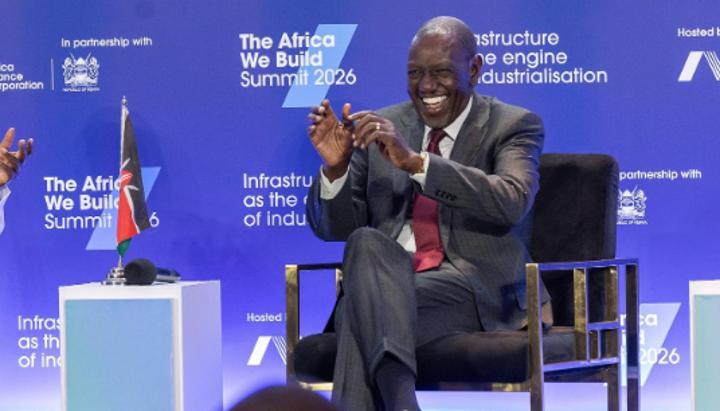
President William Ruto’s comments on Nigerian English during the Africa We Build Summit have ignited a lively online debate. While some users viewed his remarks as light-hearted banter, others criticized the comparison, emphasizing that linguistic differences stem from accents and local languages rather than proficiency. The discussion reflects broader themes of English usage across Africa and the
Africa-Press – Kenya. President William Ruto has sparked discussion on social media after remarks he made about English usage in Africa were widely circulated online.
Ruto made the comments on Thursday while speaking at the Africa We Build Summit, where he was discussing Kenya’s education system and the competitiveness of its human capital.
“Our education is good. Our English is good. We have one of the best English-speaking people in the world,” Ruto said.
He went on to make a comparison involving Nigerian English, saying: “If you listen to a Nigerian speak English, you will need a translator, even when they are speaking English.”
Participants at the meeting broke into laughter.
Ruto then shifted his remarks to a broader point on skills and human capital, saying that some of the best human capital anywhere in the world are Kenyans, and that what is remaining is that it needs to be sharpened through more training.
The remarks, captured in video clips from the event and delivered in a light-hearted tone, quickly circulated on X, where they triggered mixed reactions among users in Nigeria and Kenya.
Some users treated the comments as light-hearted banter between African countries, while others criticised the comparison, arguing that differences in English usage across the continent are largely influenced by accents, local languages and expressions rather than proficiency.
A section of users defended Nigerian English, describing it as expressive and widely understood in international contexts, while others said Kenyan English tends to sound clearer due to the country’s British-influenced education system.
On X, some users downplayed the reaction, with one post stating: “This is just accent talk. No need for outrage, Africans should relax.”
Another user wrote: “We should stop comparing English and focus on trade and development.”
The conversation also revived broader discussions on English proficiency rankings in Africa, where Kenya often features among higher-ranked countries in various global surveys.
Other users, however, cautioned against turning linguistic differences into competition, saying African countries should instead focus on economic cooperation rather than comparisons over language.
By Friday, the remarks were still trending online, driven largely by memes, commentary and cross-border online exchanges.
The use of English in Africa varies significantly across countries, influenced by colonial history, local languages, and education systems. Kenya, with its British colonial legacy, often ranks high in English proficiency, while Nigeria’s English reflects a rich tapestry of local dialects and expressions. This diversity in English usage highlights the continent’s cultural richness and the need for unity in addressing common challenges rather than competition over language skills.
In recent years, discussions around language have become increasingly relevant as African nations strive for economic cooperation and development. The ability to communicate effectively in English can enhance trade