What You Need to Know
President William Ruto has declared he will no longer remain silent in the face of criticism from opposition leaders. He plans to confront his critics directly, addressing what he describes as unbecoming behavior. Ruto’s remarks come after years of insults from opposition figures, and he emphasizes the need for a more disciplined political discourse.
Africa-Press – Kenya. President William Ruto has reiterated that he will no longer take a back seat and watch opposition leaders insult him, maintaining he will continue calling out what he terms unbecoming behaviour—even if it includes urging them to change lifestyle habits.
He said he will confront his critics head-on, responding to attacks directly rather than remaining silent as he has in the past.
The head of state said he had been quiet for too long, a stance he noted had been mistaken for weakness.
“Wale nitawashughulikia. Wamenitukana for two years mfululizo. Juzi nimewajibu tu siku moja, na hata si kuwajibu, niliwaambia tu tabia yenyu si mzuri,” he said.
(I will deal with them. They have insulted me continuously for two years. The other day I responded for just one day—and it wasn’t even really a response—I simply told them their behaviour is not good)
On Tuesday, Ruto lashed out at opposition figures he described as “brainless” in sharp remarks, following sentiments by former Deputy President Rigathi Gachagua, who over the weekend criticised him over alleged weight loss.
Without mentioning names, the President remarked about one leader’s eating habits and weight, and accused another of “impregnating” young girls and disinheriting his late brother.
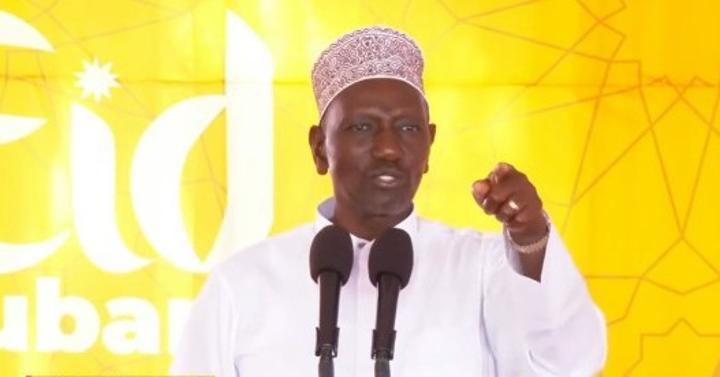
Speaking on Friday during an Eid-ul-Fitr luncheon at the Kisumu State Lodge, Ruto defended his stance, saying he was only correcting what he believes is unbecoming conduct among a section of the opposition elite.
“Nimewaambia wakuwe na nidhamu, chakula wapunguze wasikule sana. Sasa hiyo nimesema iko makosa wapi?”
(I told them to be disciplined, to reduce their food intake and not eat too much. Where exactly is the problem in what I said?)
He went on: “Mimi sijatumia lugha ya matusi, wao ndio wananitukana. Na shida wao ndio walianzisha, nilijaribu kuwaeleza jameni wacha tushindane kwa sera, tushindane kwa maono…wakasema hawana agenda, hawana maono, hawana mpango. Ati mpango yao yote ni William Ruto. Sasa, what was I supposed to do?”
(I have not used abusive language; they are the ones insulting me. They are the ones who started the problem. I tried to tell them, let’s compete on policies, let’s compete on ideas… but they said they have no agenda, no vision, no plan. That their entire plan is William Ruto. So, what was I supposed to do?)
The President said opposition leaders initiated the attacks by mocking his alleged weight loss, prompting him to respond and even advise them on staying fit.
“Sasa nikawajibu tu kidogo, nduru wakaanza. Oh, sijui body shaming. Kwani kuambia mtu enda gym na upunguze chakula ni body shaming?”
(So I just responded a little, and they started making noise— calling it body shaming. Is telling someone to go to the gym and reduce their food intake really body shaming?)
Ruto further said the opposition has consistently accused government leaders of theft and murder, claims he argued also reflect issues within their own ranks.
“How is that unpresidential? Kwani iko makosa kuambia watu waache mambo ya kuua wengine? Na bado! Nimesema one per cent of time nitatumia kudeal na hawa watu” he concluded.
Despite Ruto not mentioning any opposition leader by name, several have responded to sections of his remarks they believe were directed at them.
In recent years, political tensions in Kenya have escalated, particularly between President Ruto and opposition leaders. The political landscape has been marked by frequent insults and accusations, with Ruto often criticized for his leadership style. This ongoing conflict reflects deeper issues within Kenyan politics, where personal attacks often overshadow policy discussions. Ruto’s decision to respond more assertively indicates a shift in his approach to political engagement, aiming to redefine the narrative surrounding his presidency.