JACKTONE LAWI
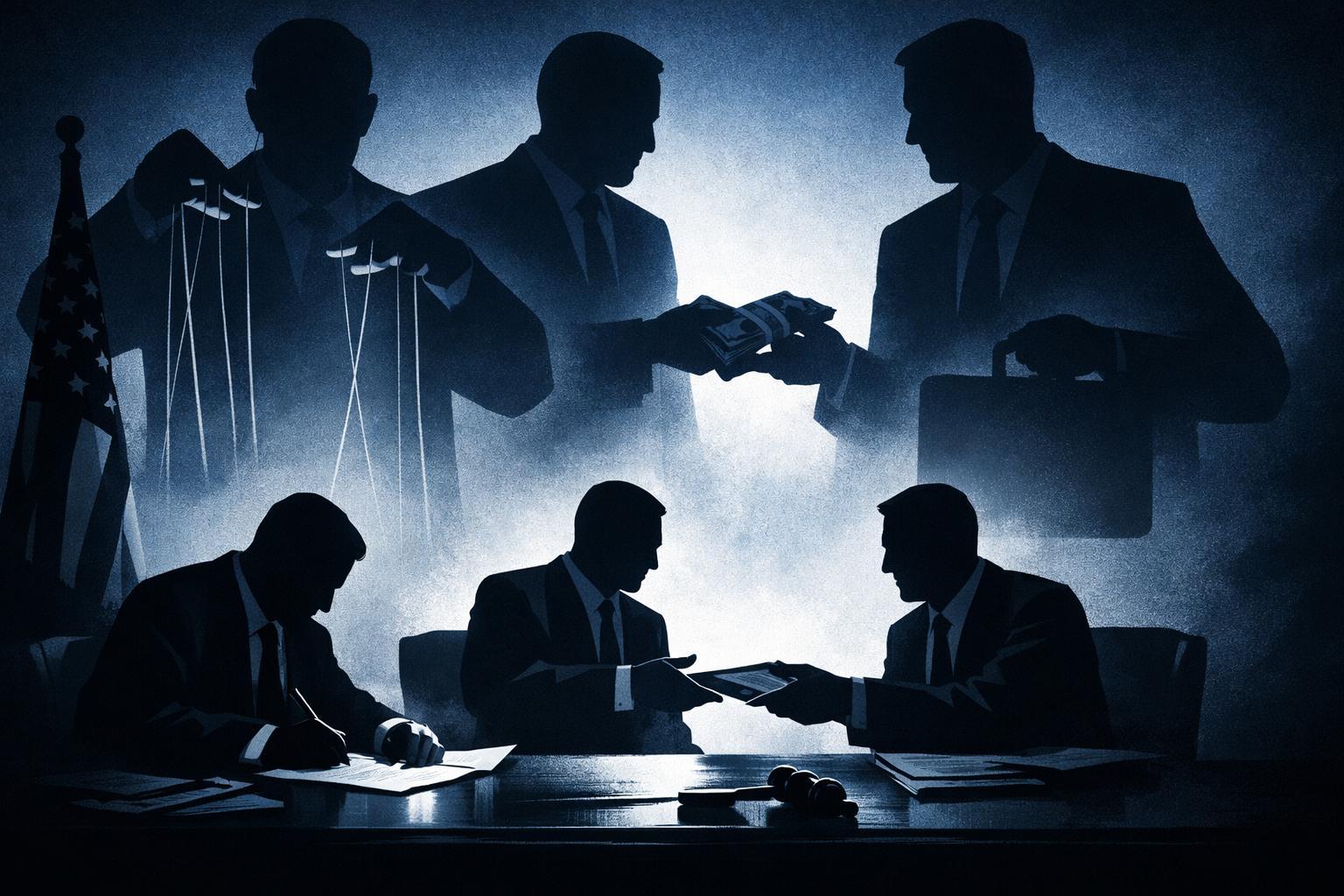
Africa-Press – Kenya. Politicians and persons in high government authorities may be holding those offices with the backing of secret billionaires, who call the shots.
From the Media Industry to banking sector, transport, energy and Telecommunications, the findings paint a grim picture where all key sectors are under ‘state capture,’ by these billionaires.
According to the new 2026 report by Oxfam, the country may not have many dollar billionaires on the Forbes list, but it does have powerful business dynasties, politically connected tycoons and elite networks whose wealth reaches deep into the country’s governance.
Their influence are everywhere, from who gets public tenders to who sits in cabinet, which policies survive parliamentary debate and even which news stories make it into the nightly bulletin.
Kenya, like much of the world, is quietly sliding into what economists call “the rule of the rich.”
Beyond Kenya’s independence-era political families, the report points out that beyond household names lies, wealthy businessmen, corporate leaders and emerging tech tycoons whose political influence is increasingly shaping national trajectories.
“In Kenya we once had free primary education – now we do in name only, with a multitude of ways in which parents must actually pay. This retreat from education, health and social protection is not incompetence, it is deliberate austerity imposed on the poor while the wealthy continue to extract with impunity,” said Kenyan grassroots activist who co-founded the Mathare Social Justice Centre Wanjira Wanjiru.
The report further notes that ordinary people are heavily taxed despite an already unbearable cost of living. Meanwhile, corporations receive exemptions and political elites shield their wealth.
Others operate behind front companies, making them nearly invisible in public discourse but highly present in policy negotiations.
These actors rarely run for office themselves, they don’t need to. Their influence is exercised through political financing, lobbying, family networks and well-placed allies.
Oxfam holds that This finance-driven patronage system across the world has shaped everything from energy regulations to infrastructure concessions.
“Being in office can also be lucrative. In Kenya, five members of President William Ruto’s cabinet have a combined net wealth above $20m, (Sh2.58 billion) with many of them massively increasing their wealth since they came into power,” the report states
Financing of elections has also been identified as a way that these powerful individuals are using to get the people, they want in the offices for them to secure the tenders.
Every five-year cycle sees billions of shillings poured into campaigns, money that doesn’t come from the public, but from private interests.
This coupled with campaign financing laws that remain weak, unevenly enforced, and opaque, political parties rarely publish donor lists and even when they do, they often reflect official contributions, not the millions channeled through cash donations, shell companies, or “in-kind” support such as providing helicopters, billboards, or logistical networks.
“The super-rich have built their political power in three main ways: by buying politics, investing in legitimizing elite power and directly accessing institutions. Billionaires and the super-rich have long used their vast wealth to buy politicians and political parties, subverting the power of the majority in favour of an unjust system of ‘one dollar, one vote’” Oxfam said in the report.
A study by Netherlands Institute for Multiparty Democracy, conducted in Kenya estimates that the current crop of MPs, Governors, Senators, women Reps and MCAs, spent billions to land the offices.
To become a senator in the 2022 elections, the politicians had to part with an average of $390,000 (Sh50.31 million) for the senatorial seat, for the Woman Representative seat, an aspirant needed $240,000 (Sh31.22 million), an MP used average of $222,000 (Sh28.64 million) and the least expensive political seat in Kenya was that of Member of County Assembly, at $31,000 (Sh4 million).
The numbers are way higher than their salaries for the whole term combined.
“The governments can take concrete steps to build a strong firewall between wealth and politics. They should, effectively tax the super-rich to reduce their economic power, and through this their political power, they should also ban campaign financing by the rich,” Oxfam says.
For instance, in Kenya, the findings note that few sectors demonstrate Kenya’s wealth-politics nexus better than energy, leading to higher electricity tariffs and costly independent power producer (IPP) contracts.
These contracts often lock Kenya into expensive purchase agreements for years, even when actual energy demand is lower.
However, Kenya Institute for Public Policy Research and Analysis (KIPPRA) governance policy analyst Douglas Kivoi, says that not all financiers have hidden agendas in their move to sponsor legislation.
He points out that governments around the world are run by rich people, but Kenyan politicians only lacks the goodwill to serve the populations.
“In US when people are hungry they go to government for food, and healthcare. But here in Kenya the system is not that way, you run to your relative. No matter how much money you have, if the government is willing to serve its people it will,” said Kivoi.
“Our leaders here go to seek treatment in foreign countries and still go to their public hospitals, we can do that here even President Kibaki did it with education. what we dont have ti the goodwill to serve people.”
Amnesty International secretary general Agnès Callamard said that deeply concerning trends of growing authoritarianism and rising inequality are not separate problems.
“They are not distinct dilemmas. They instead deeply entwined, as governments across the world side with the powerful, not the people, and choose repression, not redistribution,” said Secretary General of Amnesty International Agnès Callamard
Billionaires globally are 4,000 times more likely to hold political office than ordinary people, often shaping laws, policies, and economies in ways that favour wealth accumulation at the top.
The report warns that billionaire-owned media worldwide systematically shape public narratives, often sidelining the interests of marginalized communities.
A handful of wealthy families own major TV stations, radio networks, and newspapers.
A World Values Survey found that almost half of all people surveyed perceived that the rich often buy elections in their country. In 2024, one in every six dollars spent by all US candidates, parties and committees came from donations from just 100 billionaire families. 35
“Over half of the world’s largest media companies have billionaire owners, and nine of the top 10 social media companies in the world are run by just six billionaires. Eight of the top 10 Al companies which overlap with media companies are billionaire-run, with just three commanding nearly 90per cent of the generative Al chatbot market.”
Oxfam says that in Kenya, this became fertile ground for the Reject the Finance Bill protests of 2024 and 2025, the state responded with violence and many lost their lives.
“We have seen this brutality repeated in Cameroon, Kenya, Madagascar, Nigeria, Peru, and Tanzania. All are reminders of what can happen when the elite feel threatened,” Oxfam states.
Source: The Star