
What You Need to Know
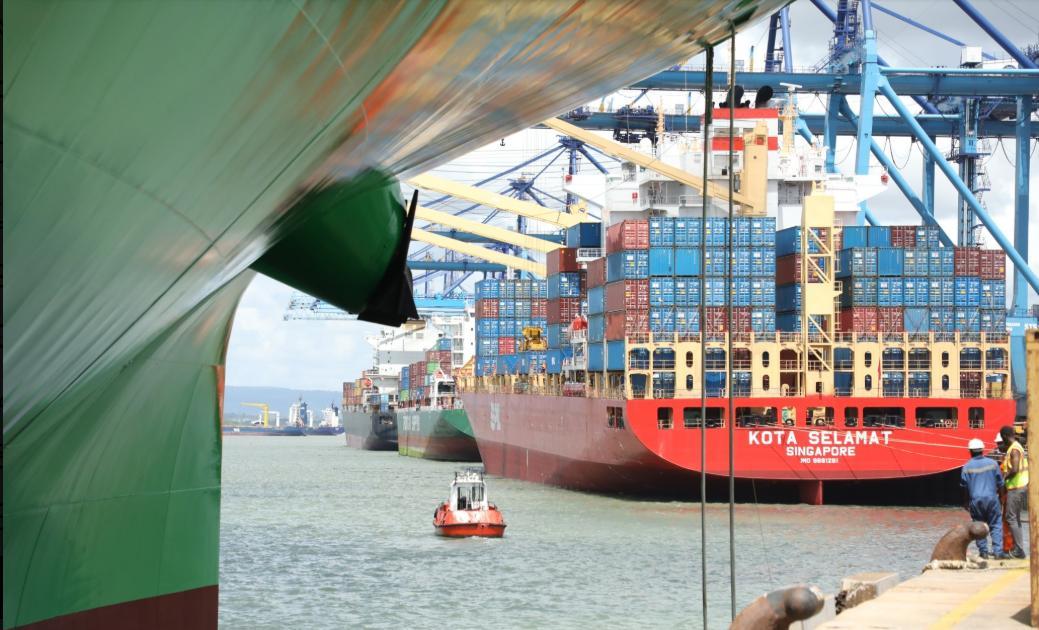
Shippers have endorsed plans to privatize port facilities at Mombasa and Lamu, aiming to improve efficiency as cargo volumes rise. The Kenya Ports Authority’s Public-Private Partnership initiative seeks to lease key facilities, attracting private investment while maintaining public ownership. Stakeholders emphasize the need for transparency and job security amid concerns over potential job losses.
Africa-Press – Kenya. Shippers have backed plans to lease port facilities at Mombasa and Lamu to private entities, saying it will help improve efficiency in the wake of rising cargo volumes.
This comes as the proposed Public-Private Partnership (PPP) plan enter its final stages, final stakeholder engagement and grievances redress.
Under the PPP, Kenya Ports Authority plans to lease a section of key facilities, which include berths 11–14, container terminal 1 (berths 16–19), and parts of Lamu Port.
KPA says the government is seeking to strengthen port performance while ensuring long-term public value, noting capacity constraints and need for expansion, which is costly.
According to managing director Captain William Ruto, the reforms is aimed at attracting private investment for operations, rather than transferring ownership of the ports to private hands.
In line with the 2021 PPP Act and supported by the National Treasury, KPA has commissioned a feasibility study for prospective partnerships.
It is also seeking private parties for investment and management of the three berths at Lamu Port and the Lamu Special Economic Zone.
These investments are required to accommodate the increasing vessel sizes and ensure Mombasa remains competitive, with container handling projected to quadruple in the next 25 years, driven by strong economic growth in Kenya and transit economies.
In total, the planned expansions require over $440 million (Sh45.9 billion) according to KPA.
“Cooperating with the private sector can spur growth and reduce the financial burden for the government,” KPA says.
The PPP is expected to increase value of KPA cash flow by at least Sh44 billion from Sh335 billion.
The Shippers Council of Eastern Africa (SCEA) which represents the interests of importers, exporters, and other stakeholders in the logistics and shipping industries across Eastern Africa, has welcomed the move.
“The is most welcome against the backdrop of continued increases in port throughout averaging over 10 per cent annually, demands for capital towards resourcing the port to meet the demands, challenges in berth productivity amongst other challenges,” SCEA chef executive, Agayo Ogambi, said.
Cargo throughput at the Port of Mombasa reached a record 45.45 million metric tonnes in 2025, up from 40.99 million tonnes in 2024, a 10.9 per cent increase.
It is expected to handle at least 50 million tonnes of cargo annually by 2050.
“The current KPA strategy already incorporates a landlord port model. Hence, the decision is in fulfilment of the strategy and aspiration of the future of port management,” said Ogambi.
KPA will still be managing some berths, which private sector players say will not only create a pricing balance, but also provide options to shippers.
“Importantly, the PPPs should be undertaken transparently, ensuring public and national interests are taken into account,” said Ogambi.
Among key concerns is job losses with calls to ensure the model does not lead to mass lay-offs but uphold job security as a high priority requirement, given that the port provides live hood to hundreds of thousands of people both directly and indirectly.
Any resultant job loss could be catastrophic, shippers say.
Supportive policies and regulations also need to be enacted prior to the completion of the awarding process to safeguard the authority and the private investors’ interests, and also ensuring shippers are not disadvantaged.
“PPPs must go beyond capital raising. It must deliver efficient and competitive services and contribute towards employment creation and economic development,” SCEA said.
What is not clear, however, is what tariffs KPA will apply when it adopts full commercial enterprise.
In the absence of a strong regulator, the costs could rise, traders under SCEA say, hence increasing freight and logistics costs.
Car Importers, who are among the biggest port users are however of a different opinion, saying instead of transferring control of the berths to private investors the government to address “structural bottlenecks” in Kenya’s logistics chain.
This includes the limited road capacity linking the coast to the hinterland.
The Northern Corridor connecting Mombasa to the western border points of Busia and Malaba into Uganda and beyond remains heavily congested, despite the rapid expansion of the port over the past decade, they say.
“The port has expanded from seven berths to more than twenty, but the road infrastructure serving it has remained largely the same for decades,” Car Importers Assoctaion of Kenya chairman, Peter Otieno, said.
CIAK is calling for the construction of a four-lane dual carriageway along the Northern Corridor to match the port’s growing capacity and improve cargo movement across the region.
The association has proposed a seven-point recovery strategy aimed at improving efficiency at the port without privatisation.
Key among them is the adoption of “smart shore infrastructure” jointly by KPA and KRA to enable automated weighing, scanning and real-time transmission of cargo data to relevant agencies.
The Kenya Ports Authority (KPA) has been exploring privatization options to enhance port efficiency and accommodate growing cargo demands. The proposed Public-Private Partnership (PPP) model aims to attract private investment while ensuring that the government retains ownership of the ports. This initiative is part of a broader strategy to modernize port operations and improve competitiveness in the region, especially as cargo throughput continues to rise significantly.
Historically, the Port of Mombasa has been a critical hub for trade in East Africa, facing challenges such as congestion and limited infrastructure. The expansion of port facilities has not been matched by improvements in the