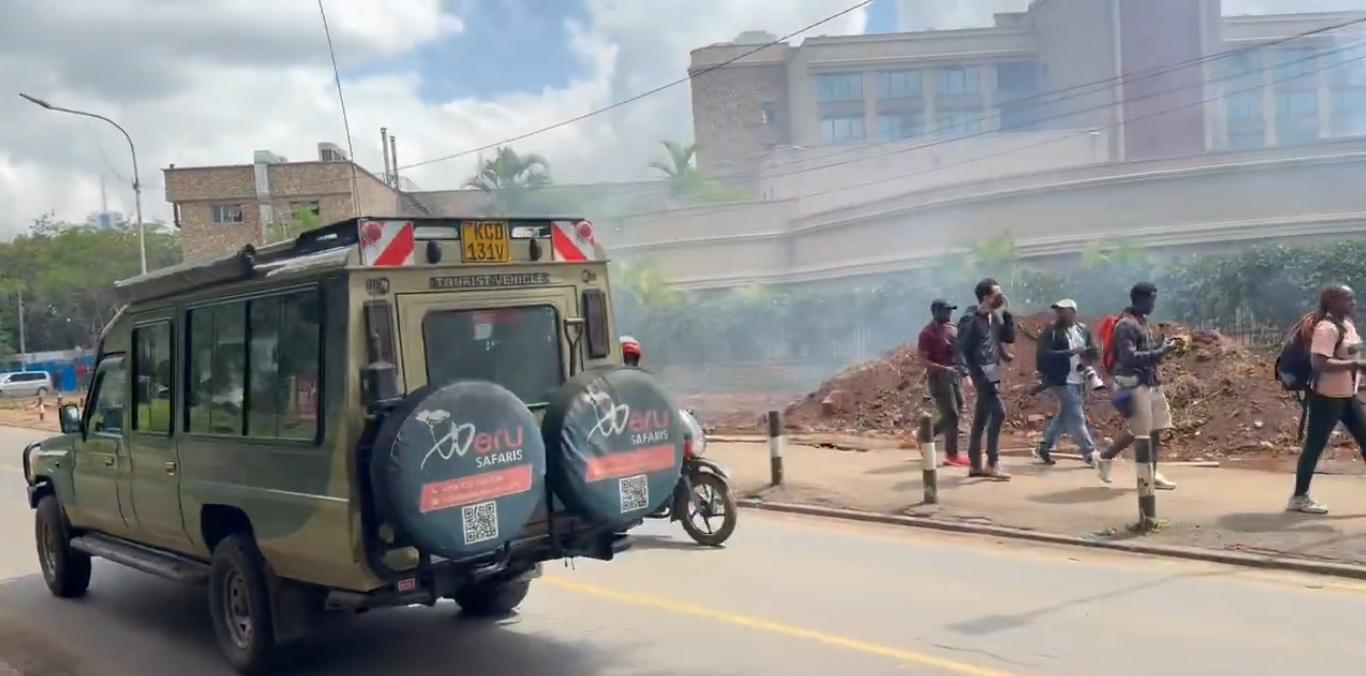
Africa-Press – Kenya. Anti-riot police lobbed tear gas on Monday to disperse families of Gen Z protest victims who were marching towards the State House in Nairobi.
The demonstrators sought an audience with President William Ruto over what they described as delayed justice for victims of the 2024–2025 protests.
The march, which began peacefully at Jeevanjee Gardens, was organised by parents and relatives of youths killed during previous demonstrations.
They decried the lack of action in delivering justice and reparations.
A video seen by the Star showed protesters waving flags and carrying rose flowers as they proceeded along the route to the State House.
The atmosphere was initially calm, with heavy security deployment observed at key points along the march, including police patrol vehicles stationed near entry points.
However, as the protesters advanced closer, law enforcement officers fired tear gas, causing the crowd to disperse and the streets to fill with smoke.
Some demonstrators were seen running for cover, while others attempted to regroup further along the route.
The march had been formally notified to the police, with organisers stating their intentions to conduct a peaceful procession beginning at 9:00 am.
The families cited prolonged delays in the implementation of reparations, despite a Presidential proclamation issued on August 8, 2025, which set a framework for compensation to victims of police violence dating back to 2017.
The demonstrators demanded accountability for the deaths of youths during previous protests, as well as timely disbursement of promised reparations.
Despite the formal notice and the peaceful intent, the situation escalated when police fired tear gas near the main access points to the State House, scattering the crowd.
The protests come amid growing frustration among families of victims over perceived delays in justice and compensation.
While the 2025 proclamation established a legal framework for reparations, families say implementation has been slow, leaving affected households without closure or support.
The proclamation, notably, faced a legal setback when the Kerugoya High Court ruled that the office of the President lacks the constitutional authority to constitute a body to advise on the compensation of victims.
In its judgment on December 4, the court held that this mandate properly falls within the jurisdiction of the Kenya National Commission on Human Rights (KNCHR).
The case was filed by lawyer Levy Munyeri, who challenged the President’s decision to form the committee.
The panel, established through a Kenya Gazette notice on August 25, had been tasked with overseeing compensation for victims. The High Court initially suspended the panel pending the determination of the matter.
In its subsequent ruling, the court directed that the relevant report be submitted to the KNCHR, which is mandated to undertake the necessary executive actions and make any amendments required to ensure the process conforms with the Constitution.
The court further ordered that all necessary amendments must be effected within 30 days, warning that failure to do so risks the impugned proclamations being invalidated.