What You Need to Know
The Teachers Service Commission (TSC) has been allocated Sh24.2 billion in Kenya’s supplementary budget for the 2025–26 financial year. This funding aims to address salary shortfalls and health insurance contributions for teachers, amidst ongoing financial pressures in the education sector. The budget also includes allocations for higher education and technical institutions, highlighting the need
Africa-Press – Kenya. The Teachers Service Commission has emerged as the biggest beneficiary of additional funding to the education sector for the 2025–26 financial year after the government moved to plug critical budget gaps and stabilise essential services across learning institutions.
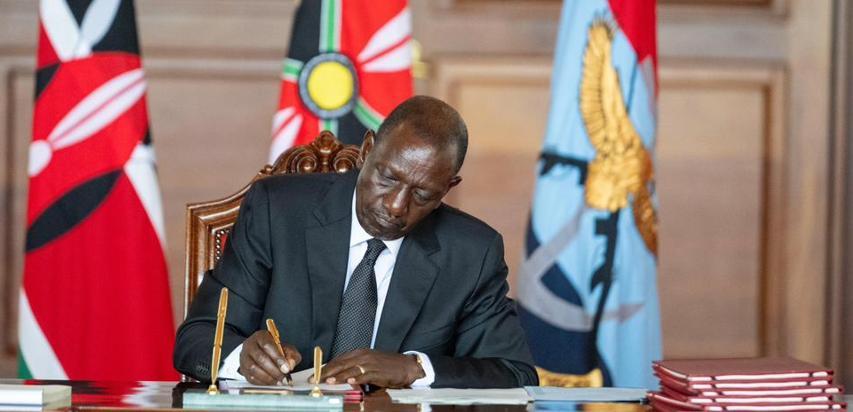
Allocations contained in the Supplementary Appropriations Bill, assented to by William Ruto on Wednesday, show that the teacher employer has been allocated Sh24.2 billion to address salary shortfalls and meet health insurance contributions for teachers.
The commission has also received an additional Sh3 billion to settle pending bills tied to teachers’ medical cover, in a move aimed at easing mounting pressure on the scheme.
The Supplementary Budget I for the 2025–26 financial year is designed to ensure continuity of critical government services, particularly in sectors facing urgent financial strain.
Within the education sector, the allocations reflect an attempt to address long-standing structural deficits that have weighed heavily on key institutions.
The TSC, which employs more than 340,000 teachers, has been grappling with an accumulated funding deficit of Sh7.9 billion.
A review by Auditor General Nancy Gathungu for the period ending June 30, 2025, placed the commission’s budget deficit for the year at Sh4.38 billion, underscoring the scale of financial pressure that had rendered the commission unable to meet its short-term obligations.
At the time of the audit, the commission was found further strained by current liabilities amounting to Sh12.3 billion against current assets of Sh4.4 billion, leaving it with a negative working capital of Sh7.9 billion.
The audit also flagged Sh12.3 billion in accrued pending bills, alongside a backlog of compensation claims under the Workers’ Injury Benefits Act valued at Sh186 million, some of which date back as far as 2001.
Further compounding the situation is a Sh53.58 billion bill for the teachers’ medical insurance scheme over a three-year period, a cost pressure that has in recent times translated into significant challenges for teachers seeking healthcare, forcing many educators to pay for treatment out of pocket.
The liabilities have compounded the commission’s financial burden, adding to the urgency for intervention.
Beyond the TSC, the supplementary budget also allocated Sh4.1 billion to the Higher Education Loans Board, bringing its total funding to Sh45.6 billion.
The board was facing a substantial funding deficit estimated at Sh43.6 billion, driven by an accrued shortfall of Sh10.7 billion from the 2024–25 financial year and a further Sh32.9 billion in the current fiscal year.
In the 2025–26 budget, Helb had been allocated Sh41.5 billion against a requirement of Sh74.4 billion to support 1,104,157 university and TVET students.
The resources were only sufficient to cater for 650,267 students, leaving 453,889 eligible applicants without funding.
The funding shortfall of Sh10.7 billion from the previous financial year left 270,122 students without support.
Universities and technical institutions have also received targeted allocations, with Sh3.88 billion set aside to clear outstanding salary arrears arising from the 2017–2021 Collective Bargaining Agreement.
The amount represents the first half of the Sh7.76 billion enhanced salary deal agreed upon by lecturers under the subsisting CBA, offering partial relief to staff who have long awaited settlement of their dues.
The government has further channelled Sh6 billion to higher education through the State Department for Higher Education, with specific allocations directed to Moi University and Kabarnet University.
In its submissions to the Departmental Committee on Education on March 18, the State Department had in the Supplementary Estimates for 2025-26 financial year sought a net recurrent budget of Sh14.3 billion to support university education and offer general administration services to public universities.
The request included Sh3.45 billion for Moi University to address obligations related to Kudheiha, right-sizing and strategic interventions, as well as Sh250 million for Kabarnet University to support infrastructure upgrades.
Additional requests had been made for other institutions, including funding for general administration, planning and support services within the higher education sector.
The Supplementary Appropriations Bill also grants the University Fund an additional Sh1.5 billion, raising total scholarship allocations to Sh18.42 billion.
However, the fund continues to grapple with a combined funding gap of Sh20.8 billion spanning the 2024–25 and 2025–26 financial years.
In 2024–25, it received Sh16.9 billion against a requirement of Sh26.55 billion, leaving a shortfall of Sh9.6 billion.
A similar allocation of Sh16.9 billion in the current financial year fell short of the Sh29.59 billion required, creating a further deficit of Sh12.67 billion.
Notably, the allocation remained unchanged despite the entry of 180,125 students from the 2024 KCSE cohort, placing additional strain on available resources and raising concerns about sustainability in university funding.
The budget also provides Sh2.6 billion in capital expenditure for the Kenya–China TVET Project Phase III, a development partner-funded initiative aimed at strengthening technical and vocational education infrastructure.
Taken together, the supplementary allocations signal the government’s attempt to steady the education sector amid persistent financial pressures, even as significant funding gaps remain across key institutions.
With improved economic conditions and stronger revenue collection efforts, the government maintains that it is better positioned to support citizens while preserving overall fiscal stability.
The Teachers Service Commission (TSC) has faced significant financial challenges, with an accumulated deficit of Sh7.9 billion. Recent audits revealed liabilities and pending bills that have strained its ability to meet obligations. The supplementary budget aims to alleviate these pressures while ensuring continuity in education services. The allocation reflects the government’s commitment to addressing long-standing issues in the education sector, particularly as it grapples with increasing demands for funding amid rising enrollment numbers.