Africa-Press – Kenya. The United Democratic Alliance (UDA) has defended the government’s fuel import arrangement, attributing the current high pump prices to global energy market disruptions, rather than domestic policy failures.
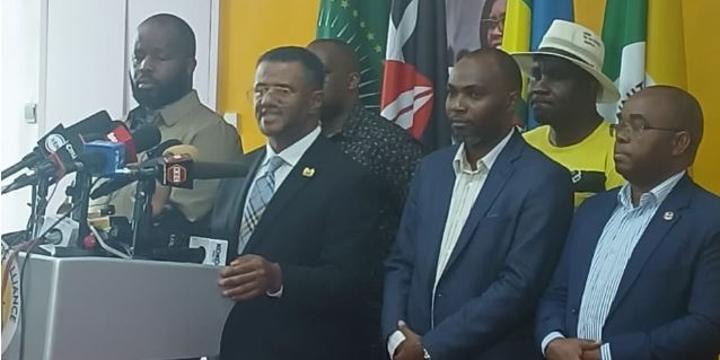
Speaking Wednesday during a press briefing at UDA Headquarters, UDA Secretary General, Hassan Omar, dismissed opposition claims that the fuel price crisis is locally manufactured, terming them misleading and politically driven.
“The global energy market has been disrupted by the ongoing conflict in the Middle East, and Kenya, like many other countries, is feeling the ripple effects,” said Omar, adding that assertions by the opposition that the crisis stems from government policy are “false, malicious and lacking analytical rigour.”
He further accused opposition leaders of politicising a global challenge for relevance, arguing that their claims reflect a “profound deficit in global policy comprehension.”
UDA maintained that the Government-to-Government (G-to-G) fuel import arrangement has been instrumental in stabilising the country’s energy supply amid volatile international oil prices.
According to Omar, the framework has ensured consistent availability of petroleum products, while cushioning the economy from external shocks.
“It is important to note that while oil prices remain extremely volatile internationally, the G-to-G arrangement has secured supply and delivered maximum benefits to the country,” he noted.
The Party also linked the arrangement to easing pressure on the foreign exchange market, particularly the US dollar.
It notes the deal has eliminated the need for oil marketing companies, to source dollars from the spot market, which previously fueled speculative demand and exchange rate instability.
“By removing the demand for dollars by over 100 oil marketing companies, the G-to-G framework has significantly reduced speculative pressure on the currency and helped stabilise the economy,” Omar added.
He reiterated that the government has taken additional measures to cushion consumers from high fuel costs.
The Secretary General cited the allocation of Sh6.2 billion through the Petroleum Development Levy (PDL) Fund, to stabilise pump prices and prevent further escalation.
Additionally, Omar highlighted a reduction in Value Added Tax (VAT) on petroleum products from 16 percent to eight (8) percent. As a result, pump prices for Super Petrol, Diesel and Kerosene now retail at Sh197.60, Sh196.63 and Sh152.78 respectively.
“This intervention is aimed at cushioning Kenyans from the high landed cost of fuel,” Omar said.
The Party also addressed criticism from opposition figures, including the impeached Deputy President, accusing him of contradicting his earlier position on the G-to-G framework.
“It is particularly notable that the impeached Deputy President personally received the first consignment under the G-to-G arrangement in April 2023 at the Kipevu Oil Terminal,” Omar asserted, accusing him of making “defamatory accusations” for political gain.
Omar further referenced former Attorney General Justin Muturi, stating that he had provided legal clearance for the G-to-G agreement in March 2023.
The Party argued that attempts to discredit the arrangement now amount to a misrepresentation of facts.
“In his capacity as Principal Legal Adviser, Muturi unequivocally approved the framework. Claims to the contrary are a distortion of the truth,” the Omar said.
He also criticised the importation of fuel outside the G-to-G framework, terming it illegal and detrimental to the economy.
Omar argued that such imports not only contravene established procedures, but also expose the country to higher costs and substandard products.
“Fuel importation outside the G-to-G or Open Tender System is unlawful, and any such actions must be treated as criminal,” he warned.
Omar urged Kenyans to disregard what it termed as misinformation from the opposition, insisting that the government remains committed to safeguarding the economy and ensuring energy security.
As the debate over fuel prices continues to dominate public discourse, the party Omar that the G-to-G arrangement remains a critical tool in insulating Kenya from global market shocks while stabilising both supply and prices.