
What You Need to Know
Kenyans seeking unclaimed financial assets may soon face anti-terrorism checks as part of proposed regulatory changes. The Financial Reporting Centre aims to prevent criminal groups from reclaiming assets through legitimate processes. The nominee for Director General, Naphtaly Rono, emphasized the need for information sharing and coordination between agencies to safeguard the financial system.
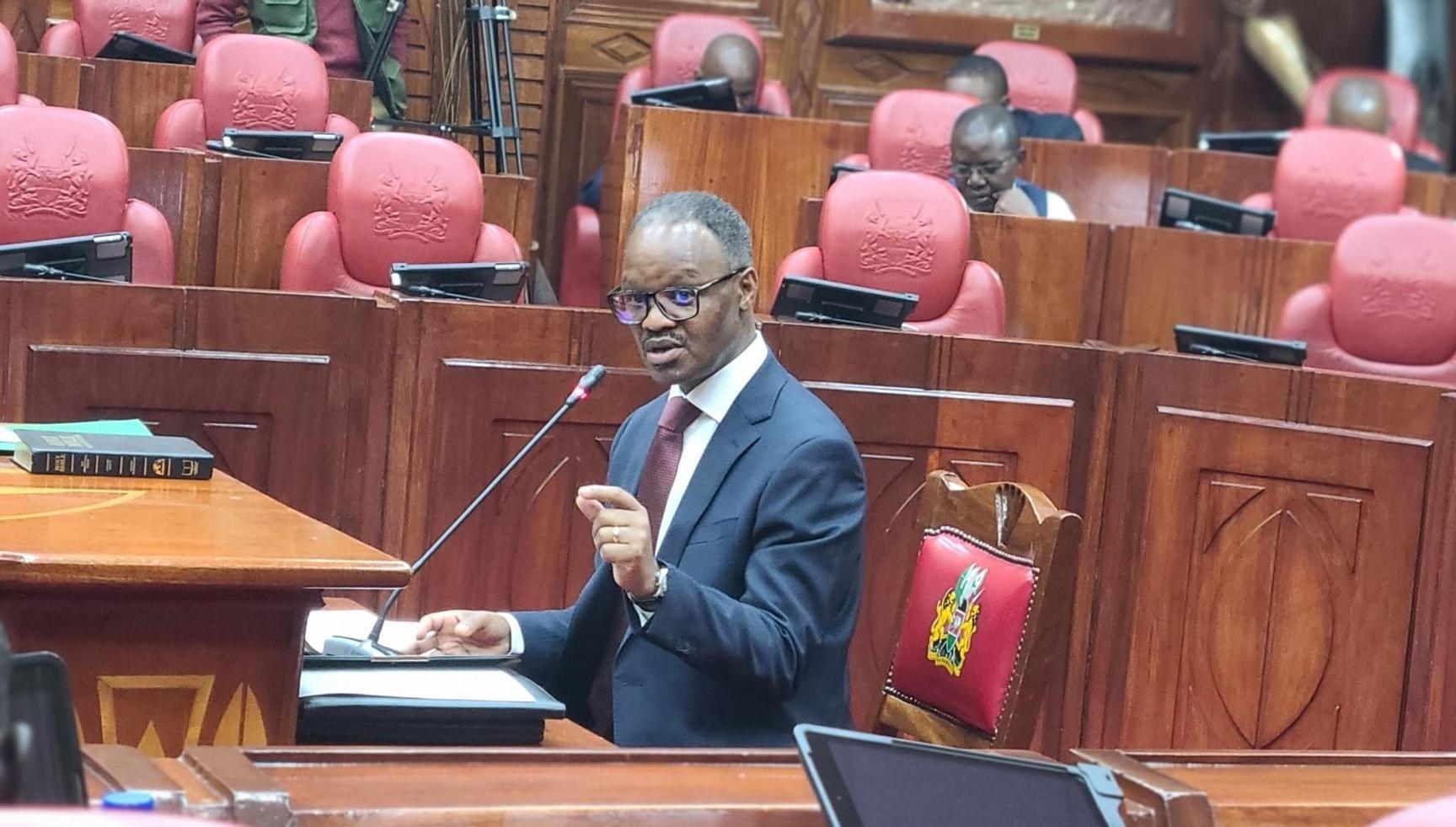
Africa-Press – Kenya. Financial Reporting Centre Director General nominee Naphtaly Rono
Kenyans seeking to be reunited with unclaimed bank accounts, insurance payouts and other dormant financial assets may soon have to undergo additional scrutiny by the Financial Reporting Centre (FRC).
This is under proposed changes aimed at tightening Kenya’s anti-money laundering and counter-terrorism financing (CFT) framework.
The proposal emerged during the vetting of Naphtaly Rono, the nominee for Director General of the Financial Reporting Centre, where lawmakers grilled him on how Kenya plans to close gaps that could allow criminal or terrorist networks to reclaim assets through legitimate recovery processes.
“So, I think one of the areas would be to be sharing information on ownership, so that the unclaimed assets are not united or reunited with families of the criminal groups or terrorist groups,” said Rono.
According to the nominee, if approved, the changes would introduce closer coordination between the FRC and the Unclaimed Financial Assets Authority (UFAA).
In the proposed structure, there will be information-sharing arrangements, including screening of beneficiaries against domestic terrorism designation lists maintained by the FRC, to ensure sanctioned individuals or their proxies do not benefit from reclaimed funds.
Currently, the UFAA operates independently under the Unclaimed Financial Assets Act, maintaining a database and trust fund to reunite dormant assets with their rightful owners.
“The risk is that unclaimed assets could be reunited with individuals linked to criminal or terrorist groups. That is where collaboration becomes important, so that proceeds of crime do not re-enter the economy through legitimate channels,” added the nominee.
The FRC, on the other hand, sits at the centre of Kenya’s AML, CFT and counter-proliferation financing (CPF) ecosystem, receiving and analysing reports from banks, insurers, capital markets players and other reporting institutions.
Rono told the committee that while UFAA is not a reporting institution under the AML framework, it plays a critical role in safeguarding the financial system.
He told MPs that effective AML enforcement depends on coordinated priorities, mutual trust and clearly defined operational goals, driven from the top.
“One of my priorities would be leadership engagement across agencies. When there is buy-in from the leadership, coordination and information sharing cascade down very easily,” he said.
Proposals on the table include regular multi-agency forums, joint investigations, shared training programs and the use of integrated case management and data-sharing systems—steps also required under Financial Action Task Force (FATF) standards on national coordination.
The finance committee chairperson Kimani Kuria sought to know from the nominee on how Kenya is prepared to tackle emerging risks, particularly those posed by virtual assets and cryptocurrencies, which were flagged as a key deficiency during Kenya’s recent mutual evaluation.
Rono acknowledged that virtual assets present heightened risks due to anonymity, speed of transactions and cross-border portability, especially when combined with weak regulation in other jurisdictions.
“Criminals and terrorists exploit peer-to-peer exchanges and enhanced anonymity features,” he said, noting that Kenyans have already been prosecuted for using cryptocurrencies to facilitate terrorism financing.
He said the recent enactment of virtual asset service provider legislation provides a foundation, but warned that success will depend on capacity building, specialised technology such as blockchain analytics and public awareness to curb fraud and illicit schemes.
The nominee pointed out that beneficial ownership transparency, supported by upcoming trust administration laws and online compliance tools, would be key to preventing abuse, while respecting constitutional rights.
Kenya has been strengthening its anti-money laundering (AML) and counter-terrorism financing (CFT) frameworks in response to growing concerns about financial crime. The Financial Reporting Centre (FRC) plays a pivotal role in this ecosystem, analyzing reports from various financial institutions to combat illicit activities. Recent evaluations have highlighted the need for improved coordination and information sharing among agencies to address emerging risks, particularly those associated with virtual assets and cryptocurrencies.
The introduction of new regulations reflects Kenya’s commitment to align with international standards set by the Financial Action Task Force (FATF). These measures,