Africa-Press – Kenya. The United Opposition has hardened its stance against the use of Smartmatic election technology in 2027, citing the company’s controversial track record globally and unresolved credibility questions from the disputed 2022 polls. The opposition argues that the Independent Electoral and Boundaries Commission’s continued engagement with Smartmatic risks undermining public confidence in the election.
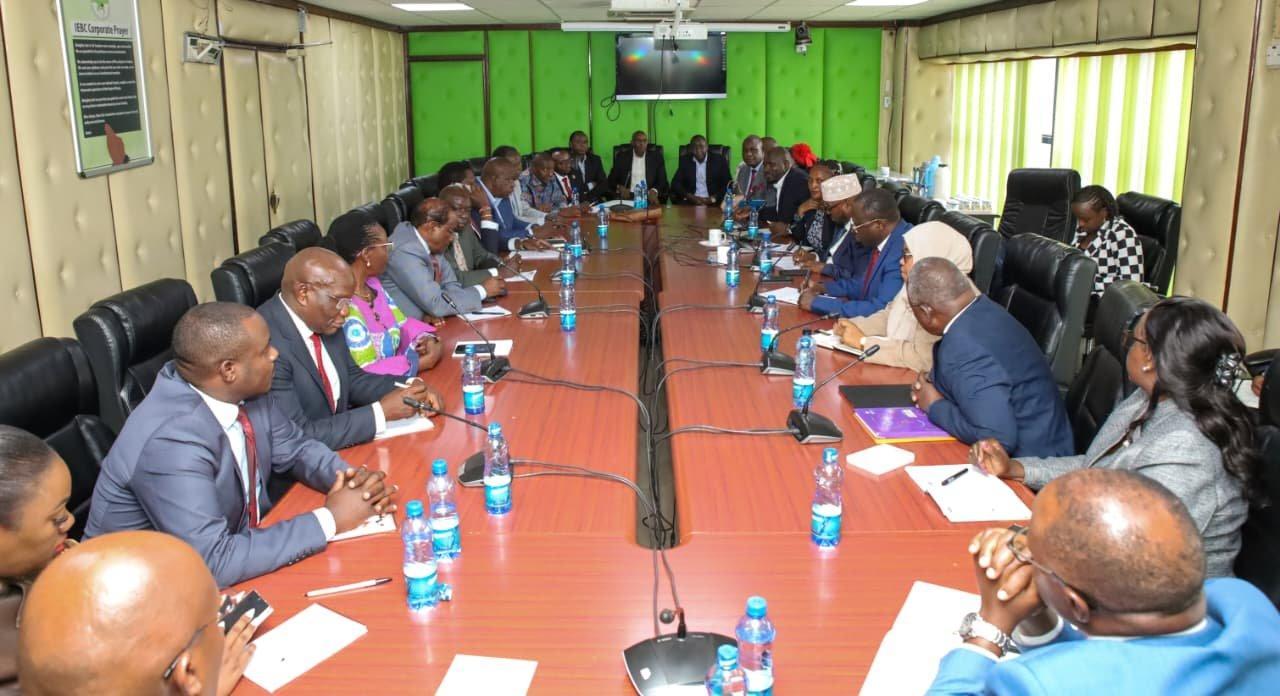
On Tuesday, opposition leaders met IEBC officials at Anniversary Towers in Nairobi, pressing the commission to abandon Smartmatic and overhaul its election technology framework.
The opposition leaders, led by Wiper’s Kalonzo Musyoka demanded that the commission disengages from Smartmatic, effectively placing election technology at the centre of the political battleground ahead of 2027.
The company supplied the Kenya Integrated Election Management System (Kiems) kits for the controversial 2022 polls.
The renewal of the contract has been condemned by the opposition, who term the company discredited.
The opposition leaders argue its global history raises red flags that the IEBC cannot ignore.
DAP-K leader Eugene Wamalwa called for the cancellation of the contract and that Smartmatic returns to Venezuela.
“We are also demanding that [IEBC chief executive Hussein] Marjan must go,” he said.
“He broke and violated the law by granting an illegal extension to Smartmatic and abused his office.”
On Wednesday, the DAP-K leader said the technology failed in the Ugandan elections as Kiems kits malfunctioned, a situation they would not want repeated in Kenya.
Smartmatic, a London-headquartered election technology firm, has been at the centre of high-profile election disputes in several countries.
In Venezuela, the company itself publicly alleged in 2017 that turnout figures announced by electoral authorities for a constituent assembly vote were inflated, a claim that brought global scrutiny to the integrity of electronic voting systems and the role of vendors.
In the US, Smartmatic became embroiled in prolonged legal and political controversies following the 2020 presidential election, as debates over electronic voting systems intensified.
While the company has denied wrongdoing and pursued legal action to defend its reputation, its credibility continues to be questioned.
Smartmatic has also faced scrutiny in Uganda, where opposition figures and civil society groups questioned the reliability and transparency of election technology used in past polls.
Although electoral authorities defended the systems, disputes over electronic transmission and access to data have led to public mistrust.
The Malawi Electoral Commission was last year forced to dismiss claims regarding the failure of the Smartmatic systems ahead of the General Election.
The company, however, describes itself as the world leader in applied cybersecurity and secure election technology, which involves voter registration, vote tabulation, results reporting and auditing.
Since its incorporation in the US in 2000, Smartmatic says its auditable and cybersecure solutions have processed more than 6.5 billion votes in elections on five continents — “all with zero security breaches”.
It also prides itself as an approved US Department of Defence vendor and a founding member of the Department of Homeland Security Council for the Election Infrastructure Subsector.
These global controversies reinforce long-standing fears in the country that election technology has been used to rig elections, a key talking point in the 2022 election petition.
Although the Supreme Court upheld President William Ruto’s election, the petition exposed structural weaknesses in results transmission, access to servers and the handling of statutory forms.
People’s Liberation Party leader Martha Karua said technology had repeatedly emerged as a key concern in disputed elections.
Coming late into office after the contested 2022 election, the Erastus Ethekon-led commission has struggled to rebuild trust amid persistent political pressure.
Following the Wednesday meeting, the IEBC said it would work strictly within the legal bounds.
“The IEBC pledged to undertake structured stakeholder engagements with all electoral players, full transparency, adherence to consultative processes and political neutrality to deliver a free, fair and verifiable election,” it said in a statement.
“The commission further committed to regular consultative meetings with leaders from all political divides under an open-door policy.”