Africa-Press – Kenya. Public universities are sinking deeper into debt even as billions of shillings are released annually under the student-centred funding model, prompting sharp questions from Members of Parliament over the sustainability of higher education financing.
The National Assembly Committee on Education has raised concern over ballooning pending bills, demanding an explanation for the widening deficits despite increased allocations to students through capitation and loans.
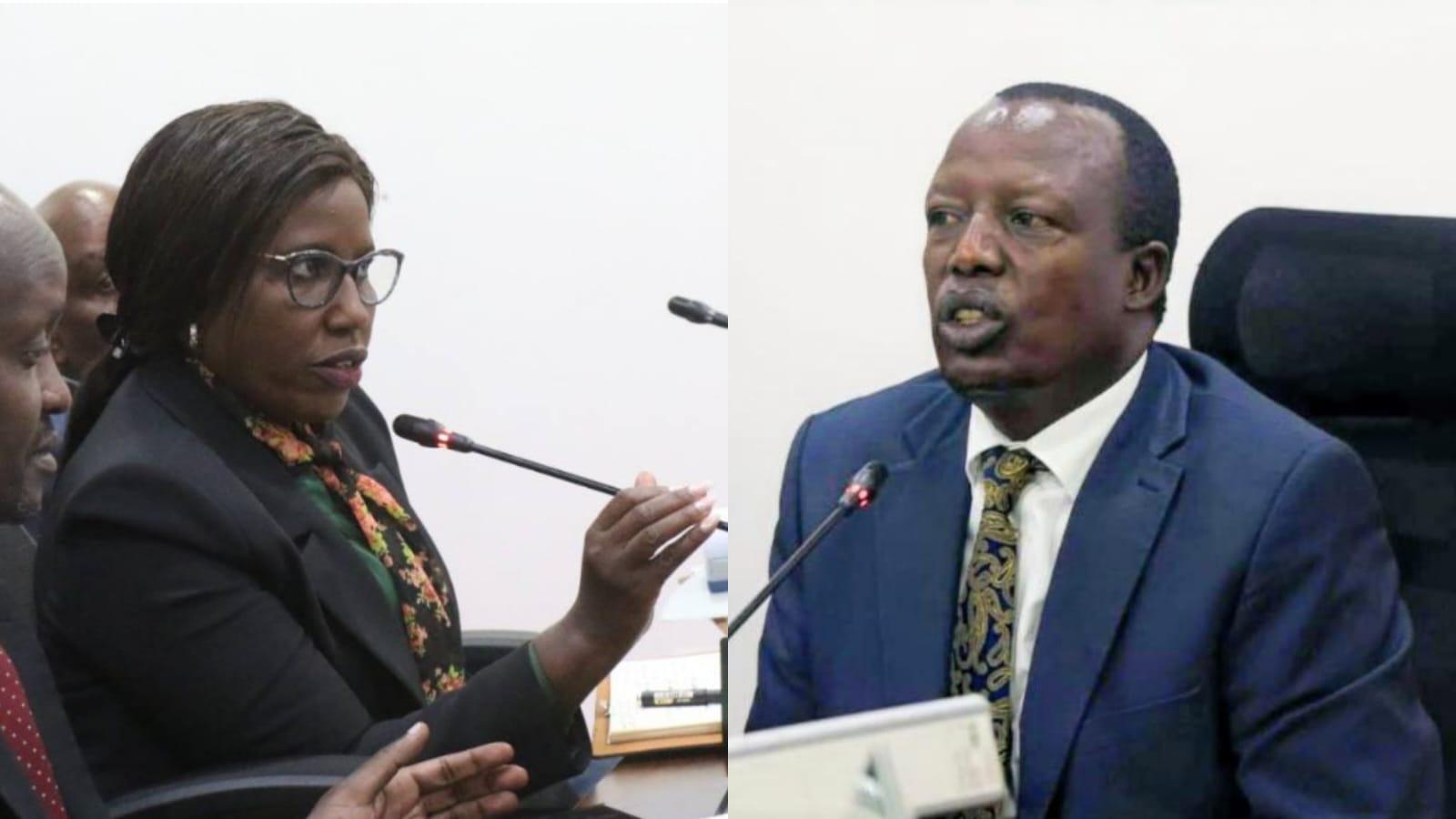
The committee, chaired by Julius Melly, on Thursday met senior officials from the Ministry of Education led by Higher Education and Research Principal Secretary Beatrice Inyangala, alongside Geoffrey Monari, chief executive of the Higher Education Loans Board (HELB), and Benedict Mutua, Vice Chancellor of the Technical University of Kenya (TUK), as scrutiny mounted over the financial state of universities.
Inyangala told the committee that the ministry is grappling with a Sh100 billion funding gap across higher education institutions, even as the government rolls out the needs-based funding model introduced by President William Ruto in 2023.
The PS told MPs that, whereas the government has consistently disbursed capital and loans to students, high unemployment continues to hinder full loan repayment as the beneficiaries have no steady incomes.
“We are implementing a multi-pronged strategy that includes asset-based securitisation and enhanced loan recoveries. Monthly recoveries have improved from Sh500 million to Sh650 million,” she said.
Inyangala explained that the new financing model ties funding to students’ financial backgrounds, programme costs and institutional efficiency, and is designed to promote equity and sustainability.
“Each household is assessed individually. Students from vulnerable backgrounds pay as little as Sh5,800 a year, while those from higher-income families pay up to Sh150,000,” she said.
Despite allocations to HELB and the University Fund rising to Sh98.4 billion and Sh4.8 billion respectively, MPs questioned why universities remain in deep financial distress.
Inyangala attributed the crisis to “a mismatch between projected and actual disbursements,” revealing that about eleven public universities are technically insolvent.
“Two institutions, Moi University and the Technical University of Kenya, are in critical financial condition,” she said.
At Moi University, acting vice chancellor Isaac Kiplagat confirmed that the institution received Sh1.5 billion last year, which was used to pay staff salaries and arrears.
However, he said the university still faces a pension liability of about Sh4.5 billion.
“We have received approvals to liquidate some properties in partnership with the Pension Fund to clear arrears,” he said.
At Technical University of Kenya, VC Mutua painted an even starker picture, telling MPs that the institution has been unable to pay gross salaries since 2013.
“We only pay net salaries. Our monthly wage bill stands at Sh102 million, but we receive less than Sh60 million from the Treasury. The staff-to-student ratio is nearly 1:1, which is unsustainable,” he said.
Monari urged the committee to support prompt disbursement of loan funds, arguing that timely payments would help stabilise universities since “money follows the student.”
In closing, Melly assured officials that the committee would make recommendations to ensure adequate and predictable funding.
“The government must align university financing with the new model’s intent to safeguard the future of higher education,” he said.
The exchanges underscored the precarious state of public universities, with legislators warning that without structural reforms and predictable financing, institutions risk sliding further into insolvency despite the injection of student-based funds.
Meanwhile, the Public Investments Committee (PIC) on Governance and Education, chaired by Bumula MP Wanami Wamboka, issued a stern warning to institutions of higher learning to take audit processes seriously, emphasising that delayed responses, lack of proper appearance before the committee and weak leadership will not be tolerated.
Legislators reiterated that such lapses ultimately undermine the service provided to students and the wider public.