What You Need to Know
Energy Cabinet Secretary Opiyo Wandayi has rejected calls to resign amid scrutiny over fuel importation outside the government framework. He insists he acted promptly upon discovering the irregular shipment and that investigations are ongoing. Wandayi maintains that the disputed fuel will not affect local prices and emphasizes the need for accountability in the energy sector.
Africa-Press – Kenya. Energy and Petroleum Cabinet Secretary Opiyo Wandayi has dismissed mounting pressure to resign over the controversial importation of fuel outside the government-to-government (G-to-G) framework, maintaining that there is no basis for him to step aside.
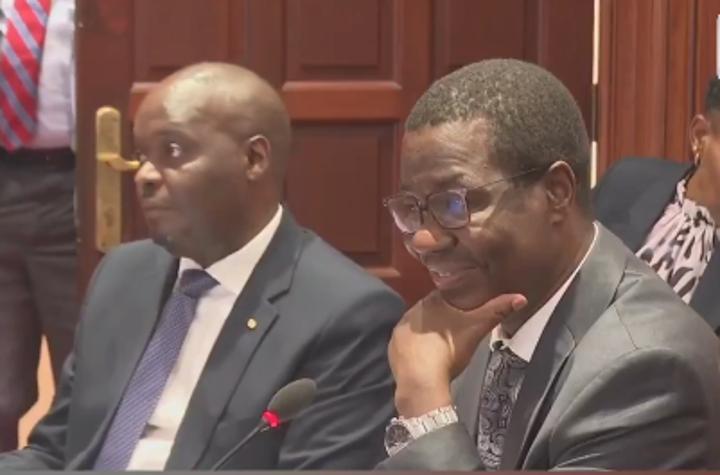
Appearing before the National Assembly Departmental Committee on Energy on Monday, Wandayi defended his role in the unfolding saga, saying investigations are ongoing and insisting he acted promptly upon learning of the irregular shipment.
“When all is said and done, in the final analysis, clearly there is no reason to stop me from discharging my duties as Cabinet Secretary,” he told MPs.
The CS said the consignment in question was processed outside the established G-to-G arrangement, which the government has relied on to stabilise prices and shield the country from global oil market shocks.
He maintained that the deviation did not receive the necessary approvals at his level.
“The approval was not sought, and if it had been sought, I would have escalated the matter to the president,” Wandayi said.
Wandayi further outlined the internal processes leading up to the shipment, pointing to a multi-agency technical team that had flagged the need for additional fuel stocks.
“A brief on supply position was prepared by a multi-agency technical team that recommended consideration for contingency cargo to shore up the stocks. The brief was presented to the PS, State Department of Energy for consideration and approval,” he said
He told the committee that once he became aware of the shipment, he moved swiftly and briefed President William Ruto on March 30, prompting a directive to halt a subsequent consignment.
“When we realised that the oil came outside the G-to-G, I reported to the President. It was from that brief that he directed that the next consignment be stopped,” he said.
Wandayi added that the disputed fuel would not be factored into the petroleum pump price review and that the importer had agreed to withdraw it from the market.
The CS told the committee that a waiver had been sought to allow the consignment into the country despite deviations from required specifications.
He maintained that the matter is now under investigation by the Director of Criminal Investigations.
“The matter is under investigation by the Director of Criminal Investigations,” he added.
The CS also addressed concerns over the recent resignations of three senior officials in the energy sector.
He told MPs he was unaware of the reasons behind their exits.
“I do not know why the three officers resigned. There is no evidence of coercion on their resignation. Investigations are ongoing,” Wandayi said.
His response prompted the committee to demand copies of the resignation letters, noting that the appointing authority could provide clarity on the circumstances surrounding the departures.
The controversy comes amid heightened scrutiny of fuel procurement processes, with questions raised over pricing discrepancies and the integrity of supply chains.
The G-to-G framework, introduced to cushion Kenyans from volatile global prices, has recently come under pressure following reports of parallel import arrangements.
Wandayi acknowledged that global fuel prices remain high but said it was up to the regulator to determine any adjustments locally.
“Fuel prices are up worldwide. I do not know whether Epra will increase or not, but the reality is that prices are high,” he said.
Even as the CS defended his position, calls for accountability have continued to emerge from sections of the political class.
However, Wandayi maintained that due process should prevail, reiterating that investigations will establish the facts.
“There is no reason to stop me from continuing to discharge my duties,” he said as pressure mounts for clarity on the handling of the fuel importation process and broader oversight within the sector.
The government-to-government (G-to-G) framework for fuel importation was established to stabilize prices and protect consumers from global market fluctuations. Recently, however, this system has faced challenges, including allegations of parallel import arrangements that could undermine its effectiveness. The scrutiny surrounding these issues has intensified, prompting calls for greater transparency and accountability within the energy sector in Kenya. As global fuel prices remain high, the integrity of procurement processes is under the spotlight, raising concerns about the management of energy resources.