What You Need to Know
The Competitiveness and Financial Inclusion Project (CAFI) is conducting a workshop in Maseru to improve financial literacy among youth and women-led enterprises. The initiative aims to equip participants with the knowledge necessary to access finance, thereby enhancing their bankability and investor readiness, crucial for sustainable business growth in Lesotho.
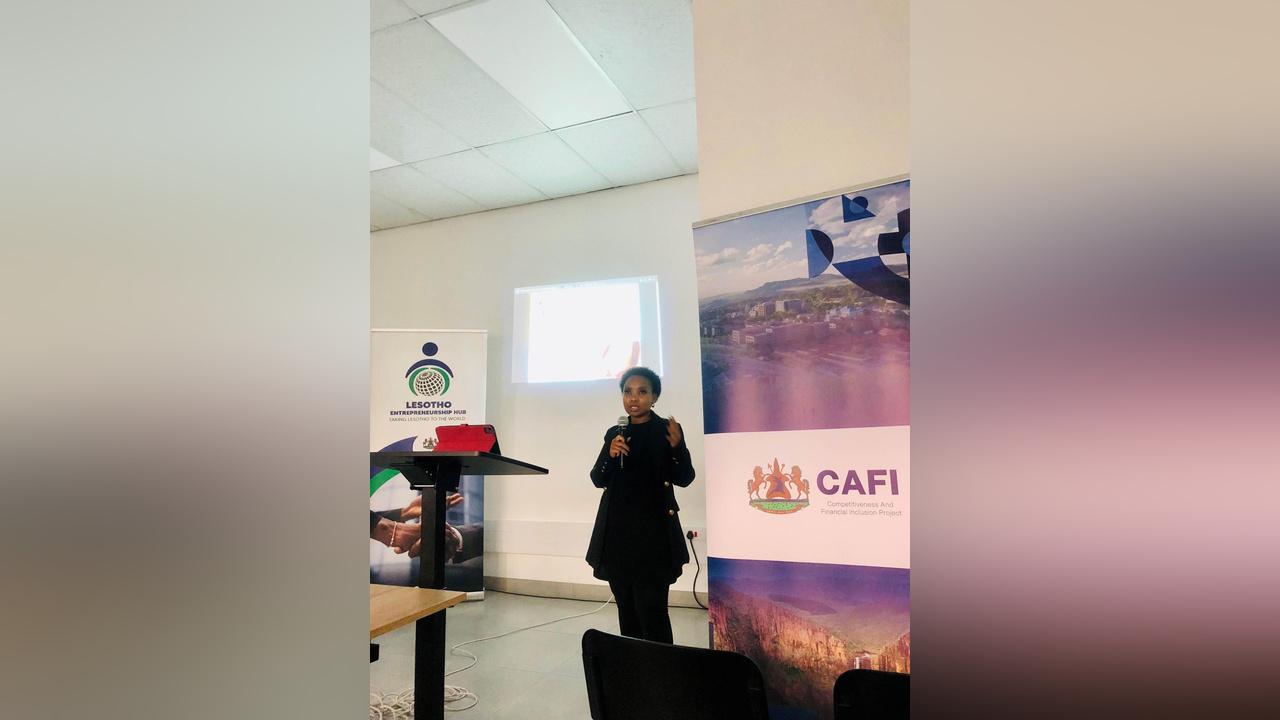
Africa-Press – Lesotho. The Competitiveness and Financial Inclusion Project (CAFI) is hosting a two-day workshop in Maseru aimed at strengthening financial literacy and empowering enterprises led by youth and women.
Speaking at the event, Acting Entrepreneurship Hub and Seed Financing Facility Manager (ACCA) at CAFI, Ms. Mamoriti Phangoa, said the primary purpose of the entrepreneurship hub is to equip enterprises with knowledge on access to finance, enabling them to become bankable and investor-ready.
Ms. Phangoa stated that the incubation programme for the fourth cohort began in September 2025 and will officially conclude on March 31, 2026.
She noted that CAFI also hosts demonstration days, which provide a platform for enterprises to attract potential investors and explore various options for accessing finance.
Access to Finance Specialist, Mr. Thabo Monyane, said the initiative brings together businesses to enhance their credibility in the eyes of banks and financiers, while guiding them on how to position themselves effectively to secure funding.
He emphasised that financial institutions in Lesotho require businesses to comply with consumer protection regulations and align with the country’s financial literacy drive.
Mr. Monyane explained that a financially healthy business is characterised by positive cash flow, consistency in operations and the potential for long-term sustainability.
He further highlighted that such businesses should demonstrate sound financial practices, including proper income flow management, savings, investment, responsible debt usage and risk management.
He added that it is essential for enterprises to understand and utilize tools that help manage risks and safeguard business income.
Meanwhile, Co-founder and Chief Operating Officer of Prime Capital, Ms. Nini Rose Moru, said that in Lesotho, over 85 per cent of businesses are Micro, Small and Medium-sized Enterprises (MSMEs), yet many face challenges in accessing finance due to lack of proper records, collateral and financial literacy.
She noted that only 4.2 per cent of SMEs had access to loans by the end of 2023, adding that women face even greater barriers, while youth remain financially excluded due to informality and limited exposure to financial education.
Ms. Moru indicated that addressing these challenges is crucial for promoting inclusive economic growth and empowering entrepreneurs in Lesotho.
She said enterprises can access funding through various channels, including microfinance institutions, government grants and subsidy programmes, angel investors, development finance institutions, accelerators and crowdfunding platforms.
She outlined that most funders require a clear use of funds, proof that the business is operational, the capacity to repay or deliver results, as well as credibility and a basic business structure.
Ms. Moru advised entrepreneurs to develop compelling business narratives, maintain consistent financial records, remain focused, demonstrate growth and understand their business purpose.
“Be transparent about the challenges you are facing, demonstrate strong financial habits and align your funding request with your business stage without overreaching,” she said.
The Competitiveness and Financial Inclusion Project supports local MSMEs and entrepreneurs by increasing access to finance, providing business incubation services and boosting economic growth.
Lesotho’s economy heavily relies on Micro, Small and Medium-sized Enterprises (MSMEs), which constitute over 85% of businesses. However, many of these enterprises struggle with access to finance due to inadequate financial literacy and record-keeping. The CAFI initiative aims to address these challenges by providing training and resources to empower youth and women entrepreneurs, fostering a more inclusive economic environment. By enhancing financial literacy, CAFI seeks to promote sustainable business practices and improve the overall economic landscape in Lesotho.