
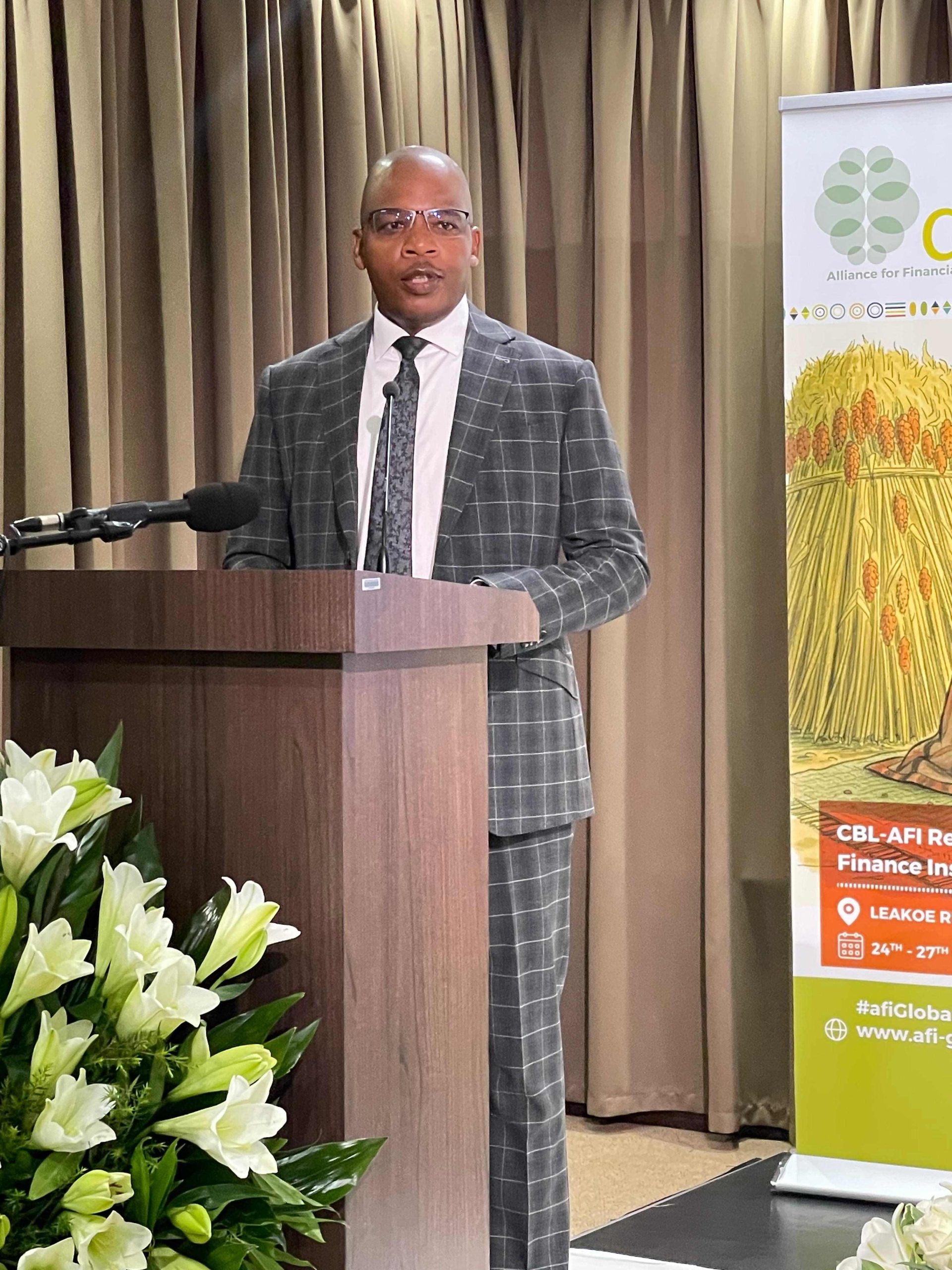
Maseru, Feb. 24 — The Central Bank of Lesotho (CBL) in collaboration with the Alliance for Financial Inclusion (AFI) is hosting a four-day Regional Joint Learning Program on Alternative Finance Instruments for Women-led MSMEs in Maseru, a move closely aligned with the achievement of the United Nations Sustainable Development Goals (SDGs).
In his welcoming remarks, CBL First Deputy Governor Mr. Lehlomela Mohapi said that the gathering marks the first physical meeting hosted by the Bank following earlier virtual engagements held during the COVID-19 pandemic.
He noted that the program provides an important platform for knowledge exchange and skills sharing aimed at identifying innovative ways to enhance financial inclusion for women-led micro, small and medium enterprises (MSMEs).
AFI Chief Executive Officer Dr. Alfred Hannig described the meeting as critical, highlighting that women constitute a significant proportion of the population but continue to face barriers in accessing financial services.
He emphasized that women-led SMEs are key drivers of economic activity, innovation and employment creation, yet financial exclusion remains a persistent challenge.
Dr. Hannig noted that challenges including limited access to finance, collateral constraints and informality require deliberate policy interventions, strengthened collaboration among stakeholders and peer learning platforms such as this regional program.
The initiative directly contributes to SDG 5 (Gender Equality) by promoting women’s economic empowerment and improving their access to financial resources.
By strengthening women-led enterprises, the program also advances SDG 8 (Decent Work and Economic Growth) through support for entrepreneurship, job creation and inclusive economic participation.
Furthermore, efforts to improve access to alternative finance instruments align with SDG 9 (Industry, Innovation and Infrastructure) by encouraging innovation in financial products tailored to underserved groups.
Expanding financial inclusion also supports SDG 10 (Reduced Inequalities) by addressing systemic barriers such as limited collateral, informality and financial literacy gaps that disproportionately affect women and small businesses.
The meeting reflects Lesotho’s national development priorities and broader regional commitments to women’s economic empowerment, reinforcing the principle that financial inclusion is not only a social necessity but an economic imperative essential to achieving the 2030 Agenda for Sustainable Development.
Ends/NT/ml