What You Need to Know
The Confucius Institute at the National University of Lesotho and the Ministry of Agriculture held a consultative meeting to enhance their partnership in agricultural education and youth empowerment. This collaboration aims to modernize the agricultural sector, improve food security, and provide training for smallholder farmers and government officials.
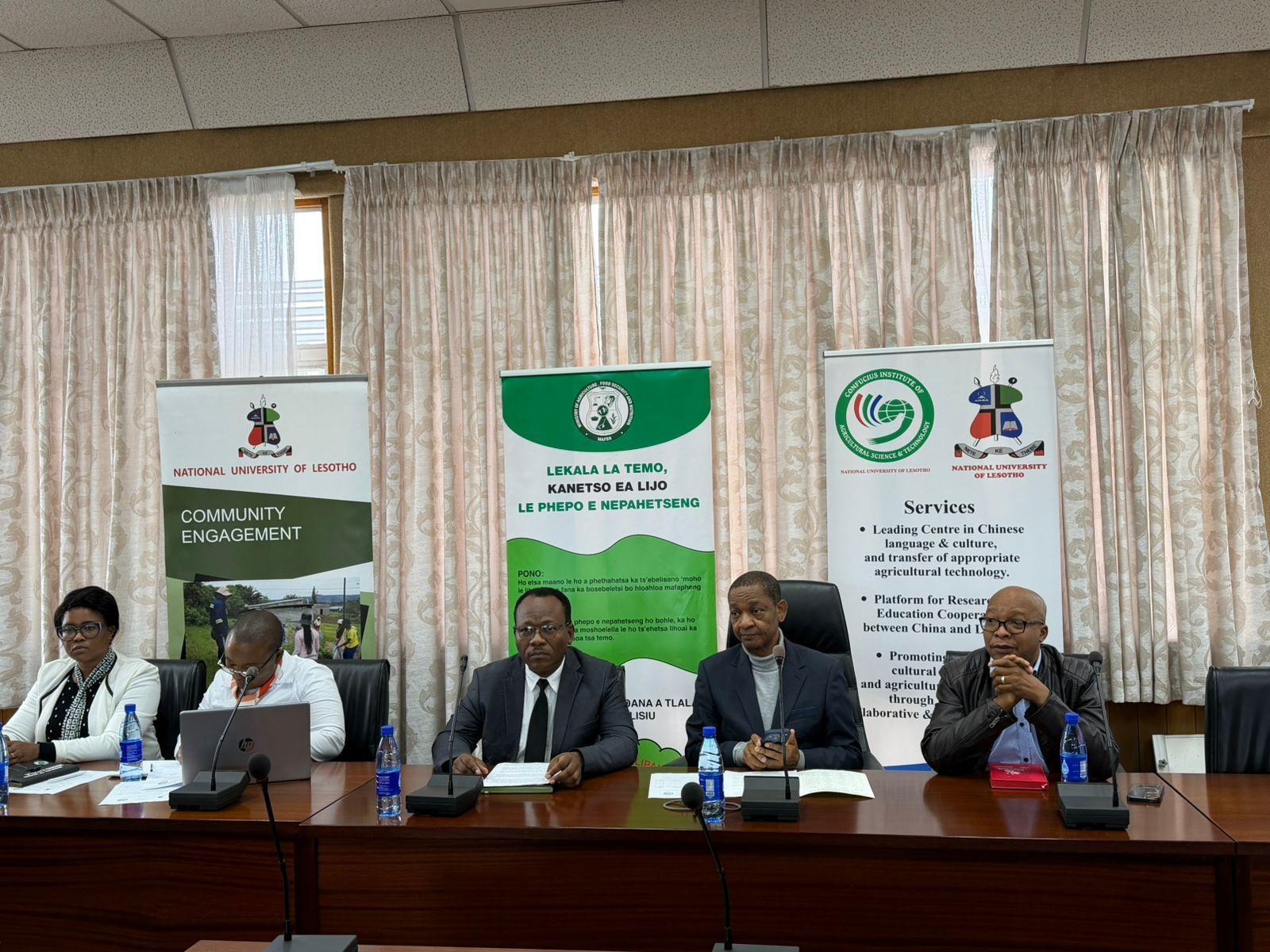
Africa-Press – Lesotho. In an effort to strengthen partnership, the Confucius Institute of the National University of Lesotho (NUL CI) together with the Ministry of Agriculture, Food Security and Nutrition on Wednesday held a one day consultative meeting under the theme: “Strengthening Sino-Lesotho partnerships in Agricultural Education, Innovation and Youth empowerment”.
The Confucius Institute at NUL is designed to serve as a centre of excellence in linguistic and agricultural education, aligning with Lesotho’s national development goals while fostering international cooperation.
In his remarks, Principal Secretary Dr. Khothatso Ts’ooana said this reaffirmed the strong potential between the ministry and the Confucius Institute as it highlights opportunities in agricultural training including research, innovation and youth empowerment. The areas, he said are central to the national development agenda and food security priorities.
He said, they are very appreciative of the valuable support the Confucius Institute has committed to provide such as capacity building, technical expertise, knowledge exchange and skills development saying they strengthen efforts to modernize agricultural sector and enhance capabilities of their human resource.
He said, he is encouraged by identification of key priority areas for collaboration which include intensifying cooperation between NUL CI and the ministry in training of smallholder farmers, government officials on agro-processing, animal diseas prevention and control, farm machinery as well as establishment of belt and road laboratories in Lesotho to serve as economic development and shared commitment in defining practical steps and timelines.
Dr. Ts’ooana indicated that these outcomes provide a solid foundation for a meaningful, structured results oriented partnership saying as the ministry, they welcome this collaboration and stand ready to support its advancement including facilitating necessary processes toward formal endorsement and broaden stakeholder engagement.
He stressed that their task now is implementation therefore urging all to translate today’s discussions into tangible programs that will strengthen the agricultural sector and empower youth as well as improve livelihoods across their nation.
On the other hand, NUL Vice-Chancellor Professor Isaac Fajana said today they are standing at the intersection of knowledge, innovation and national development. He said they are reeling the partnership that nourishes the people and secure prosperous future for Lesotho.
He mentioned that NUL has been a beacon of higher education, research and community service.
He said NUL CI has been established through a cherished partnership with Jilin University in China which embodies their commitment and collaboration as a hub for practical agricultural skills, agro processing and youth empowerment, the areas that are critical to the country’s food security and economic resilience.
He noted that opportunities for this partnership include joined training programmes where youth learn modern farming techniques, Chinese language by agricultural extension workers, access to global expertise, exchange visits for innovation and agro processing. He emphasised that this collaboration can transform challenges like climate change, youth unemployment as well as lead to opportunities for sustainable growth.
He therefore urged that together they plant seed of collaboration that will yield lasting results for Lesotho.
Moreover, giving an overview of the Confucius Institute Co-Director Dr. Meng Fanxing said it Confucius operates as an academic hub for: Chinese Language and Culture, offering structured language programmes from basic to advanced levels, enabling students and professionals to engage effectively with China in trade, diplomacy and cultural exchange.
Again, he said it is a hub for: Agricultural Sciences and Technology, saying it introduces innovative agricultural techniques and sustainable farming practices inspired by China’s agronomy, food security and agro-processing success.
He added that it also offers: Research and Knowledge Exchange saying they promote joint research initiatives between Lesotho and China, focusing on sustainable agricultural development, technology transfer and interdisciplinary learning.
He indicated that the Institute also offers Cultural and Academic Collaboration: saying they facilitate exchange programmes, international conferences and cooperative educational projects that bridge cultural and academic.
He explained that through the Confucius Institute, China helps African countries in reducing food insecurity saying the cooperation is very important because agriculture is also important as people need food every day.
“China has been farming successfully for many years. Now Basotho farmers will learn new ways to grow more food, save water and fight climate change from the Chinese experience. Chinese experts will visit Lesotho to share knowledge with farmers”, he said.
On one hand, Dr. Meng indicated that since its launch in 2025, they have covered every education level for Chinese language from NUL students, NULIS students, Roma Primary students, Roma community and NUL staff totalling over 1200 people with basic Mandarin.
The establishment of the Confucius Institute at NUL is a transformative development, reinforcing the university’s role as a leader in international education, cultural exchange and agricultural advancement. This initiative offers unparalleled opportunities for students, researchers and professionals, ensuring that NUL remains at the forefront of academic excellence and global engagement.
The Confucius Institute was established to promote Chinese language and culture, as well as agricultural sciences in Lesotho. Since its inception, it has aimed to foster international cooperation and knowledge exchange, particularly in agriculture, which is vital for Lesotho’s economy. The partnership with the Ministry of Agriculture signifies a commitment to addressing food security and empowering youth through education and innovation in farming practices. This initiative aligns with Lesotho’s national development goals and reflects a growing trend of international collaboration in agricultural education.