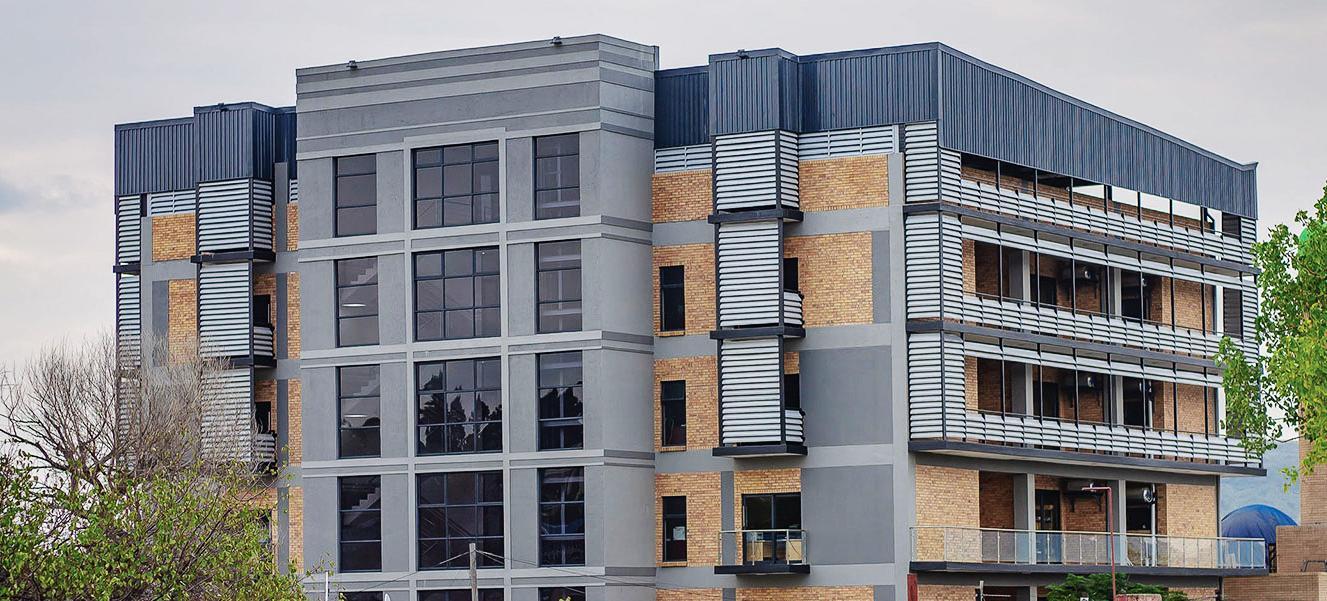
Africa-Press – Lesotho. IN a move that has stunned governance observers and raised fresh questions about Lesotho’s spending priorities, the government has ordered the Independent Electoral Commission (IEC) to sell its newly-acquired M77 million office building and relocate to a vacant, undeveloped site in Masowe worth M25.5 million — all because the current structure is “too tall” for the comfort of the National Security Service (NSS) and the Prime Minister’s office.
A savingram addressed to Director of Elections Advocate Mpaiphele Maqutu — seen by the Lesotho Times — confirms that Cabinet has approved a proposal by Minister of Law and Justice Richard Ramoeletsi to forcibly move the IEC out of its modern five-storey headquarters in Maseru West, less than a year after it took occupation.
The savingram, issued by Finance Ministry Principal Secretary Nthoateng Lebona, instructs the IEC to prepare a full project proposal for the Masowe site, including legal documentation, cost breakdowns, timelines, risk assessments and funding plans.
IEC not budging: “We just bought this building. We’re not moving.”
But IEC spokesperson Marafaele Mohloboli says the electoral body will not be pushed into vacating premises it lawfully purchased for M77 million.
“The IEC does not have an interest in purchasing a site in any way. IEC has a building and does not need a site,” she said.
Ms Mohloboli emphasised that the Commission is waiting for the lease to be finalised and will not abandon Elections House without a lawful cause.
“It does not make sense to purchase a site for M25.5 million which has not even been developed. The Commission will not vacate these premises until this issue has been resolved legally,” she said.
A recycled controversy
The IEC only moved into Elections House in March 2024 after public outrage over the Commission renting offices at Prime Minister Sam Matekane’s MGC Park — a glaring conflict of interest for an institution meant to operate independently.
Now, barely two years later, the IEC is once again embroiled in a politically charged relocation saga.
This time, the government argues that the IEC building is a “security threat” because it overlooks the State House. Cabinet initially sought to place NSS intelligence officers on the fourth floor of Elections House to monitor the area — a proposal the IEC rejected as an attack on its autonomy.
Unable to secure the floor for the NSS, the government appears determined to push the IEC out altogether.
Skewed priorities: Why uproot a functioning institution?
What makes the situation particularly shocking is that Elections House was bought precisely to resolve a long-standing controversy about IEC independence. Now, despite having spent M77 million of public funds on a permanent headquarters, the government wants the building sold — and replaced with an empty plot requiring millions more for construction.
This would mean:
Millions wasted in sunk costs
Millions more spent on new construction
Months or years of operational disruption
A constitutional body being uprooted because the Prime Minister does not want a tall structure near State House
In a country battling unemployment, poverty and violent crime, forcing the IEC to move because the building “looks down on” the Prime Minister’s residence is nothing short of extravagant misgovernance, one government official, speaking on condition of anonymity because she is not authorised to speak to the media said, said.
A security threat — or political insecurity?
Government insists the height of Elections House poses a danger to State House operations. But governance experts say this explanation appears thin, especially given the IEC’s recent international recognition as one of Africa’s top four electoral bodies.
Critics argue that instead of celebrating and strengthening an institution vital for democratic stability, the government is creating upheaval for reasons that appear more political than practical.
IEC stands its ground
For now, the IEC is refusing to leave:
It has a legally acquired building
It has no budget or mandate to buy undeveloped land
It sees no rational justification for the government’s demands
And unless Cabinet can provide one, this matter appears headed for a legal confrontation.
One thing is clear:
For an institution that just earned continental praise for its efficiency and credibility, being uprooted over height-driven “security fears” is not only irrational — it is emblematic of a government with skewed priorities and an underdeveloped respect for institutional independence.