
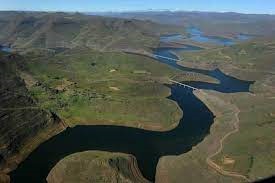
Lesotho Highlands Development Authority (LHDA) has awarded Zutari contract to provide the design and site supervision services for the construction of the Phase II of the Lesotho Highlands Water Project (LHWP) bridge project.
The LHWP II bridge project involves construction of Senqu Bridge, the Mabunyaneng Bridge and the Khubelu Bridge. LHWP II Senqu Bridge This is the largest of the three bridges that will be constructed to span the Polihali reservoir. It is 100m high and has a length of 825m.
Mabunyaneng Bridge and Khubelu Bridge have a length of 120m and 270 m respectively. Their superstructures consist of variable-depth prefabricated post-tensioned concrete beams, with in-situ cast reinforced concrete top slabs. The substructure consists of reinforced concrete wall columns and closed wall abutments with wing walls.
Also Read:South Africa’s TCTA raises US $1bn for Lesotho Highlands Water Project
Reducing construction time
The Polihali reservoir in the valleys and tributary catchments of the Senqu and Khubelu rivers, which will be formed by the construction of the Polihali Dam, will have a surface area of 5000 hectares. Besides the three major bridges, the restoration of access across the reservoir also necessitates the construction of new approach road sections to the bridges that tie into the existing A1 road. Zutari will break ground on the project in the second quarter of 2022. Senqu Bridge will take three years to be completed while Mabunyaneng and Khubelu bridges will take two years.
“One of the main constraints in building this bridge is that the construction of the dam must be completed on time to pave way for the impoundment of the dam. However, construction time could be reduced by constructing the bridge from both sides. In addition, flooding of the Senqu River might delay construction when a pier is constructed in the centre of the river,” said Nati Wilson, Chief Technology Officer of Zutari Transportation Services.
“In order to meet these two design constraints, temporary cast steel is a common practice which supports the front portion of the deck by means of cable stays. The wharf in the middle of the river was demolished, resulting in a 100-meter span above the Senqu River. This section is formed by the confluence of two cover plates thrown from both banks of the river in the middle of the 100-meter section. The substructure consists of 90-m-high piers founded on spread footings,” he added.