
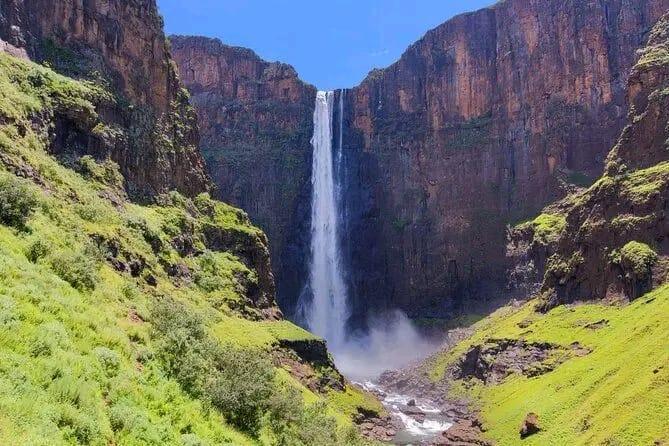
MASERU – Perched high in the heart of Southern Africa, Lesotho is steadily cementing its reputation as a premier destination for adventure, culture and eco-tourism. From cascading waterfalls and rugged mountain passes to historic landmarks and international sporting events, the Mountain Kingdom’s tourism sector is experiencing renewed growth—buoyed by strategic investment, global partnerships and a calendar of high-profile events.
Among Lesotho’s most celebrated attractions is Maletsunyane Falls, one of Africa’s highest single-drop waterfalls. The site recorded an 8.6 percent increase in visitors—rising from 7,468 in 2024 to 8,093 in 2025—underscoring its enduring appeal.
Equally captivating is the dramatic Sani Pass, a winding mountain route that draws thrill-seekers and off-road enthusiasts, while Ts’ehlanyane National Park offers pristine biodiversity for hikers and nature lovers.
Closer to the capital, the newly refurbished Makoanyane Square—often the first landmark encountered by visitors entering through the Maseru Border Post—has emerged as a symbol of urban renewal. With upgraded electronic fountains and enhanced landscaping, the square now projects a modern image while honouring Basotho soldiers who perished in World War II.
A snip view of refurbished Makoanyane Square which has become a busiest area around town during the day and at night for photo shoots, the place have always attracted couple for wedding picture moments
A major pillar of Lesotho’s tourism growth is the legendary Roof of Africa, widely regarded as one of the world’s toughest off-road motorcycle endurance races. The 2025 edition marked the 54th running of the event and was hosted in Ha-Lebamang, Maseru, from November 20 to 22.
This year’s race carried historic significance as the final round of the Hard Enduro World Championship, placing Lesotho firmly on the global motorsport calendar. The event attracts more than 400 registered riders annually, alongside thousands of spectators, generating substantial revenue across accommodation, hospitality, fuel and retail sectors.
According to the Lesotho Tourism Development Corporation (LTDC), the 2022 race generated approximately M10 million in revenue, with projections expected to rise in subsequent years.
Events such as these not only test endurance, skill and strategy among elite riders but also showcase Lesotho’s dramatic landscapes to a worldwide audience—positioning the country as a hub for extreme sports and adventure tourism.
Riders during the famous Roof of Africa race
Tourism Minister Motlatsi Maqelepo says the 2025–26 fiscal year budget allocation of M207.2 million, themed “Economic Transformation,” signals government’s commitment to diversifying the economy through tourism.
“Over a million tourists are targeted this financial period, and we anticipate even more in the coming years. It cannot be business as usual if we are to attain radical economic transformation,” he said.
The sector currently employs an estimated 25,000 people—representing 4.6 percent of national employment—and contributes 5.5 percent to Gross Domestic Product. Budget projections suggest this figure could surpass six percent in the coming years.
Under the National Strategic Development Plan II (NSDP II) review extension, tourism remains a priority sector. Principal Secretary in the Ministry of Tourism, ‘Mantiti Khabo, says the ministry is pursuing a holistic strategy that includes refurbishing key heritage sites such as Thaba-Bosiu, the mountain fortress of founding father Morena Moshoeshoe I.
Thaba-Bosiu recorded a 4.5 percent increase in visitors—from 24,464 in 2024 to 25,574 in 2025. Revitalising such heritage landmarks, she noted, encourages longer visitor stays and increased revenue generation.
Lesotho’s tourism ambitions have also been strengthened through a partnership with the African Tourism Board. A recently signed Memorandum of Understanding focuses on four pillars: global positioning, capacity enhancement, investment facilitation, and marketing development.
The collaboration aims to position Lesotho as Southern Africa’s leading mountain, culture and adventure ecotourism destination through digital storytelling and global ambassadorial platforms.
The partnership gained momentum following a visit by prominent African YouTuber Wode Maya, who described Lesotho as a “magical” destination with stunning scenery and rich cultural experiences—further amplifying the country’s online visibility.
Growth in tourism is already being felt at the grassroots level. Revenue in the accommodation sub-sector rose by 3.6 percent compared to 2024, while employment increased by 81 jobs—a significant boost for local communities.
At Gracing Lodge in Roma, restaurant Manager ‘Malika Potsanenyane says events such as the Roof of Africa have positively impacted business.
“Some of the bikers were accommodated here, and apart from lodging, visitors enjoyed meals and other services. It has certainly improved business,” she said, calling for continued government and stakeholder collaboration to sustain the sector’s upward trajectory.
Meanwhile, local Contractor Fanyane Mofokeng, who oversaw rehabilitation works at Maseru Main Circle and Makoanyane Square, believes the revitalised fountains symbolise more than aesthetic improvement.
“This new image not only beautifies the country but highlights that Lesotho is a water-rich nation—something unique that entices both domestic and international tourists,” he said.
As Lesotho prepares to mark 60 years of independence in 2026—coinciding with global cultural milestones such as China’s 21st Intergovernmental Committee session for the Safeguarding of Intangible Cultural Heritage—the tourism sector stands poised for further expansion.
With strong policy backing, growing international partnerships and a portfolio of natural and cultural attractions, Lesotho’s tourism industry is not merely growing—it is ascending.
For the Mountain Kingdom, the journey toward economic transformation is being charted along scenic passes, historic plateaus and roaring waterfalls—one visitor at a time.
Ends/AM/ml