
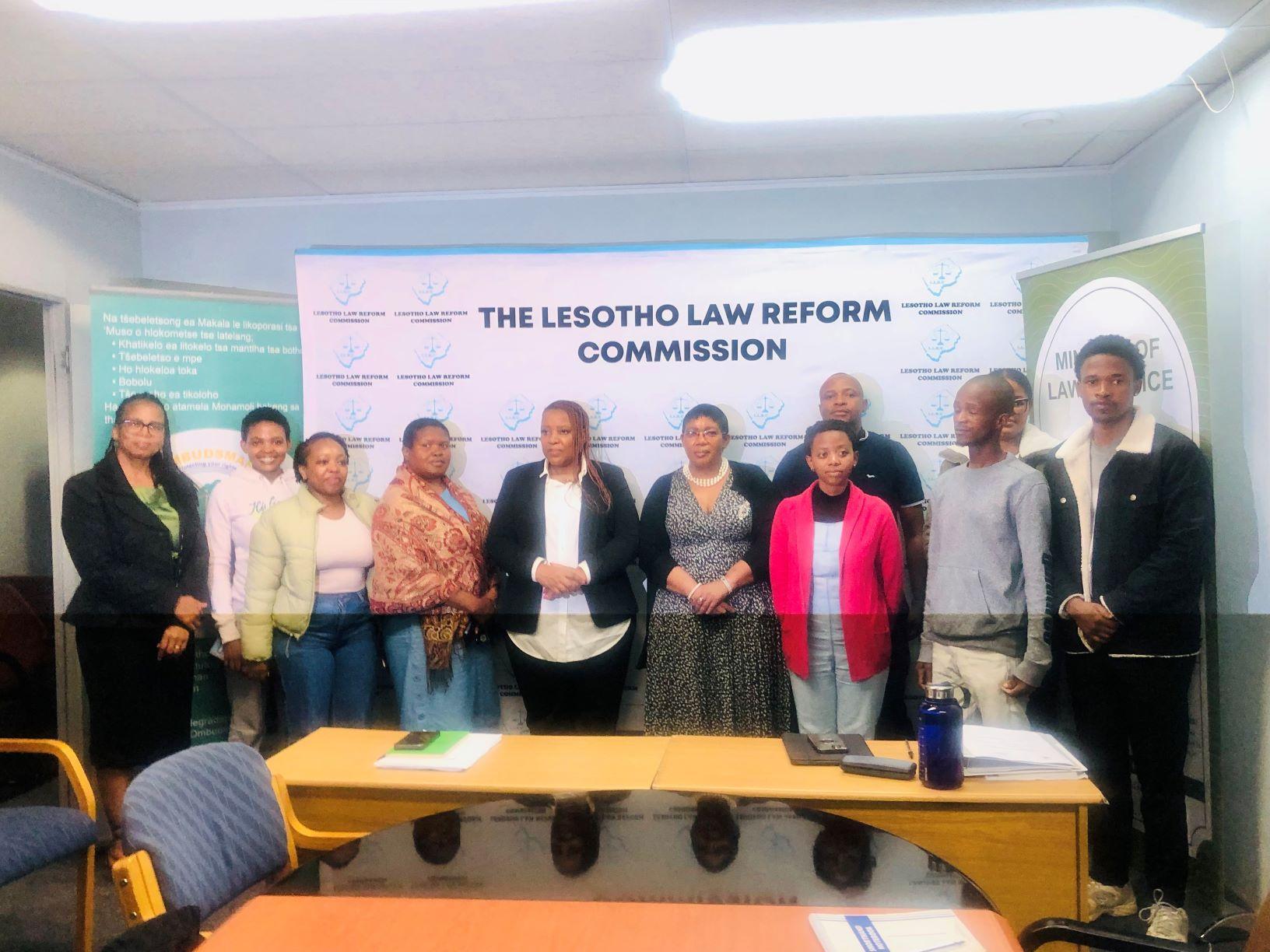
The Ministry of Law and Justice, through the Lesotho Law Reform Commission (LLRC), has signed a Memorandum of Understanding (MoU) with the Office of the Ombudsman at the LLRC offices in Maseru. The agreement aims to strengthen legal frameworks and enhance cooperation between the two institutions.
Speaking at the signing ceremony, LLRC Head of Secretariat, Ms. Puleng Ramolai, said the Commission operates under the Office of the Attorney General with a mandate to simplify laws, remove defects within legislation and consolidate statutes. She explained that the Commission combines laws with their amendments so that they can be easily accessed and used by every Mosotho.
Ms. Ramolai further stated that the Commission also identifies gaps within existing legislation and works closely with relevant ministries and government departments to address them.
She emphasised that the Commission will continue updating the country’s laws and the statute book while working closely with the public and relevant institutions to ensure accurate information and evidence-based law reform that promotes good governance and transparency.
Advocate Tlotliso Polaki, the Ombudsman, said the Office of the Ombudsman is mandated to investigate complaints related to government ministries, agencies and their officials, particularly in matters involving maladministration, violation of fundamental human rights and freedoms, corruption and environmental degradation.
Advocate Polaki noted that the Memorandum of Understanding will strengthen legal frameworks and ensure that accountability becomes a requirement rather than merely a suggestion.
She added that through sharing expertise and information, the two institutions will reduce duplication of efforts in investigations and law reform processes.
She further indicated that the partnership aligns with the Office of the Ombudsman’s long-term strategic vision of becoming a preferred and effective mechanism for the resolution of public complaints.
Advocate Polaki said the collaboration will also ensure that findings related to injustice or maladministration are taken into consideration during law reform initiatives.
The agreement came into effect upon signature by representatives from both institutions and will run for an initial period of five years.