What You Need to Know
The Ministry of Agriculture, Food Security and Nutrition, in collaboration with the World Food Programme, convened a stakeholders’ meeting in Lesotho to discuss crop insurance. The meeting highlighted the introduction of parametric agricultural insurance aimed at enhancing farmers’ resilience and improving agricultural risk management amidst challenges in the sector.
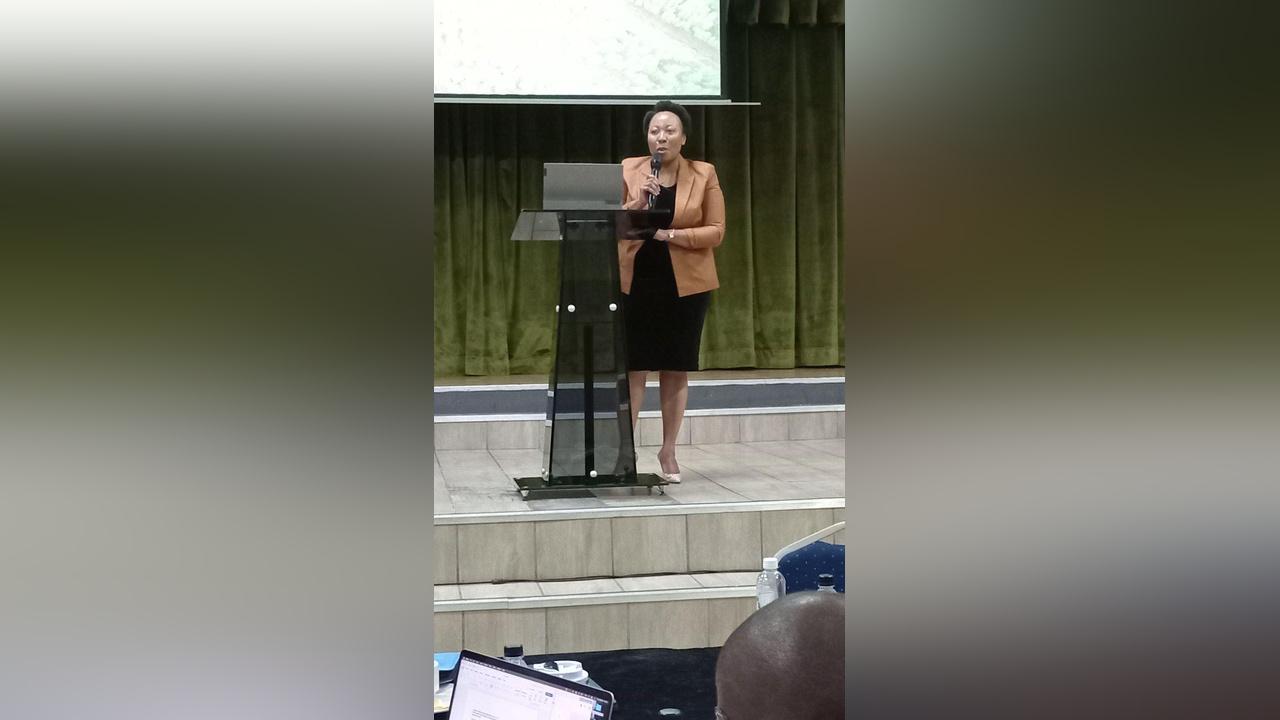
Africa-Press – Lesotho. The Ministry of Agriculture, Food Security and Nutrition (MAFSN), in collaboration with the World Food Programme (WFP) and partners, on Thursday convened a stakeholders’ meeting on crop insurance at Mojalefa Lephole (Victory) Hall under the Smallholder Agriculture Development Project II (SADP II).
Speaking during the meeting, Monitoring and Evaluation (M&E) Officer for WFP programmes, Mr. Lekeli Motsomi, said the project goes beyond providing agricultural support by ensuring that farmers are treated with dignity and adequately protected.
Mr. Motsomi noted that while many beneficiaries are able to access distribution sites within reasonable time, some still encounter challenges due to long travel distances and extended waiting periods.
He said this underscores the need to bring services closer to farming communities and improve efficiency at distribution points.
He added that most farmers find the conditions at distribution sites acceptable, as they provide basic facilities that support a comfortable experience.
Mr. Motsomi, however, raised concern about the limited awareness of complaint and feedback mechanisms among farmers, stressing the importance of strengthening communication channels to enable beneficiaries to share their experiences.
Meanwhile, Head of Underwriting at LNIG Hollard Insurance, Mrs. Maleseli Tšiu, highlighted the introduction of parametric agricultural insurance as a key innovation aimed at supporting farmers.
She explained that unlike traditional insurance, which compensates based on assessed losses, parametric insurance provides pre-agreed payouts triggered by specific conditions such as crop failure or adverse weather, allowing for faster and more predictable assistance.
Mrs. Tšiu said the approach is tailored to farmers’ needs by enabling them to insure specific crops such as maize and beans, and is developed through collaboration with stakeholders including WFP and SADP.
She indicated that the initiative focuses on strengthening farmers’ resilience and improving agricultural risk management rather than prioritising immediate profit.
For his part, Mr. Daniel Lederman from the World Bank said agricultural insurance in Lesotho remains complex due to the country’s highly variable climate and terrain.
He noted that farmers must carefully consider the risks they wish to insure against, such as drought, excessive rainfall or hail, as well as the cost implications, since broader coverage results in higher premiums.
Mr. Lederman further explained that, unlike social support systems, insurance must be financially sustainable and cannot pay out more claims than it collects in premiums.
He said this makes it challenging to design an insurance model that meets diverse needs, particularly in a country like Lesotho where conditions vary significantly across regions.
He also raised key policy considerations, including whether agriculture should primarily focus on increasing food production or also serve as a means of providing social support to vulnerable households with limited or no access to land.
Mr. Lederman acknowledged that such decisions require careful consideration and collaboration among stakeholders, while commending those involved in the initiative for their efforts in advancing agricultural development.
Despite the progress made, challenges remain in developing sustainable crop insurance in Lesotho, with stakeholders calling for enhanced collaboration, improved access and tailored solutions to strengthen farmer resilience and ensure long-term agricultural sustainability.
Lesotho’s agricultural sector faces significant challenges due to its variable climate and terrain, impacting farmers’ ability to manage risks effectively. The introduction of innovative insurance models, such as parametric insurance, aims to provide timely support to farmers by offering pre-agreed payouts based on specific conditions. This approach is designed to enhance resilience and ensure sustainable agricultural practices in the region, addressing the unique needs of Lesotho’s farming communities.