LAMINI A. WARITAY
Africa-Press – Liberia. Ask Liberians how much they love their country, and, without batting an eye, they will tell you that Liberia is always on their minds. They will go beyond that to assert that anytime they are called upon to even lay down their lives for their country, they will do so in a heartbeat. Yet, whenever situations arise where the rubber meets the road and ‘love of country’ comes calling or demands it, most Liberians end up jettisoning the national cause at the drop of a hat in pursuit of self-interest.
This somewhat oxymoronic and duplicitous disposition of giving full-throated expression of love of country while exhibiting actions and deeds to the contrary, has become a politically carcinogenic malaise in our body politic. It afflicts individuals and groups at all levels of society — from politicians and government officials, to lawyers and advocates, and, sadly, to even media practitioners and the clergy.
No where has this “Me, Myself, and I” syndrome been more patent than in the successive leaderships that have come and gone since the beginning of the Republic. History is replete with several instances where Liberian leaders and their minions have undermined the national interest in order to advance their selfish desires. This manifest display of unpatriotic inclination has since become a throughline in our leadership experience — spanning decades.
It became apparent from the very beginnings of the Republic. Take the case of the long-governing True Whig Party (TWP), which changed the leadership baton from one kindred leader to the other over a period of 133 years without having any sustained and defining impact on the quality of lives of the generality of the people.
Had the leaders during that period prioritized the real interests of the people and the country, Liberia would have had a solid developmental basis that could have placed the country today among Upper Middle-Income countries like Botswana, Singapore, and Malaysia — nations which, only decades ago, were more impoverished than Liberia at the time. In the 1940s, when Liberia’s population was estimated at below 900,000, the country became one of the largest recipients of American aid in the world and was reportedly at one point not too far behind Japan in terms of GDP per Capita.
Today, some 176 years after attaining independence, a potentially resource-rich country of five million people is among the 10 poorest countries in the world per GDP Per Capita, according to the 2023 World Bank Report. It is the only Mano River Union (MRU) country on that list, and has since lagged behind Japan by eons in development.
A cascade of missteps, missed opportunities, and ‘development without growth’ syndrome, all rooted in visionless and selfish leadership, kept the country trapped for decades in a cycle of self-centered national stewardship. The situation was such that when the enduring oligarchy was ultimately thrown into the dustbin of history in 1980, few Liberians shed tears for its demise.
The unprecedented coup that year catapulted a group of barefoot poor and barely literate soldiers to the helm of leadership in the country led by a master sergeant Samuel K. Doe. Completely unversed in the running of a country, the junta enlisted the services of highly educated civilians to help it govern the country. Many Liberians welcomed the moment as an opportunity to reset the country’s leadership trajectory. But no, the new breed of leaders (largely so-called “indigenous” or “native” sons) soon hugely disappointed their hopeful supporters and sympathizers. The popular slogan, “IN THE CAUSE OF THE PEOPLE, THE STRUGGLE CONTINUES”, laughably morphed into “In the cause of the new leaders and the nouveau riche, the suffering of the people continues”.
After acquiring as much wealth as he could during five years of dictatorial leadership, many Liberians had hoped that love of country would have moved master sergeant Doe into recognizing his leadership inadequacies and then called it quits at that point.
If he had done so, he could have positively etched his place in the history of the country and that of Africa as a whole by peacefully transitioning the country from what the late founding father of the Unity Party (Dr. Biyan Kesselly) used to refer to as a ‘Milivilian” (military-civilian) regime, to a truly democratic civilian governance conceived out of free, fair, transparent, and credible elections. He could have also spared the country the violent political fallout that subsequently befell the country on account of his political miscalculations.
Sadly, the usual opportunists and sycophants around leaders deceived Doe into believing that he was popular, and that if he let power slip through his fingers his political enemies would go after him, his family, and even his tribesmen. They therefore egged him on to cling to power.
He did so by discarding the military fatigue for a civilian garment and placed himself on the ballot for the 1985 elections, which were by all accounts heavily rigged against the united opposition led by Jackson F. Doe. Neither the leader nor his advisers, nor the elections commission headed by Emmet Harmon (late), saw the need to put the national interests of the country above their individual and collective selfish interests by maintaining the integrity of the electoral process. The rest, as they say, became history.
In the wake of Doe’s tragic fall, another Liberian ‘revolutionary’ came on the scene. Like the soldiers before him in 1980, Charles Taylor came under the guise of patriotism (Remember the National Patriotic Front of Liberia?) when he and his ‘Special Forces’ led a band of largely inexperienced, lightly armed and outnumbered fighters to go up against a militarized and well-resourced regime.
But once the situation that warranted the insurgency had been removed (with the brutal assassination of Doe), Charles Taylor, in yet another display of selfishness at the national level, refused to silence his guns — despite the grim reality that the generalized violence had by then already claimed the lives of tens of thousands of his fellow compatriots.
Despite his bloody prosecution of the war, when Taylor ultimately became President in 1997 many still thought Taylor would take the much-needed nationalistic and selfless path to reconcile war-weary Liberians, heal the wounds of the bloody war, establish the rule of law and a system of equal justice, rein in corruption, chat a pathway that will correct the vices of the past and propel the country on a peaceful and prosperous track.
But again, no; the mercurial leader instead moved on a completely opposite track of those expectations. His leadership became one of revenge, unjustified killings that went unpunished, the hunting down of political opponents in and out of the country, a display of unnecessary bravado and arrogance of power, the looting of state resources, and the destabilization of the Mano River Union subregion.
As a direct consequence of his leadership style, more bloodshed and destabilization of the country followed. The national interest had yet again been betrayed for personal interests and desires and ambition. So much for patriotism and love of country by the head of the National Patriotic Front of Liberia (NPFL).
Taylor’s infamous leadership was succeeded by the Presidency of Ellen Johnson Sirleaf — a one-time opposition firebrand with perhaps some of the best credentials to lead a governance system that would exorcize the demons of selfishness, poverty, and anti-democratic tendencies that had hitherto tormented the body-politic of ‘Mama Liberia’. Indeed, she was regarded by many, if not most of her compatriots, as someone who would set a leadership example that would endure, and put the country on an irreversible path of national development.
To be sure, there were such high hopes for her leadership among her admirers (including this writer), that even with the publication of the unflattering book by John Milton Greaves, titled, ‘The Fist of Machiavelli’, in which some people believe the ex-President was negatively fictionalized, her followers remained unfazed about supporting her political aspirations. I recall that I was so particularly convinced about her anti-corruption and democratic credentials, that when I was asked to make a writing input to her first inaugural speech, I used the opportunity to highlight the issue of fighting corruption. I was subsequently very pleased that my direct statement on the subject had largely been preserved in her finalized speech to read:
“…Corruption, under my Administration, will be the major public enemy. We will confront it. We will fight it. Any member of my Administration who sees this affirmation as mere posturing or yet another attempt by another Liberian leader to play to the gallery on this grave issue should think twice.” (My original version had actually alluded to corruption as “public enemy number one).
Out of the many rounds of applause that punctuated her well-received speech, this anti-corruption declaration received the longest and loudest applause — indicating how very expectant the thousands of excited Liberians gathered on the grounds of the Capitol building on that balmy afternoon were in regard to her perceived capabilities to seriously wrestle corruption.
True to such hopes, the madam, in her first term, did take up the cudgel against graft and wastefulness in government, and demonstrated this by setting up, as a matter of policy, anti-corruption and transparency institutions, commissions, agencies and relevant regulatory bodies, and appointed capable professionals to run them. The establishment of the Liberia Anti-Corruption Commission (LACC) in 2008, the strengthening of the General Auditing Commission (GAC), and her appointment of John Sembe Morlu 11 (an anti-corruption crusader who is not known for taking any prisoners in his fight against graft,) to head the Commission were all considered part of her policy intentionality to run a transparent government.
With the help of her efficient and well-connected Finance Minister, Antoinette Sayeh, Madam President also erased the country’s huge debt up to that point in her presidency, embraced inclusivity as a way of reflecting diversity in her administration, and generally upheld the principles of free expression and respect for civil liberties. But then came her second and final six-year term at the helm, commencing on January 16, 2012 — a period many hoped she would use to enhance the gains of her first six-year term and marshal resources to restore basic services such as electricity and drinkable water, which were still very much lacking at that point.
However, two years into her second term (having since bagged a Nobel laureate recognition along with compatriot Layman Gbowee) the contours of disappointment in ‘Ma Ellen’s’ commitment to working even harder became evident.
Not only did progress on provision of social services get stunted, corruption soon became, in her own words, “a vampire.” Family, family friends, and long-term associates held sway in her second term. The iron in the ‘iron lady” had largely become corroded. In fact, even before the tail end of her first term, the madam had served notice that she would be de-nominating Auditor General John Morlu for a renewal of his European Union contract.
Morlu had gotten in Ellen’s crosshairs by declaring that her government was “three times more corrupt” than its predecessor (faction-based) transitional government, alleging that millions of dollars were unaccounted for in her government’s 2007/2008 draft budget.
The situation became such that some government officials who stood up to corrupt heads of their respective agencies were villainized and scapegoated. (That is another story for another day). Gossip-mongering in presidential corridors, peddled by individuals wanting to ingratiate themselves into her good graces and protect their connections and jobs in the process, unfortunately, became prevalent. In the end, what had promised to be a true renaissance for Liberia under an otherwise highly educated and enlightened female president, had in fact fallen prey to considerations that were less than altruistic and visionary.
As the sun set on her twelve-year presidency, the “Maradona of Liberian politics” (as she is cynically referred to by some pundits) ‘rewarded’ her UP partisans and many other supporters for giving her twelve solid years of support with the inexplicable decision to dump her very loyal Vice President of twelve years during the 2017 elections in favor of the current incumbent.
Her critics have since alleged that she made the political calculation to go against her ex-VP because she sought “protection” for her family, and had concluded in the process that a George Weah, and not a Joseph Boakai, could guarantee that.
Again, another Liberian leader, this time one deemed to have been very well equipped for the job, had given short shrift to the country’s concerns when love of country collided with considerations for political self-preservation — even though it has never been clear to many why she needed any such ‘protection’ at all.
Six years on since that astonishing coup de grâce against her own party, the country is where it is under the current dispensation — with most Liberians now frantically struggling to offload the leadership the madam had reportedly preferred to that of her party. As many Liberians continue to cry that “Ma Ellen brought this (the Weah problem) on us oh…”, it is sad to think that she just might end up being remembered by many Liberians more for this Weah ‘wahala” than for any other political or leadership legacy of her twelve-year administration.
Touted and proclaimed by his once huge support base as ‘a Son of the Soil’, and the ‘Country Giant’, whose love of country had no bounds, George Manneh Weah became the immediate successor to President Sirleaf. An ‘indigenous’ product from the slum of ‘Gibraltar’ whose humble beginnings not only resonated with the masses, but assured them that the country would be in good, if not better hands, the new leader’s ascendancy was greeted enthusiastically by his largely youthful, soccer-loving supporters — never mind that many other Liberians at the outset were in no doubt that the ex-soccer icon simply didn’t have what it would take to govern a highly underdeveloped society in these vastly sophisticated modern times.
A few months after his inauguration on January 22, 2018, the once captivating Ballon d’or winner-turned President seemed to have set the tone for his leadership style for the rest of his six-year term by bizarrely embarking on a construction spree involving private condominiums. Rather than immediately sinking his teeth into urgent matters affecting the masses who had gone all out to vote for him, Weah clearly became preoccupied with self-aggrandizement — making total nonsense of his otherwise impressive ‘Pro-Poor’ inaugural speech that had been written for him by his handlers.
Today, taking the totality of the state of affairs in the country (corruption on steroids, insecurity, incompetency, illicit drug proliferation, ethnic favoritism, etc.), and with the ship of state floating virtually rudderless, one cannot help but draw some eerie parallels between certain aspects of the incumbent administration and the goings-on in William Golding’s notable novel titled, ‘Lord of the Flies’ — a 1954 fictional work that depicts the governance system of a group of boys left stranded on an island after a plane crash. Even though many enlightened critics did not expect much from Weah at the outset, the six-year stewardship of the ‘Country Giant’ clearly represents another Liberian leadership promise betrayed big time.
Under his Administration, much of the operation of the bi-camera legislature (made up mostly of the so-called ‘Sons of the Soil ‘) has become particularly inimical to the interests of the Liberian people. Little wonder that most of the representatives and senators have lost the public’s trust. If some senators are not found routinely shaking down presidential appointees for bribes in return for being confirmed (regardless whether such appointees are unqualified), most representatives would be busy passing all manner of concession agreements with the speed of a 5G network — again unmindful of whether these are detrimental to the larger interests of the country and its people. The body of lawmakers has since knuckled under the influence of the executive’s dictates.
With regard to the Judiciary, the less written about it the better. Many magistrates and judges have since given up what little independence they had before, and have instead capitulated to the whims of politicians and the highest bidders in the dispensation of justice. That is a sad state of affairs, as it goes without saying that anarchy, lawlessness, disenchantment, and underdevelopment could become the order of the day in a society where the justice system becomes susceptible to arm-twisting by capricious elements of the executive, and where those with resources and connections determine the outcome of cases brought before them by citizens, residents and investors alike.
As we berate successive leaders and their functionaries who have ditched the national cause for selfish inclinations, those who are supposed to be the moral guardians and consciences of the nation (in particular, the clergy and the media) are meanwhile also engaged in self-seeking acts that run counter to love of country. While some of our clerics (be them Christians or Muslims) are busy competing with each other in their efforts to gain favor with the leaders of the country, many if not most local media personnel are also openly and appallingly engaged in unprecedented mercenary journalism — with ‘big time’ publishers and editors having literally turned over their media platforms (newspapers, radio stations and online publications) to individuals and groups with deep pockets in the lead up to the elections — to hell with the public good and ethical journalism.
It is a measure of how deep various manifestations of selfishness have eaten into the entrails of our polity that some of our political parties, civil society, and self-styled activists are equally displaying the same self-seeking disposition–even as the people struggle to navigate their way out of the prevailing socio-economic and political quagmire. Recall for a moment how a once determined coalition of opposition forces seized the momentum and rode the crest of mass popularity to win bigly in two past senatorial elections in Montserrado. And juxtapose that unity of purpose then with the present fractured opposition, and you have a clear example of how easy it is for many Liberians — educated or otherwise — to subordinate the people’s interests to selfish political and personal desires.
One would have thought that in the face of what almost could be an existential situation for the country as it gallops toward a consequential election, and with the government enjoying all the benefits of incumbency, the genuine opposition would have seen the electoral imperative to circle the wagon or coalesce around the larger national cause for the greater good of the people. But again, no, individual differences and internal rancor have since splintered the collective opposition into various permutations — with 19 aspirants wanting to replace the incumbent.
We often hear local politicians arguing that “Politics is about interests.” But while there may be a need to acknowledge the universality of human interests, this “politics of interests” mantra could also be used as a jaundiced excuse or intellectual rationalization for betraying the national interests by individuals and groups in pursuit of their own personal agendas. In fact, sometimes uncritically embracing this politics of interest concept could result in serious individual and group mistakes that could be counterproductive not only to the interests and needs of the larger society, but to one’s own future political ambitions.
Against this backdrop, it behooves all well-meaning Liberians to continuously be ready and willing at all times to make sacrifices and compromises for the common good, and to ensure that the freedoms and liberties many struggled and died for are not taken away or watered down. As one of the founding fathers and ex-Presidents of the United States, Thomas Jefferson, once pointed out, ‘Eternal Vigilance is the price of liberty”.
Liberians (especially the younger generation) must be aware that the multi-party democracy and the freedom of expression they enjoy today did not descend from heaven and given to Liberians on a silver platter. It took courageous and selfless activists, politicians, journalists and students who endured beatings, imprisonments, torture, sustained harassment, mock executions, loss of jobs, and arson attempts on their residences, among other inhumane treatments, to win these freedoms and rights. Many Liberians even lost their lives in the process.
As Liberians get ready to go to the ballot box in their fourth post-war multi-party democratic elections (the second to be conducted entirely by the Government of Liberia since the end of the civil crisis in 2003), the need to demonstrate a deeper sense of patriotism and love of country becomes even more imperative at all levels of society — from the current leadership of the country to the National Elections Commission of Liberia (NEC), and from political parties to the clergy and the media.
In regard to the national leadership, President Weah, even at this late day, may still have a potentially redeeming opportunity to show a high degree of selflessness and love of country by adopting a hands-off approach with respect to the National Elections Commission. He can do so by applying no pressure whatsoever on the Commission to tip the electoral scales in his party’s favor. Indeed, for the greater interests of the country and in support of the determined efforts by Liberians to consolidate multi-party democratic elections, President Weah should avoid being misled by any self-centered group of people, advisers or supporters to botch his administration’s remaining opportunity to demonstrate love of country by making sure that the outcome of the elections will eventually and truly reflect the will of the majority of voters.
For better or for worse, the October 10 electoral exercise will constitute an unofficial referendum on what the government has achieved or not accomplished since Mr. Weah’s ascendancy to the leadership nearly six years on. As a consequence, the outcome of the vote should bear out if most voters believe he deserves another six-year term, or if they should give him the red card. By remaining non-partisan in the conduct of the pending elections by the NEC, President Weah will ensure that the onus of ensuring that the elections are held transparently, credibly and inclusively will be left largely on the shoulders of Mrs. Davidite Browne-Lansanah and her fellow commissioners.
Once such a hands-off approach is guaranteed, Liberians will then expect and demand of the NEC commissioners to give the country a soft landing by honestly, professionally, and patriotically conducting the elections in a way and manner that will strengthen the democratic advances and peace building efforts the country has thus far made since the end of the conflict days. (At this writing, the developing military situation in Gabon, just a few days after a blatantly rigged elections in that country, is just one consequence — as unpalatable as it may be–of civilian governments in Africa wanting to hold on to power through manipulated elections results).
All told, Liberian leaders–present and future — and Liberians in general, need to take a deep dive into their consciences and understand that seeking and acquiring power, and being a government functionary, should not all be about feathering one’s own nests and catering only to one’s own family, friends, or tribesmen. They must appreciate that power, leadership, and citizenship mean nothing if it is not leveraged to improve the lives of the people and propel the country on a part of continuous and tangible progress and development. They have to know that a nation cannot build itself, and that a country is only as good as its people. It would therefore take the combined efforts of all, through hard work, competency, unity of purpose, and a visionary, honest, patriotic and purposeful leadership to build a viable society.
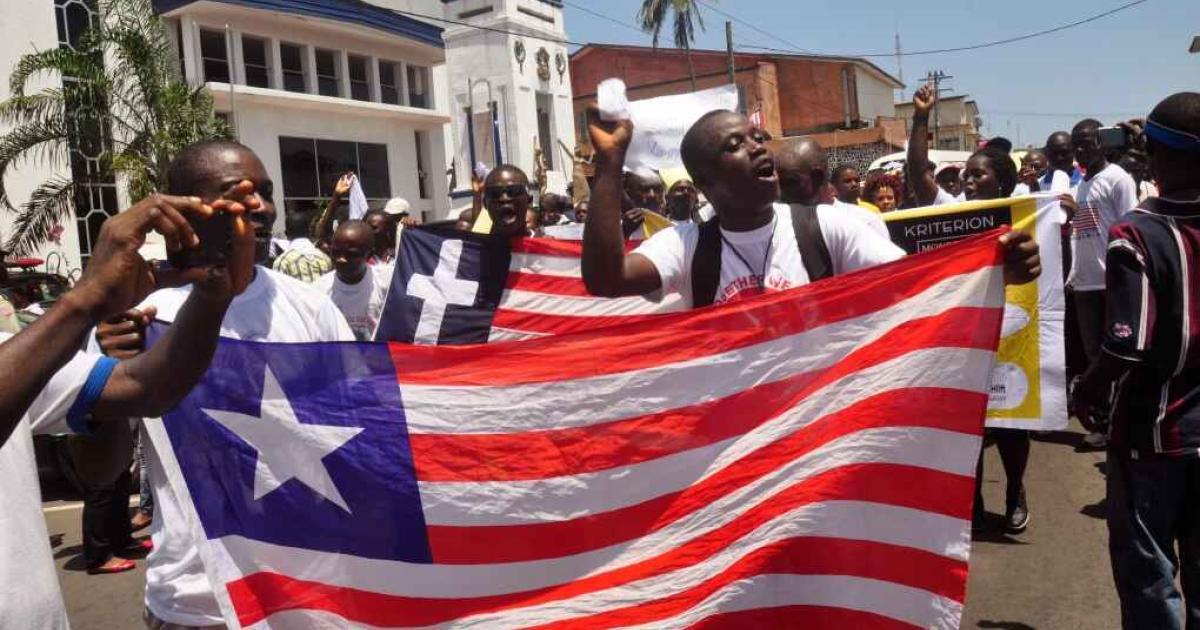
As the American educational psychologist, William H. Burnham, once observed, “The essence of patriotism is the sacrifice of personal interest to public welfare.” This means that flag waving and shouting from the top of our voices that we love our country are not sufficient in and of themselves as indications of patriotism. Love of country must always be demonstrated in actions and deeds, and in the willingness of leaders and citizens alike to strive at all times to make their country great and prosperous — regardless of whether they benefit personally or not in the process. Only leaders and citizens who truly love their country can be so inclined to sacrifice their personal advantage in order to achieve the greater good of the country and its people. Liberia desperately needs such a leader.
Source: Liberian Observer
For More News And Analysis About Liberia Follow Africa-Press