Africa-Press – Liberia. The Society for the Conservation of Nature of Liberia (SCNL) has strongly rejected claims by the Forestry Development Authority (FDA) that its conservation work in the Gola-Foya forest landscape has produced “no visible development benefits,” describing the assertion as misleading and dismissive of more than a decade and a half of sustained investment in forest protection and community development.
In a press statement issued on Christmas Day, SCNL said the FDA’s assessment does not reflect realities on the ground in Gbarpolu and Grand Cape Mount counties, where forest-dependent communities continue to face deep development challenges amid ongoing efforts to conserve one of Liberia’s most ecologically significant landscapes.
“The Gola-Foya forest landscape is part of the Upper Guinea Forest, rich in biodiversity and contributing significantly to climate mitigation,” SCNL stated. “Yet, it continues to grapple with long-standing development challenges, particularly a poor road network that limits access to healthcare, education, and markets.”
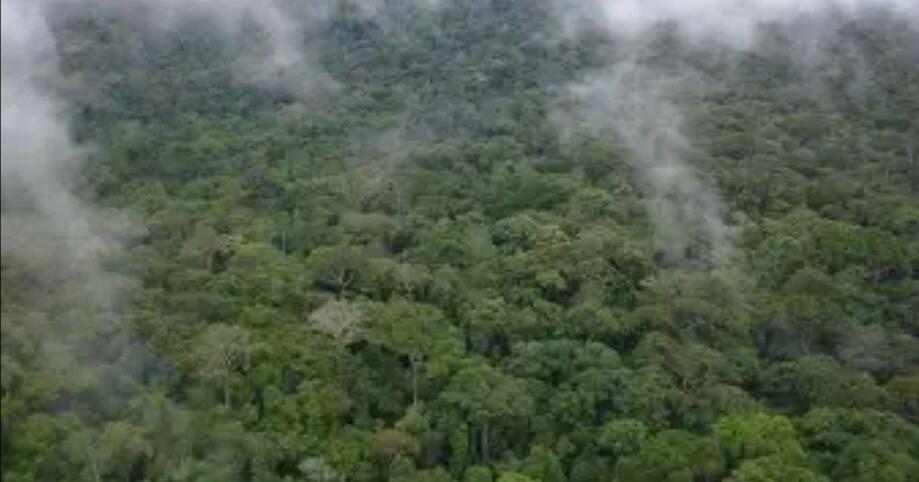
The Gola-Foya landscape sits at the heart of Liberia’s conservation ambitions. As part of the Upper Guinea Forest ecosystem, it hosts rare and endangered species and plays a critical role in carbon sequestration. However, communities living around the forest often associate conservation with restricted livelihoods, especially where basic infrastructure remains weak.
SCNL acknowledged these realities, emphasizing that conservation alone cannot resolve decades of underdevelopment.
“Improving road access and basic services in the Gola-Foya landscape requires collaborative efforts, with the Government taking a leadership role,” the organization said, adding that no single institution can address such national challenges.
While SCNL says it remains actively engaged with international partners, government institutions, and local communities, it stressed that the primary responsibility for infrastructure development rests with the Government of Liberia and its agencies, including the FDA.
At the center of the dispute is an FDA assessment report that reportedly accused SCNL of failing to deliver tangible development benefits despite years of conservation advocacy. SCNL described the claim as “unjust” and “inaccurate,” noting that the FDA is fully aware of its work in the region.
“Such assertions do not accurately reflect SCNL’s 16 years of sustained commitment, investment, and conservation efforts,” the statement said.
According to SCNL, its interventions go beyond forest protection. The organization disclosed that it is supporting the government to place more than 230,000 hectares of forest under conservation while creating livelihoods for nearly 400 young people employed as ecoguards, ecobrigades, research assistants, community mobilizers, and liaison officers.
SCNL also outlined a series of development initiatives aimed at improving living conditions in forest-edge communities. These include the provision of 60 motorcycles to improve local transportation, the renovation and solar electrification of six schools and clinics, the installation of 19 hand pumps for safe drinking water, and the construction of a concrete bridge linking SLC and Kongbor.
In addition, the organization said it has established a revolving fund exceeding L$15 million to provide micro-loans to local women—an intervention it says has helped boost household incomes and economic resilience.
“These are visible and measurable benefits,” SCNL argued, countering the FDA’s assessment.
The public disagreement between SCNL and the FDA highlights deeper structural challenges facing Liberia’s conservation sector. Despite strong commitments on paper, including adherence to multiple Multilateral Environmental Agreements (MEAs), Liberia continues to struggle with implementation.
SCNL noted with concern that no new protected areas have been established in the past eight years, including under the current administration—an issue that raises questions about the country’s ability to meet its global “30×30” target of conserving 30 percent of land and sea by 2030.
“We anticipate that management agencies like the FDA will ensure that the Government of Liberia meets its 30×30 targets and does not hinder progress,” the organization warned.
Analysts say the lack of new protected areas, combined with lingering tensions between conservation groups and state institutions, could undermine donor confidence and slow progress at a time when Liberia is heavily reliant on international climate and conservation funding.
SCNL urged the FDA to refrain from what it described as unfairly targeting conservation partners, warning that such actions risk repeating past mistakes.
“We do not see what was left behind for locals by previous logging and mining companies except open mines, degraded lands, and benefits for a few,” the statement read.
Instead, the organization called for a collaborative approach grounded in transparency, mutual respect, and shared responsibility—one that balances environmental protection with the urgent development needs of forest communities.
“SCNL remains passionate and fully committed to conservation in Liberia,” the statement concluded, “and is open to meaningful and constructive dialogue that addresses the challenges facing the Gola-Foya landscape.”
For More News And Analysis About Liberia Follow Africa-Press