Africa-Press – Liberia. Liberia’s Finance and Development Planning Minister, Augustine Kpehe Ngafuan, is cognizant of delays towards development and as such, he has called all hands on deck in doubling up to meet the government’s real-time development agenda.
For a way forward, Minister Ngafuan is outlining a vision for national progress centered on the concept of strategic acceleration, arguing that the government must transition from merely running to a sprinting pace to overcome development delays.
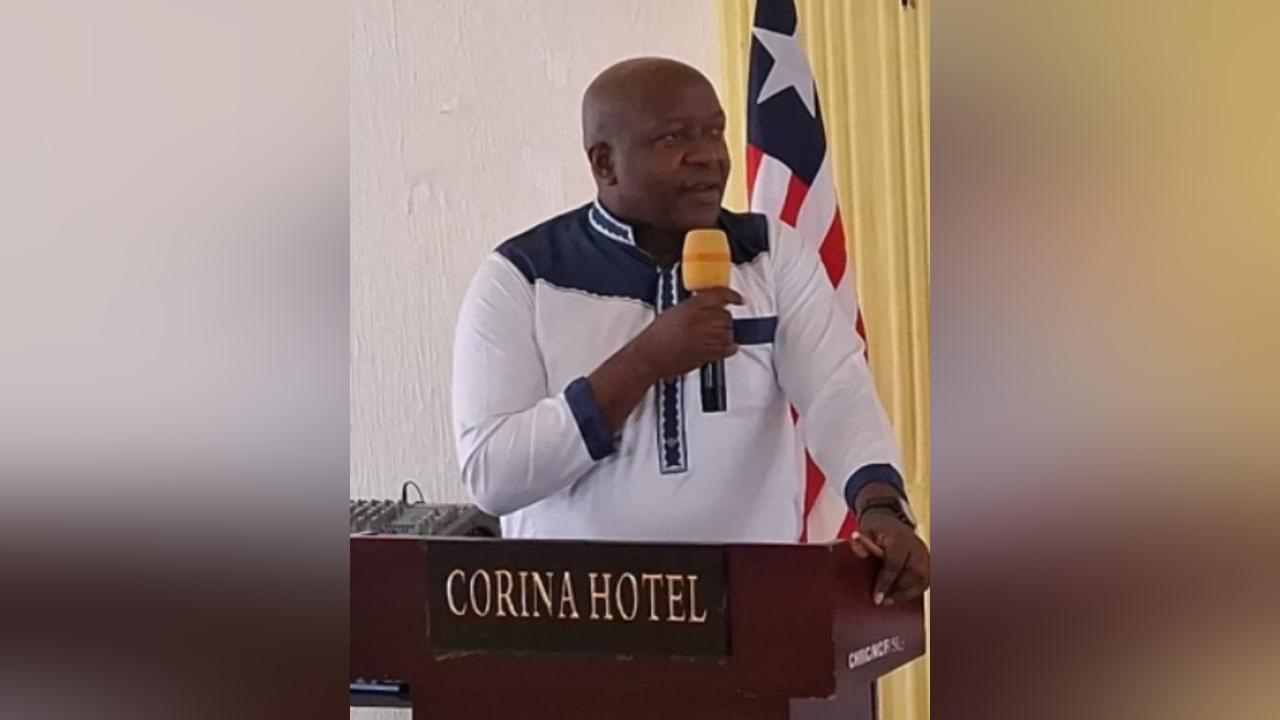
The Minister was speaking recently at occasion marking the official launch of the Institutional Support for Enhanced Domestic Revenue Mobilization and Reform Implementation Project (ISEDRMP) – an approximately US$18.3M financing package to enhance Liberia’s capacity for revenue collection and governance reforms and the Debt Ownership Transparency Technical Assistance Project (DOT-TAP), US$1.3M to strengthen public debt transparency and beneficial ownership frameworks, held in Monrovia.
The project will support 14 institutions, namely: MFDP itself, the Liberia Revenue Authority (LRA), the Ministry of Gender, Children and Social Protection (MoGCSP), Environmental Protection (EPA), Liberia National Police (LNP), Liberia Drugs Enforcement Agency (LDEA), Ministry of Mines and Energy, the Judiciary, Liberia Anti-Corruption Commission (LACC), the Ministry of State and Liberia Immigration Service among others.
Specifically by modernizing the judiciary and the Presidential Delivery Unit, Minister Ngafuan asserts that the administration aims to foster an environment of institutional credibility that attracts investment and ensures the efficient monitoring of public projects.
Also, he reveals that a significant portion of the strategy involves aggressive debt management, where the government prioritizes repaying domestic and external creditors to unlock private sector financing and maintain international trust.
Ultimately, the country’s MFDP Minister told the gathering that this multi-sectoral push in infrastructure, healthcare, and finance is designed to transform the economy and meet the fundamental aspirations of the citizenry through disciplined, rapid execution.
According to him, accelerating growth through judicial reform and the Presidential Delivery Unit is a good thing to do, stressing that Liberia aims to sprint toward progress by managing a $2.8 billion debt to boost investor confidence, and empower the private sector to meet national goals.
Also speaking at the launch, the Officer-In-Charge Country Manager of the African Development Bank or AfDB, Yussuf Bob Foday, said the initiatives reflect the Bank’s continued commitment to supporting Liberia’s fiscal stability, effective governance, and inclusive economic growth.
The AfDB official thanked the Government of Liberia for fostering sustained dialogue with stakeholders and providing leadership in advancing reforms critical to national development.
Together, he explained that the two projects launched will support a range of reforms, including the digitization of tax collection systems, updates to mining sector policies to reduce revenue leakages, modernization of judicial processes for financial crime prosecution, strengthening of anti-corruption mechanisms, enhanced debt management capacity, and the expansion of digital registration systems for beneficial ownership.
The AfDB official revealed that these interventions are intended to curb illicit financial flows, improve tax compliance, and build the capacity of law enforcement and oversight institutions to enforce financial and tax laws effectively.
The projects are aligned with Liberia’s ARREST Agenda, contributing to improved fiscal capacity and transparency, expanded public service delivery, job creation, and increased public trust in government institutions.
“As of November 2025, Liberia’s active AfDB portfolio comprised 15 projects—10 national and five regional—valued at US$314.77 million. The transport sector accounts for the largest share of funding at 55 percent, followed by energy at 17 percent, agriculture at 11 percent, and multi-sector governance and social finance projects at 17 percent,” said Mr. Foday.
Among other things, the AfDB country chief maintained that Liberia’s future development depends on broadening the revenue base, improving tax administration, strengthening extractive sector governance, and ensuring transparency and accountability, thus reaffirming the Bank’s commitment to supporting the country’s sustainable development and economic growth agenda.
For More News And Analysis About Liberia Follow Africa-Press