Africa-Press – Liberia. The Environmental Protection Agency (EPA) has concluded that the hydrochloric acid spill reported near Money Sweet Town in Jorquelleh District Number Two, Bong County, was successfully contained and poses no lasting threat to the environment, groundwater, or nearby wetlands.
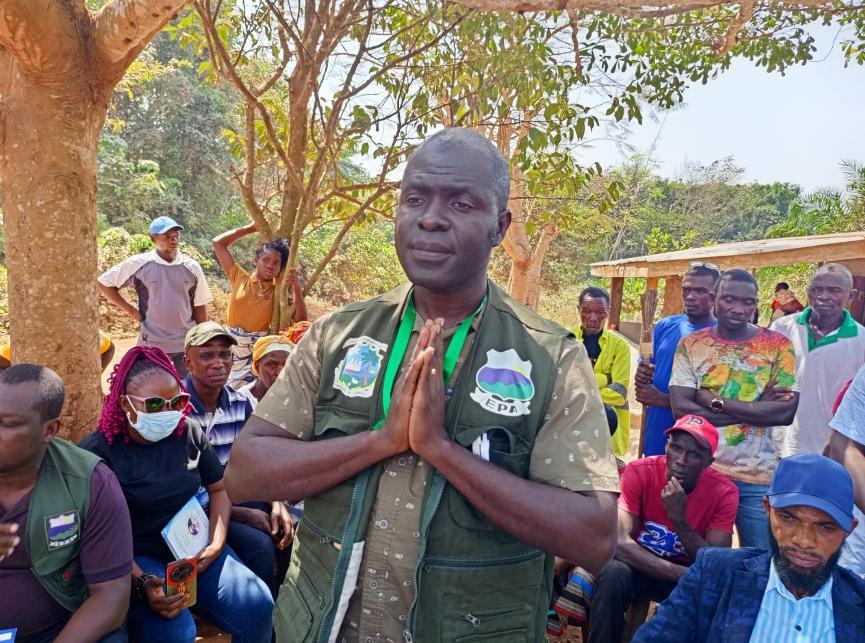
The conclusion was announced Saturday evening in Gbarnga by the Executive Director of the EPA, Dr Emmanuel King-Urey Yarkpawolo, during a press engagement with journalists, civil society representatives, and local intellectuals at the Bong County Athletic and Social Intellectual Center. Dr Urey presented the outcome of an extensive environmental investigation conducted by the agency following public anxiety over the incident.
According to Dr Urey, the EPA initiated its investigation after receiving reports of a chemical spill involving hydrochloric acid and subsequent complaints from residents who alleged health complications and damage to crops. He said the agency treated the situation as a priority due to the potential risks associated with hazardous substances.
Dr Urey stressed that the EPA’s findings were based strictly on scientific evidence gathered from field inspections and laboratory analysis. He said investigators collected and tested soil and water samples, assessed the physical terrain, and reviewed emergency response actions taken immediately after the incident.
The EPA disclosed that the spill occurred on January 18, 2026, when three trucks operated by Everest Company, an EPA-certified transporter of hazardous materials, were transporting hydrochloric acid for MNG Gold Liberia. One of the trucks was involved in a vehicular incident near Money Sweet Town, during which burning tires damaged a container holding the acid, causing an estimated forty liters to spill.
Dr Urey explained that MNG Gold Liberia responded promptly by deploying an emergency team to the scene. The fire was extinguished, the area was secured, and containment measures were applied under EPA supervision to prevent further spread of the chemical. Neutralization of the acid and excavation of affected soil were also carried out as part of the response.
Despite these actions, concerns emerged within the community days later, with residents reporting illnesses and possible crop damage. Community accounts indicated that approximately one hundred and forty people sought medical attention between January 24 and January 26. In response, the EPA dispatched a multidisciplinary fact-finding team to Money Sweet Town on February 6. The team included senior technical officers, county environmental inspectors, media representatives, and civil society observers to ensure transparency and credibility.
Dr Urey said the investigation confirmed that the spill site showed no visible chemical residue and that laboratory results supported the field observations. Soil samples taken from the affected area and downstream locations revealed near neutral pH levels, indicating that the acidity associated with hydrochloric acid had been neutralized and did not persist in the soil.
He further explained that hydrogeological analysis conducted by the EPA showed that the soil in the area has extremely low permeability, making it scientifically unlikely for the acid to migrate into groundwater or nearby wetlands. According to the agency, this finding effectively ruled out fears of underground water contamination.
Water samples collected from a community hand pump were also tested. While the EPA reported no traces of hydrochloric acid or heavy metals linked to the spill, the analysis revealed significant bacterial contamination. Dr Urey clarified that the bacterial presence was unrelated to the chemical incident and was instead attributed to sanitation challenges within the community. He advised residents not to consume the water until it is properly cleaned, chlorinated, and retested.
The EPA also addressed concerns about possible air pollution, stating that air quality testing was unnecessary. Dr Urey explained that hydrochloric acid was being transported in liquid form, does not readily vaporize, and the volume spilled was limited, leaving no scientific basis for harmful airborne exposure.
On reported illnesses, Dr Urey emphasized that the EPA does not have the mandate to establish medical links between health complaints and chemical exposure. He said such determinations fall under the authority of the Ministry of Health and noted that no scientific conclusion has yet connected the reported symptoms directly to the spill.
As part of its recommendations, the EPA called on MNG Gold Liberia to further strengthen its emergency response systems, improve communication with host communities during incidents, and enhance preparedness training for handling hazardous materials. The agency also pledged to maintain continuous environmental compliance monitoring of the company’s operations.
Claims related to health impacts have been officially referred to the Ministry of Health, while allegations of crop damage have been forwarded to the Ministry of Agriculture for independent evaluation.
Dr Urey reaffirmed the EPA’s position as an independent regulator, stating that no company operating in Liberia is exempt from environmental laws and regulations. He emphasized that the agency remains committed to enforcing standards impartially and in the interest of public safety.
The EPA assured residents of Money Sweet Town and the wider public that it remains dedicated to transparency, scientific integrity, and the protection of Liberia’s environment and public health.
For More News And Analysis About Liberia Follow Africa-Press