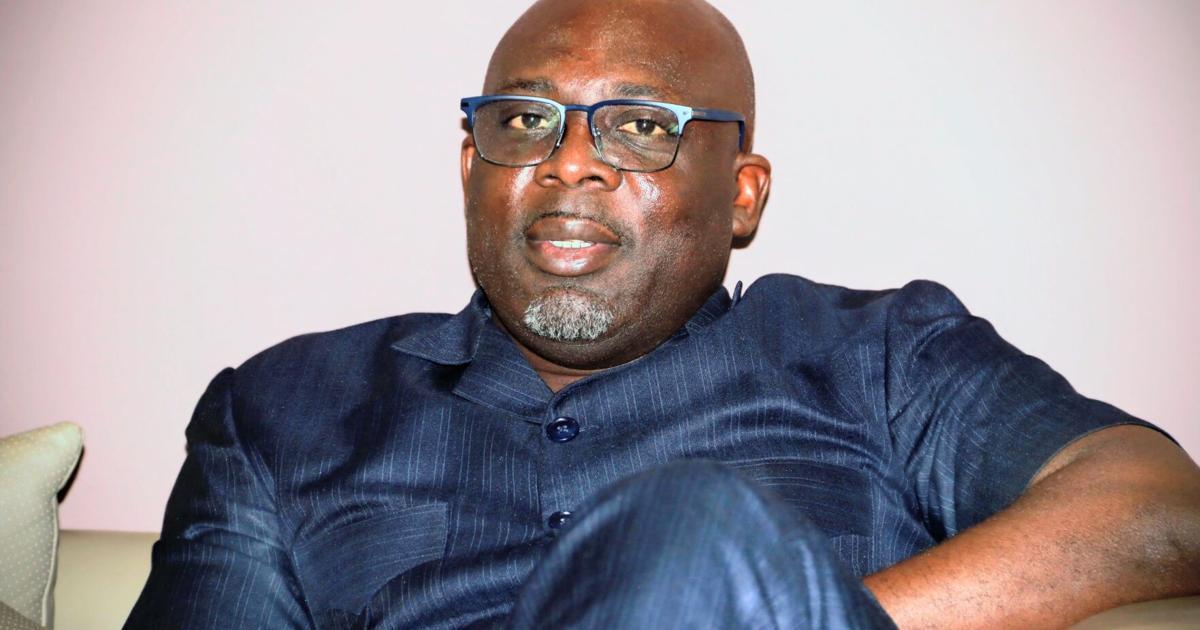
Africa-Press – Liberia. Cllr. Neto Z. Lighe, Commissioner and CEO of the Liberia Maritime Authority (LiMA), announced a targeted compliance and modernization push following Liberia’s recent International Maritime Organization (IMO) audit — centering the Authority’s response on a new Digital Center initiative to host IMO instruments and speed regulatory access.
Speaking in a wide-ranging interview, Cllr. Lighe framed the response as both corrective and strategic. “We just ended the IMO audit scheme,” he said. “As a country, there are some deficiencies, not necessarily [within] the Maritime Authority, but within the sector…. Beyond the audit, we are now trying to work along with all of the entities to make sure that in terms of compliance, we are up to date.”
The IMO audit, which examines a flag state’s regulatory framework and operational compliance with international conventions, flagged gaps across Liberia’s maritime ecosystem — from policy and enforcement inconsistencies to limited public access to major IMO instruments. Cllr. Lighe described the findings plainly: “If you were to come to Maritime today to get information readily made, you will have difficulty. And those were some of the findings of the audit.”
To address those gaps, LiMA’s flagship response is the construction of an annex that will include a centralized Digital Center. The center will house both hard and digital copies of major IMO instruments and serve as a platform for modernized regulatory systems.
“As part of our vision, as we now endeavor on the construction of an annex, we want to ensure that we have a digital center where we can launch all of the IMO instruments — hard copies and digital copy — and also as part of that to be able to modernize the system,” Cllr. Lighe said.
Digitization, he emphasized, is not optional: “In this day and age, in this age of globalization, things are moving fast with the advent of AR. You must be able to conform to reality.” The Digital Center is intended to provide immediate access to regulatory instruments for government agencies, port actors, lawyers, shipowners and the public — reducing delays, improving transparency, and strengthening Liberia’s ability to demonstrate compliance in future inspections and audits.
Maintaining Liberia’s whitelisted compliance status at the IMO is a central priority. Cllr. Lighe stressed the reputational and practical stakes: “Liberia is a whitelisted country, meaning in terms of compliance, we are above average, and this is something we want to do to maintain that.” He tied the digital push directly to that goal: easier access to instruments and streamlined coordination with sector partners will close gaps identified by auditors and help preserve Liberia’s standing.
Beyond the Digital Center, LiMA’s remediation plan includes coordinated work with sector agencies to fix compliance shortfalls that extend beyond the Authority’s remit. “When an audit is conducted it is the maritime that are going to engage and then maritime has a responsibility to coordinate with agencies within the sector to be able to address the different concerns,” Cllr. Lighe said. “In some cases, we have compliance issues. In some cases, we have policy issues. In some cases, we have an enforcement issue.”
The Commissioner flagged concrete operational priorities tied to compliance and safety: improving domestic vessel oversight, strengthening surveillance and enforcement, and modernizing record systems.
He noted that domestic maritime capabilities lag behind Liberia’s international standing and must be raised: “Our domestic sector is on par with the region or even above. Because in the region, all of the countries see us as the biggest maritime nation…. Domestically, much has not been done. So those are some of the fresh ideas and vision that we have.”
LMA will also expand digital record-keeping and certification processes. The Authority has already elevated the Liberia Maritime Training Institute (LMTI) to issue Certificates of Competence and is building administrative capacity to ensure certifications, inspections and enforcement actions are documented and accessible.
Cllr. Lighe framed the audit response as a matter of legal clarity and jurisdictional certainty: “We have just submitted to the Office of the President a new maritime law that is now going to address port-state, coastal-state and flag-state functions. Old law had a number of limitations… This law now will address everything, especially in terms of jurisdiction. You don’t want to exercise power when the law doesn’t give it to you.” He argued that legal modernization plus digitization will prevent the ad hoc decision-making that auditors flagged.
The Commissioner also tied the compliance drive to safety and environmental responsibilities. He highlighted Liberia’s ISPS-compliant ports and an active environmental department that investigates pollution incidents: “We are fully ISPS compliant, meaning that our ports are secure. The basic frameworks are in place.” But he added that improved digital systems and centralized records will strengthen the country’s capacity to track incidents, evidence inspections, and enforce remediation.
On international engagement, Cllr. Lighe said Liberia will use its active role in regional and global maritime bodies to both defend the interests of developing nations and share best practices on compliance: “We are playing a leadership role in all of our international organizations.” The Digital Center, he indicated, will also support Liberia’s ability to participate meaningfully in international forums by providing immediate access to the instruments and data required for policy negotiations.
LMA is positioning the Digital Center as a foundational piece of a broader modernization agenda: legal reform, digitization, capacity building and inter-agency coordination. “We think it’s important that maritime becomes fully digitized,” Cllr. Lighe said. “Now, we just ended the IMO audit scheme… we are now trying to work along with all of the entities to make sure that in terms of compliance, we are up to date.”
As the annex and Digital Center move from plan to implementation, Liberia’s maritime stakeholders will be watching closely: auditors will expect corrective actions, and the international community will look for demonstrable improvements.
For Cllr. Lighe, the mission is clear and urgent — preserve Liberia’s global credibility while building domestic systems that can stand up to scrutiny. “You don’t want to exercise power when the law doesn’t give it to you,” he said, “and you must have the systems to show that you’re compliant.”
For More News And Analysis About Liberia Follow Africa-Press