Africa-Press – Liberia. In an unusual show of parliamentary displeasure, Liberia’s House of Representatives on Tuesday dismissed a delegation from the Ministry of Labour after lawmakers determined that the officials were unprepared to provide statistical and empirical evidence regarding the country’s alien registration regime and the impact of the recent hike in work permit fees for foreign nationals.
The incident unfolded during a plenary session convened to examine the Ministry’s policy decision to increase work permit fees for non-Liberians from US$1,000 to US$3,000—a move government officials previously described as part of broader efforts to protect Liberian jobs and strengthen regulatory oversight.
The appearance of the Ministry’s senior management team followed a formal communication submitted by Montserrado County District #3 Representative Sumo Mulbah. Lawmakers sought clarity on how the fee increment was affecting employment opportunities for Liberians, as well as detailed data on alien registration across sectors of the economy.
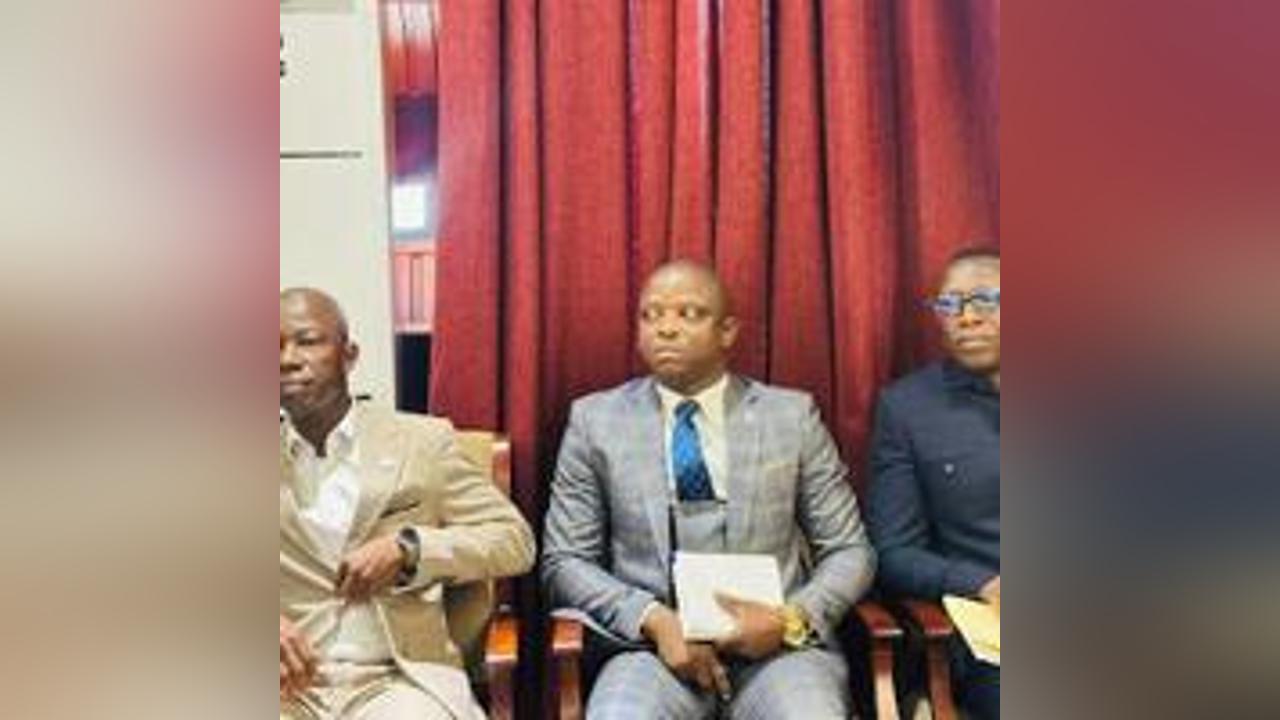
In the absence of Labour Minister Cllr. Cooper Kruah — who is reportedly out of the country on official duty — three senior officials appeared on his behalf: Mr. Othello P. Mansou, Deputy Minister for Administration; Mr. Jackson F. Wolobah, Assistant Minister for Statistics and Research, and Mr. Raphael E. Donokolo II, Assistant Minister for Alien Registration
However, the officials’ presentation reportedly failed to satisfy lawmakers, who had expected comprehensive data, sectoral breakdowns, and measurable evidence of the policy’s economic impact.
Margibi County District #2 Representative Ivar K. Jones moved that the delegation be excused from the chamber, citing their inability to provide the requested empirical analysis.
“The House is serious about getting answers on how the policy is affecting Liberian employment,” Rep. Jones declared during deliberations. “If we are to make informed decisions in the interest of our people, we must have facts — not assumptions.”
The motion was subsequently endorsed by plenary, leading to the rare dismissal of the Ministry’s representatives from the session.
Legislative observers described the move as both symbolic and substantive — signaling heightened scrutiny by lawmakers over executive policies that have direct economic implications.
The increase in alien work permit fees from US$1,000 to US$3,000 has generated public debate since its announcement. The Ministry of Labour has maintained that the adjustment is intended to encourage greater employment of qualified Liberians, regulate the influx of foreign workers, and generate revenue for labor oversight and compliance monitoring.
Critics, however, argue that without transparent data demonstrating how many positions are being held by foreign nationals — and in which sectors — it is difficult to assess whether the policy effectively advances local employment or simply raises operational costs for businesses.
Lawmakers pressed the Ministry for answers to key questions, including how many active aliens work permits currently exist? Which industries are most reliant on foreign labor? Has there been measurable growth in Liberian employment since the fee hike? And what mechanisms are in place to ensure compliance and prevent underreporting?
According to several representatives, the delegation failed to present detailed statistical breakdowns or impact assessments.
Members of the House indicated that once Minister Kruah returns to Liberia, he will be formally summoned to appear before the full plenary to provide comprehensive documentation and defend the policy shift.
Some lawmakers emphasized that the matter goes beyond administrative procedure and touches directly on national economic priorities.
“This is about Liberian jobs,” one legislator remarked during debate. “If we say the increase is meant to benefit our people, then we must show how it is benefiting them.”
The incident underscores growing legislative insistence on data-driven governance. In recent years, public institutions have faced increasing calls for transparency, particularly on policies affecting employment and foreign labor regulation.
Liberia’s economy remains fragile, with high youth unemployment and widespread concerns about job accessibility for citizens. In that context, policies related to alien work permits carry significant political and economic weight.
By demanding statistical evidence and accountability, the House signaled its intention to play a more assertive oversight role in labor and employment policy.
Whether the Ministry of Labour will return with the detailed empirical analysis lawmakers are demanding remains to be seen. But Tuesday’s dramatic session made one thing clear—on issues affecting Liberian jobs, plenary is prepared to demand more than policy pronouncements — it wants proof.
For More News And Analysis About Liberia Follow Africa-Press