Africa-Press – Liberia. For a country battling slow growth, high youth unemployment and a narrow export base, the inaugural EU–Liberia Business Forum represents more than a diplomatic gathering. It is a calculated economic pitch.
With approximately €1.5 billion in investment opportunities showcased across agriculture, forestry, fisheries, roads, energy infrastructure, trade, tourism and sanitation, the two-day forum in Brussels signals Liberia’s most coordinated attempt in recent years to reposition itself as an investable frontier economy.
Held under the theme “The ARTS in the ARREST – Investing in Liberia,” the forum brings together senior Liberian government officials, European investors, financial institutions, development partners and diaspora entrepreneurs in structured government-to-business (G2B) and business-to-business (B2B) negotiations.
But beyond the headline figures, the deeper question is whether this initiative can materially alter Liberia’s economic trajectory as the country transitions from aid dependency to robust investment diplomacy.
The forum marks a strategic pivot in the country’s external engagement model — from traditional donor-driven assistance to proactive economic diplomacy.
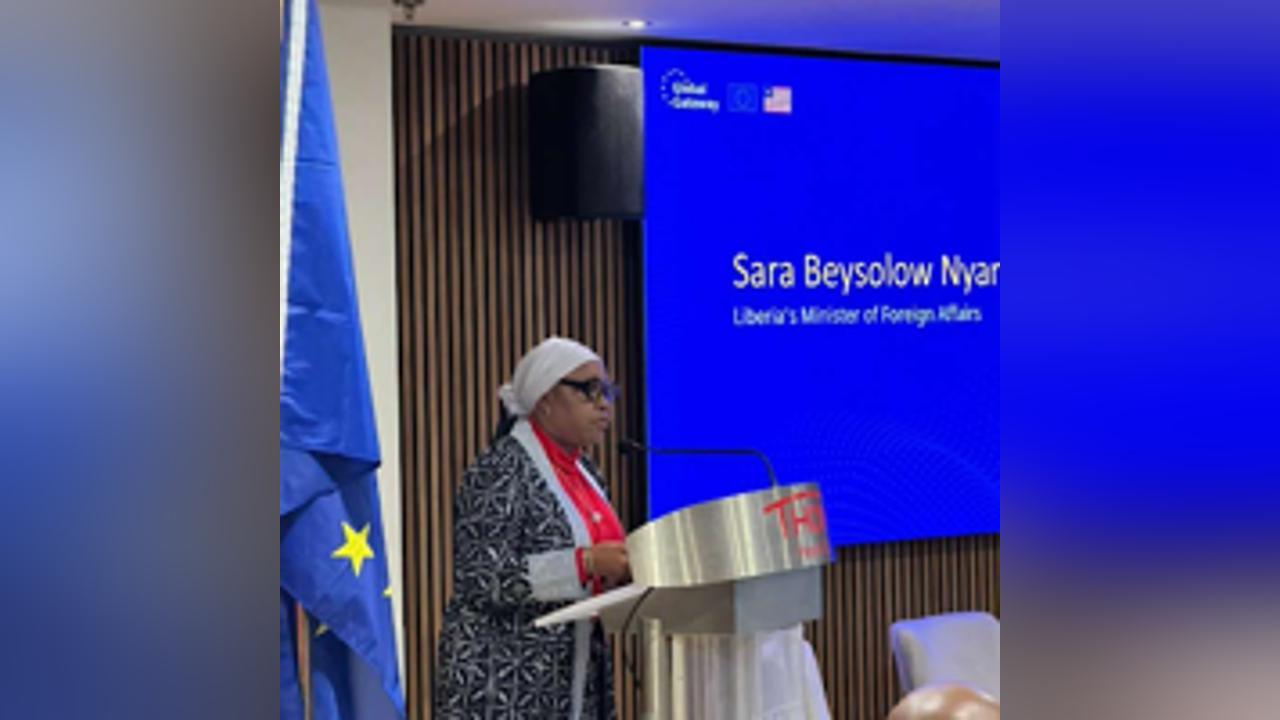
Minister of Foreign Affairs, Sara Beysolow Nyanti, made that shift explicit. “We are here because we want deals. We are here because we want jobs for our people. We are here because we want a diversified and prosperous Liberia.”
Originally conceptualized as a Benelux-focused outreach, the initiative was expanded into a European Union-wide platform through ministerial intervention. Businesses from all 27 EU member states were mobilized to participate, alongside Liberian private sector actors and state-owned enterprises.
The event aligns with the European Union’s Global Gateway Strategy and broader EU–Africa cooperation frameworks, positioning Liberia within global supply chain conversations — particularly in agriculture, critical raw materials and sustainable infrastructure.
Opening remarks were delivered by Liberia’s Ambassador to the EU, J. Levi Demmah, European Commission Director-General for International Partnerships Koen Doens and Liberia’s finance and sectoral ministers, reflecting high-level political backing on both sides.
Why €1.5 Billion Matters
The Liberian economy remains heavily dependent on extractive industries — iron ore, rubber and gold—making it vulnerable to commodity price shocks. Growth has been uneven, and job creation has struggled to keep pace with a youthful population.
More than 60 percent of Liberians are under the age of 25. Youth unemployment and underemployment remain among the country’s most pressing socio-economic challenges.
The €1.5 billion pipeline spans sectors with higher employment multipliers Agriculture and forestry — potential for agro-processing and value addition; Energy and transport infrastructure — critical for industrial growth; Fisheries and maritime — underdeveloped blue economy potential; Tourism and sanitation — service-sector expansion and environmental resilience, and Trade logistics — including export processing facilities.
A key signing at the forum includes a deal between Global Logistics Services and APM Terminals Liberia to develop the country’s first Export Processing Facility — a move that could improve value-added exports and reduce logistical bottlenecks.
For Liberia, whose infrastructure deficits raise transaction costs for businesses, such developments could lower barriers to private sector expansion.
Minister of Finance and Development Planning, Augustine Ngafuan, and sectoral ministers joined negotiations to directly pitch policy reforms and sector readiness.
The forum’s message from government officials was consistent—investment equals jobs.
Infrastructure Ministerial discussions emphasized that roads and reliable electricity are foundational for private sector growth. Deputy Energy Minister Charles Umehai participated in debates on expanding generation and distribution capacity—an issue that has long constrained industrialization.
The Liberian Chamber of Commerce and its European counterparts signed a memorandum of understanding to strengthen institutional linkages, further embedding private-sector partnerships.
The government’s economic diplomacy strategy — coordinated across its embassies — signals a whole-of-government approach to attracting capital.
What It Means for Young People
For the young people of the country, who make up over 60 percent of the population, the forum’s outcomes could be transformative—if commitments translate into implementation.
Agriculture modernization could generate rural employment beyond subsistence farming. Tourism and sanitation investments could expand service-sector opportunities in urban areas. Infrastructure projects could absorb both skilled and semi-skilled labor.
However, many caution that job creation depends not only on capital inflows but also on local capacity development.
Foreign direct investment often concentrates in capital-intensive sectors like mining. The challenge for Liberia will be ensuring labor-intensive industries receive sufficient attention and that contracts incorporate local content provisions.
Minister Nyanti’s emphasis on “deals” reflects urgency. Youth frustration over limited economic mobility remains high, and the credibility of economic diplomacy will ultimately be measured in employment numbers.
The forum also highlighted Liberia’s preferential access to the European market under the EU’s “Everything But Arms” arrangement, granting duty-free, quota-free access for nearly all exports.
In theory, this positions Liberia as a gateway for processed goods into Europe. In practice, limited industrial capacity has prevented the country from fully exploiting this advantage.
If the forum catalyzes agro-processing plants, fisheries exports or light manufacturing ventures, Liberia could begin leveraging that access more effectively.
While optimism permeated the event, structural risks remain. Infrastructure gaps increase operational costs, while regulatory unpredictability can deter long-term investors. Also, governance and transparency standards must align with European compliance frameworks, while skills shortages may limit workforce readiness.
The success of the €1.5 billion investment showcase depends on follow-through—regulatory reform, streamlined licensing, dispute resolution mechanisms and anti-corruption safeguards.
European investors are increasingly guided by environmental, social and governance (ESG) criteria. Liberia’s ability to meet these benchmarks will influence the speed and scale of capital deployment.
Deputy Minister Ibrahim Nyei and Assistant Minister Leon Talery were credited for the technical coordination that expanded the forum into a full European platform.
“This is not symbolism,” one of the Liberian delegates noted. “This is a marketplace.”
Indeed, the presence of companies like ArcelorMittal Liberia and APM Terminals underscores the blending of diplomatic outreach with existing corporate footprints.
For a nation in urgent need of diversified revenue streams and sustainable employment, the Brussels forum represents both opportunity and test.
If agreements signed this week mature into bankable projects, the country could see new energy plants, agro-industrial hubs, export facilities and tourism infrastructure within the next five years.
If they stall, the €1.5 billion headline may fade into another unrealized ambition.
For now, the Unity Party led government has placed Liberia’s economic case before Europe.
Whether that pitch translates into cranes on construction sites, factories in rural counties and jobs for thousands of young Liberians will determine whether this forum becomes a footnote — or a turning point—in the country’s economic recovery narrative.
For More News And Analysis About Liberia Follow Africa-Press