Africa-Press – Liberia. The NPP Chairman further emphasized the importance of adhering to the country’s legal framework, pointing out that under the country’s Defense Act, only the President, as Commander in Chief, has the authority to deploy troops outside the barracks or authorize recruitment into the Armed Forces of Liberia
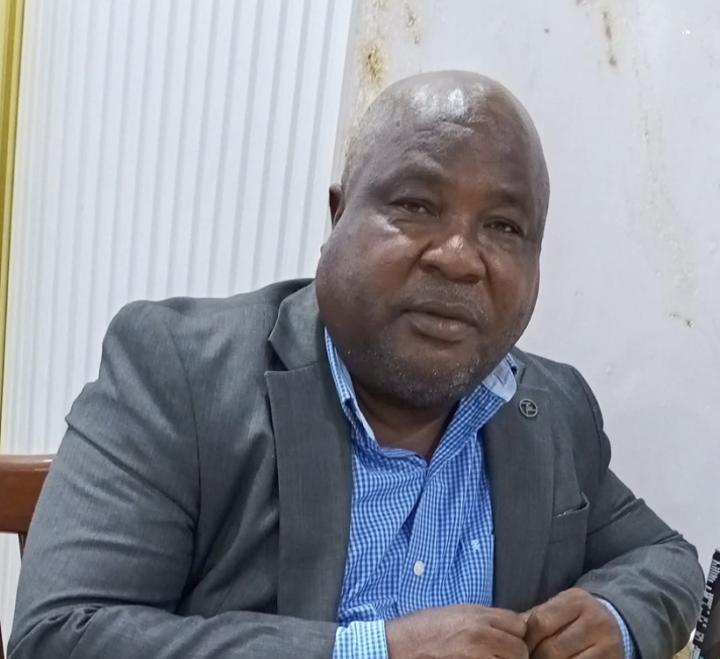
MONROVIA — The Chairman of the opposition National Patriotic Party (NPP), Attorney George Mulbah, has urged the government to exercise restraint while strengthening Liberia’s defense capacity amid growing tension along the border with Guinea.
Atty. Mulbah commended President Joseph Boakai for avoiding what he described as an emotional response to the situation, emphasizing that the use of force at this stage would be premature and potentially harmful to ongoing diplomatic efforts.
He stressed that Liberia must adopt a measured and calculated approach, noting that while diplomacy remains critical, the country must also begin to take concrete steps toward building a stronger and more prepared military force capable of responding to future threats.
“There shouldn’t be a violent response from our security in the current situation, and I want to thank the President for not allowing emotions to dictate national action, but instead choosing a path of caution and responsibility, while recognizing that, going forward, we must build a strong army with a numerical strength of not less than ten thousand soldiers to ensure that Liberia is adequately prepared to defend its territorial integrity without hesitation,” Mulbah said.
The NPP Chairman further emphasized the importance of adhering to the country’s legal framework, pointing out that under the country’s Defense Act, only the President, as Commander in Chief, has the authority to deploy troops outside the barracks or authorize recruitment into the Armed Forces of Liberia.
He noted that all actions taken in response to the crisis must remain within the bounds of the law.
Atty. Mulbah also presented several recommendations to the Boakai administration, including refraining from the use of force, considering the temporary closure of the Liberian-Guinean border if Guinean forces fail to withdraw, recalling Liberia’s ambassador to Guinea for consultations, and notifying the United Nations Security Council about the situation.
In addition, he called on the government to prioritize national defense infrastructure, particularly the reconditioning of Camp Naama in Zota, Bong County, which he said has historical significance in safeguarding the country’s northern border.
“We cannot continue to crawl on our knees begging Guinea for the protection of our sovereignty, and while it is true that Guinea possesses conversational military sophistication, Liberia is a nation whose people have experienced war and have developed the capacity for self-defense in towns and villages, and therefore the government must act decisively by considering the reconditioning of Camp Naama in Zota, Bong County, while also pursuing diplomatic channels that reflect strength, dignity, and national resolve,” he added.
The Liberia-Guinea border tension has deep historical roots, stemming from poorly demarcated boundaries established during the colonial era.
These ambiguities have persisted for decades, particularly in remote forest regions where cross-border communities share ethnic and cultural ties, often leading to disputes over land ownership and territorial control.
The situation has escalated in recent weeks following reports of Guinean military presence in contested areas, raising concerns among residents and prompting renewed calls for diplomatic engagement and clearer boundary enforcement.
Regional efforts to ease tensions have included mediation through the Mano River Union, involving Liberia, Guinea, and Sierra Leone, where leaders have emphasized dialogue, cooperation, and non-aggression as key to maintaining stability in the sub-region.
For his part, President Boakai reaffirmed Liberia’s commitment to peace on Wednesday, stating that his administration remains focused on diplomatic engagement while ensuring that the country’s sovereignty is protected through lawful and measured actions.
He stressed that Liberia will continue to work with regional and international partners to resolve the dispute without resorting to violence.
For More News And Analysis About Liberia Follow Africa-Press