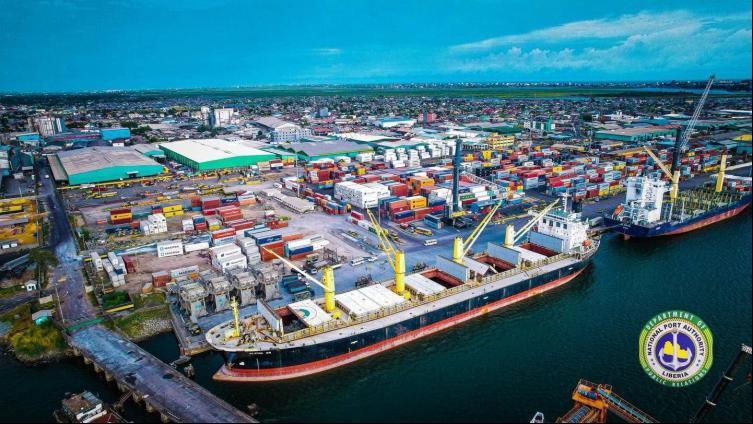
Africa-Press – Liberia. Liberia has entered a decisive phase in its maritime and commercial transformation as the National Port Authority (NPA) implements sweeping reforms that are reshaping the country’s port operations and positioning it as a competitive player within the West African maritime corridor.
For years, businesses routing cargo through Monrovia faced a critical operational setback, as the port’s inability to function at night created costly delays, increased demurrage charges, and discouraged major shipping lines from prioritizing Liberia in their schedules, often redirecting vessels to more efficient regional ports.
That longstanding limitation has now been addressed with the full restoration of night navigation at the Freeport of Monrovia, following the installation of modern navigational systems and the expansion of pilot and tugboat services.
The port now operates around the clock, marking a significant shift in efficiency and reliability. This development is expected to reduce vessel waiting times, lower costs for importers and exporters, and improve scheduling flexibility for international shipping companies, thereby strengthening Liberia’s competitiveness in regional trade.
Beyond operational improvements, 2025 has also seen critical reforms in contractual and governance structures within the port sector. After more than a decade without formal review, APM Terminals, the Danish operator managing the main container terminal, has agreed to renegotiate its long-standing concession agreement.
The renegotiation process is expected to address terminal fees, performance benchmarks, and investment obligations, aligning them more closely with Liberia’s current economic priorities.
At the same time, the National Port Authority successfully renegotiated its agreement with GTMS CTN, resulting in reduced costs for port users and increased revenue for the Liberian government, while revisions to the Marine Services Agreement have introduced stronger provisions aimed at promoting local participation and reducing reliance on foreign expertise.
These reforms collectively signal a broader shift toward a more business-friendly port environment, where efficiency, transparency, and national interest are prioritized. For businesses operating in Liberia, the changes translate into lower transaction costs, improved predictability, and a more responsive port system that supports economic growth and trade expansion.
Liberia’s renewed momentum has also extended to the international stage, where strategic engagements throughout 2025 have repositioned the country within global maritime networks.
The National Port Authority hosted the 10th Annual Conference of Harbor Masters and Port Security Officers of West and Central Africa in Monrovia, drawing regional attention and reinforcing Liberia’s role in maritime dialogue.
Additionally, the country has secured inclusion in a twelve million euro European Union maritime security and corridor development programme, further strengthening its infrastructure and operational capacity.
A landmark partnership agreement with Morocco’s Tanger Med port authority is set to deliver a comprehensive long-term master plan for Liberia’s port system, introducing global best practices in port development and management.
Engagements with Korean shipbuilders and Japanese development finance institutions have also opened new avenues for investment and technical collaboration, signaling growing international confidence in Liberia’s maritime sector.
Equally significant is Liberia’s progress in building domestic capacity within the industry. In 2025, the country achieved a milestone by certifying its first Liberian Marine Pilot and Tugboat Captain, marking a shift toward reducing dependence on foreign maritime professionals.
This development not only strengthens national expertise but also helps retain financial resources within the local economy, as reliance on costly foreign specialists gradually declines.
Complementing this milestone is an ongoing investment in human capital, with National Port Authority staff receiving specialized training in countries including China, Ghana, the United States, and Morocco.
These training initiatives cover a wide range of disciplines, from port management and vessel operations to blue economy strategies and anti corruption practices, while internal knowledge sharing programmes are ensuring that these skills are disseminated across the institution.
Taken together, these operational, contractual, and human capacity reforms represent a comprehensive transformation of Liberia’s port sector.
The country is no longer defined by its previous limitations but is instead emerging as a strategic hub with growing relevance in regional and international trade.
For investors, traders, and shipping operators, Liberia now presents a more efficient, reliable, and forward-looking maritime gateway, signaling that its ports are not only open to the world but ready to compete.
For More News And Analysis About Liberia Follow Africa-Press